

Cooking dinner for the first time can feel like a big step. The recipes look long, the techniques sound unfamiliar, and the fear of getting something wrong is real. But here is the good news: easy dinner recipes for beginners are not a different kind of cooking. They are the same good food, cooked with a few simple techniques that anyone can learn on the first try.
If you are just starting out, the best dinners are the ones with short ingredient lists, clear steps, and room for mistakes. One pot, one pan, or one tray. A handful of ingredients you already know. And a result that tastes like real cooking, because it is. This guide is built exactly for that kind of cook.
Below you will find six original dinner recipes written for beginners, with each step explained in plain language. You will also learn the basic techniques that make weeknight cooking easier: how to boil pasta properly, how to brown chicken without drying it out, and how to rescue a dish that goes slightly wrong. Pick one recipe tonight, and let dinner be the start of a habit you will enjoy.

What Makes a Dinner Recipe Good for Beginners?
A beginner-friendly dinner has three qualities. First, the ingredient list is short and familiar. If a recipe asks for ten things you have never bought before, it is not a beginner recipe. The dinners in this guide use pasta, rice, eggs, beans, chicken, and vegetables — things you can find in any shop.
Second, the method is simple. One pot, one pan, or one tray. No juggling three pans at once, no sauce that needs constant watching, and no step where five minutes of inattention ruins the meal. Each recipe below has one main cooking step, and the rest is preparation.
Third, the recipe is forgiving. A beginner dinner should still taste good if you cook it a minute too long, add a little too much salt, or swap one vegetable for another. The recipes below all have that quality: they are hard to ruin and easy to fix, which is exactly what a new cook needs.
Which Kitchen Basics Should a Beginner Learn First?
You only need a few skills to cook every dinner in this guide. The first is boiling: a large pot of salted water, brought to a rolling boil before the pasta goes in, and pasta cooked until just tender. Salt the water well — it is the only chance to season the pasta itself.
The second is browning. When chicken or mince goes into a hot pan, leave it alone for a few minutes before stirring. That patience is what builds golden colour and flavour. If you stir constantly, the meat steams instead of browning, and the dish tastes flat.
The third is tasting as you go. Taste the sauce before you serve it. Add salt a little at a time, not all at once. Squeeze a lemon over a finished dish and taste again. Cooking is not about following numbers perfectly — it is about adjusting until the food tastes good to you.
What Equipment Does a Beginner Need?
You do not need a kitchen full of gadgets to cook dinner. A large pot for pasta and soup, a large frying pan for everything else, a baking tray for oven dinners, and a wooden spoon will cover every recipe in this guide. A sharp knife and a chopping board complete the set.
A lid for the frying pan is worth having, because several recipes below ask you to cover the pan and let the food cook gently. If your pan has no lid, a large plate or a baking tray placed on top works just as well in a pinch.
Keep the rest simple. You can add equipment later, once you know which dinners you cook most often. A beginner who owns one good pan and knows how to use it will cook better dinners than a beginner with a cupboard full of gadgets they have never tried.
Recipe 1: Simple Tomato Pasta for Beginners
Tomato pasta is the perfect first dinner. It needs one pot, a handful of ingredients, and about twenty minutes, and it teaches you two basics at once: boiling pasta and making a simple sauce.
Bring a large pot of water to a rolling boil and add a generous pinch of salt. Add 300 grams of pasta and cook until just tender, following the time on the packet but tasting a piece a minute before it ends. Drain the pasta, keeping a cup of the cooking water before you pour it away.
While the pasta cooks, warm a tablespoon of olive oil in a large pan over medium heat. Add two sliced garlic cloves and cook gently for one minute, until they smell fragrant. Do not let the garlic brown, because browned garlic turns bitter quickly. Stir in a tin of chopped tomatoes, a pinch of sugar, and a pinch of salt, and simmer for ten minutes until the sauce thickens slightly.
Toss the drained pasta through the sauce, adding a splash of the reserved cooking water if the sauce looks too thick. Serve in warm bowls with grated cheese on top. That is the whole recipe. Once you can make tomato pasta confidently, you can make almost any pasta dinner, because the method is the same every time.
Recipe 2: One-Pan Chicken and Vegetables
One-pan chicken is the beginner dinner that looks impressive with almost no effort. Everything cooks together on a single tray, the oven does the work, and there is only one pan to wash.
Heat the oven to 200 degrees Celsius. Cut four chicken thighs into pieces, or use two chicken breasts sliced in half, and place them on a large baking tray. Around the chicken, arrange chopped potatoes, carrots, and red onion, all cut into similar-sized pieces so they cook evenly.
Drizzle everything with olive oil, squeeze over the juice of half a lemon, and season with salt, pepper, and a teaspoon of dried oregano. Use your hands to toss everything together on the tray so the oil and seasoning coat every piece.
Roast for thirty minutes, turning the vegetables once halfway through, until the chicken is cooked through and the vegetables are golden at the edges. If you are unsure whether the chicken is done, cut the thickest piece open: the meat should be white all the way through, with no pink remaining. Serve straight from the tray, spooning the pan juices over the top.
Recipe 3: Easy Vegetable Stir-Fry with Rice
A stir-fry teaches a beginner the most important pan skill: cooking quickly over high heat. It is ready in about fifteen minutes, and it is the best way to use whatever vegetables are in the fridge.
Cook rice first, following the packet instructions, and keep it warm. While the rice cooks, slice your vegetables — peppers, carrots, broccoli, or whatever you have — into thin, even pieces. Even pieces cook evenly, which matters more than the exact choice of vegetable.
Heat a tablespoon of oil in a large frying pan over high heat until it shimmers. Add the vegetables and stir constantly for about five minutes, keeping everything moving so it cooks without burning. The vegetables should stay slightly crisp, not soft.
Pour over a simple sauce made from three tablespoons of soy sauce, a teaspoon of honey, and a squeeze of lime or lemon juice. Toss for one more minute until everything is coated and glossy, then serve over the rice. If you want to add protein, cook sliced chicken or a tin of chickpeas with the vegetables. The method stays the same.

Recipe 4: Bean Tacos for a First-Time Cook
Bean tacos are the fastest proper dinner in this guide, and they are almost impossible to get wrong. The filling takes fifteen minutes, and everyone builds their own tacos at the table.
Warm a tin of black beans or kidney beans in a frying pan over medium heat with a teaspoon of cumin, half a teaspoon of paprika, and a pinch of salt. As the beans warm, mash about half of them with the back of a spoon. This thickens the filling and helps it stay inside the taco. If the mixture looks dry, add a splash of water.
Warm flour or corn tortillas in a dry pan, one at a time, for about thirty seconds on each side. Fill each tortilla with a spoonful of beans, a handful of grated cheese, and whatever toppings you have: shredded lettuce, diced tomato, sliced avocado, or a spoonful of yogurt.
Two or three tacos per person is usually plenty. Tacos are a great beginner dinner because there is no single moment where the dish can fail. The filling is simple, the assembly is fun, and everyone eats exactly what they like. Leftover bean filling keeps in the fridge for three days and makes an excellent lunch.
Recipe 5: Simple Vegetable Soup with Bread
Soup is the most forgiving dinner a beginner can make. It simmers gently while you do something else, it tastes better the longer it sits, and it is very hard to ruin.
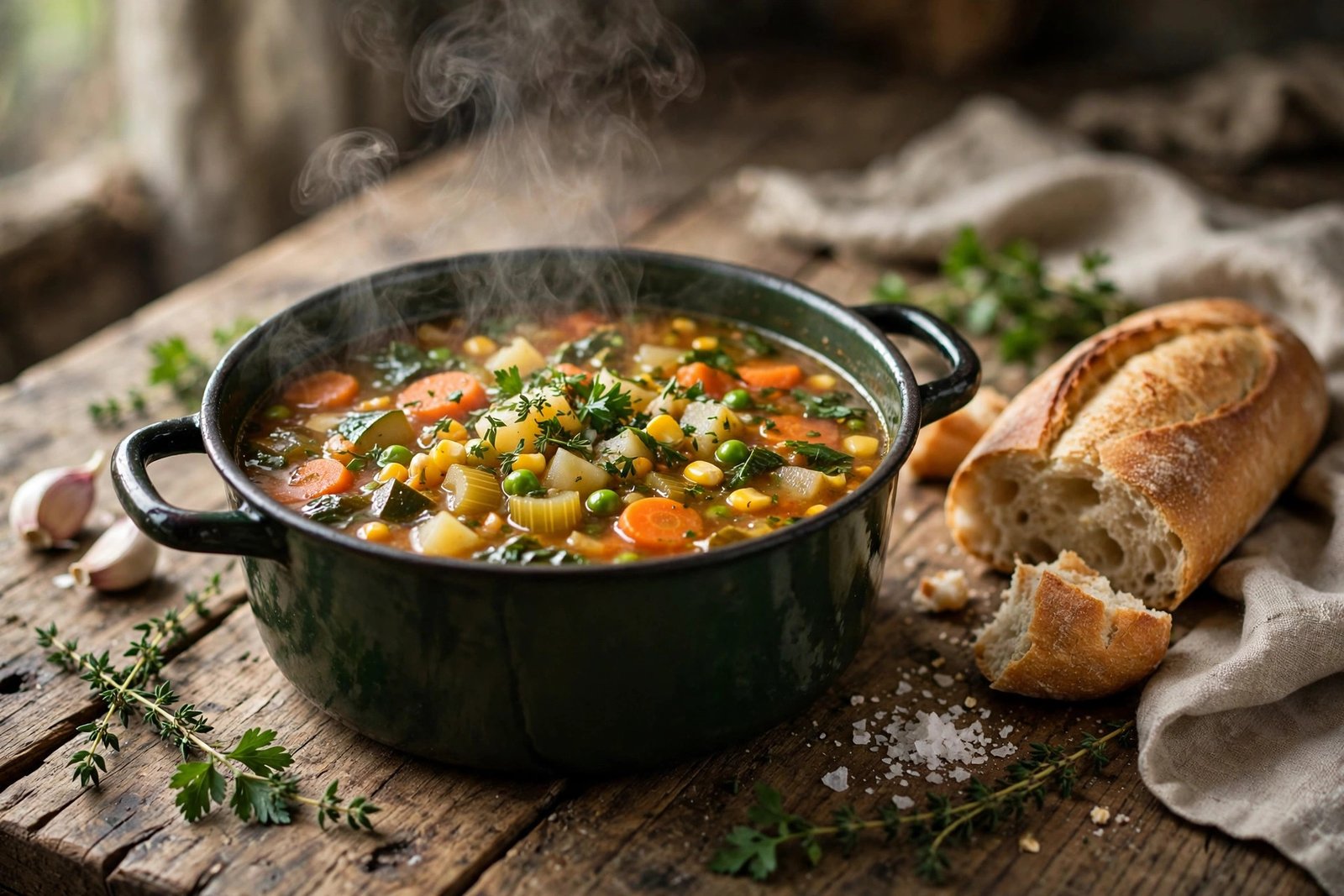
Warm a tablespoon of olive oil in a large pot over medium heat. Add one chopped onion, one sliced carrot, and one sliced celery stick, and cook for five minutes until soft. Add two sliced garlic cloves, a tin of chopped tomatoes, a tin of drained beans, and one litre of vegetable stock.
Bring the pot to a gentle simmer — small bubbles breaking the surface, not a rolling boil — and cook for twenty minutes, stirring now and then. Taste the soup and season with salt and pepper. A squeeze of lemon juice at the end brightens the whole pot, so add it last and taste again.
Serve in deep bowls with crusty bread for dipping. One pot serves four people, and leftovers keep in the fridge for three days. Soup teaches a beginner the most useful lesson in cooking: time and gentle heat do most of the work, and patience is a real ingredient.
Recipe 6: Egg Fried Rice from Leftovers
Egg fried rice is the dinner that turns leftovers into something people actually want to eat. It uses cold cooked rice, a few eggs, and whatever vegetables are in the fridge, and it is ready in about fifteen minutes.
Heat a tablespoon of oil in a large frying pan over high heat. Add two beaten eggs and scramble quickly, breaking them into small pieces, then remove them from the pan and set aside. In the same pan, add a little more oil and cook a chopped onion and a handful of frozen peas for three minutes.
Add three cups of cold cooked rice, breaking up any clumps with a spoon. Cold rice works better than fresh rice here, because the grains stay separate instead of turning sticky. Stir-fry for three minutes, then add two tablespoons of soy sauce and the scrambled egg, tossing everything together until heated through.
Serve in bowls, with spring onions or a drizzle of chilli sauce on top if you like. Egg fried rice is a complete meal on its own, but it also works as a side dish for grilled chicken or fish. The rule is simple: cold rice, hot pan, quick cooking, and dinner is done.
How Do You Know When Chicken Is Cooked?
This is the question every beginner asks, and it matters more than any other. Undercooked chicken is unsafe, so learning to check it properly is essential. The simplest check is to cut the thickest piece open: the meat should be white all the way through, with no pink remaining, and the juices should run clear.
A meat thermometer removes all doubt. Chicken is safe to eat when the thickest part reaches 75 degrees Celsius. If you cook chicken often, a thermometer is the single most useful tool you can buy, and it costs very little.
Rest the chicken for a few minutes after cooking before slicing. Resting lets the juices settle back into the meat instead of running out onto the board, which is why rested chicken tastes juicier. Five minutes is enough for most pieces.
What If a Beginner Dinner Goes Wrong?
Beginner dinners are forgiving, and most mistakes have a quick rescue. Pasta that overcooks turns soft, but tossing it with sauce and a little pasta water brings it back. A sauce that tastes flat usually needs salt, lemon, or a pinch of sugar — taste, adjust, and taste again before deciding it has failed.
Chicken that dries out can be sliced and served with pan juices, a spoonful of yogurt, or a simple sauce. Rice that clumps can be spread on a tray to cool, then fried the next day into egg fried rice, which is often better than the original meal. Almost nothing in a beginner dinner is truly ruined.
The general lesson is the same as for any cooking: do not panic, taste as you go, and keep the fixes simple. A squeeze of lemon, a spoonful of yogurt, or a handful of fresh herbs rescues more dinners than any complicated technique. Confidence matters more than precision, and each dinner you cook teaches you something for the next one.
How Do You Build Confidence as a New Cook?
Start with one recipe and cook it twice. The second time is always easier than the first, because you already know the steps, the timing, and the look of the finished dish. Confidence comes from repetition, not from collecting new recipes.
Cook the same few dinners for a month before adding new ones. Five or six reliable recipes, rotated through the week, will carry you through most evenings. Once those feel easy, add one new recipe at a time, and let your collection grow slowly.
Finally, cook for people you trust. A dinner shared with family or friends is more forgiving than a dinner cooked alone under pressure, and the encouragement you get will carry you through the next attempt. For more simple everyday cooking, our guide to easy meal recipes covers straightforward meals for the whole day, while fast and easy dinner recipes has more quick options for busy evenings. If the evening ends with something sweet, easy chocolate desserts is a good place to look next.
You May Also Like
Frequently Asked Questions
What is the easiest dinner for a complete beginner?
Tomato pasta is the easiest first dinner, because it needs one pot, a handful of ingredients, and about twenty minutes. Bean tacos are nearly as simple, and both are very hard to get wrong. Start with one of these if you have never cooked dinner before.
How long does a beginner dinner usually take?
Most beginner dinners take twenty to thirty minutes from start to finish. Pasta and stir-fries are ready in about fifteen minutes, while one-pan chicken takes thirty minutes but most of that time is hands-off in the oven.
Do I need special equipment to cook these dinners?
No. A large pot, a large frying pan, a baking tray, a wooden spoon, a sharp knife, and a chopping board are enough for every recipe in this guide. A meat thermometer is a useful extra if you cook chicken often, but it is not essential.
Can I swap ingredients in these recipes?
Yes, and you should. Swap vegetables for whatever is in the fridge, use chickpeas instead of chicken, or change the sauce to suit your taste. Beginner recipes are built to be flexible, and swapping ingredients is how you learn what you like.
Are beginner dinners healthy enough for every night?
Beginner dinners can fit well into a balanced diet, especially when they are built around vegetables, beans, and whole grains rather than added fat alone. Pair a main dish with a salad or extra vegetables, keep added salt modest, and vary the recipes across the week for balance.
Conclusion
Easy dinner recipes for beginners prove that cooking dinner does not need to be complicated to be good. Tomato pasta, one-pan chicken, a quick stir-fry, bean tacos, vegetable soup, or egg fried rice — each one uses simple techniques, everyday ingredients, and thirty minutes or less, and each one leaves you a little more confident than before.
Start with the recipe that uses what you already have in the kitchen tonight. Cook it, taste it, and cook it again next week. Once one beginner dinner feels easy, the rest follow quickly, and cooking stops being a worry and starts being a small pleasure at the end of the day. For general balanced eating guidance, the USDA MyPlate recommendations are a helpful reference.
Sources
- USDA MyPlate: https://www.myplate.gov/
- NHS – Eating a balanced diet: https://www.nhs.uk/live-well/eat-well/how-to-eat-a-balanced-diet/eating-a-balanced-diet/


