

Cooking your first meals at home can feel harder than it looks. Recipes use words you have never heard, timings seem to overlap, and one small mistake can turn dinner into something nobody wants to eat. Many new cooks give up after one or two bad experiences and decide that cooking is simply not for them.
It does not have to be that way. The secret is not talent or expensive equipment. It is choosing the right recipes — the forgiving kind that still taste good if your timing is a little off, your chopping is uneven, or your seasoning is cautious. Once a few of those meals go well, confidence grows quickly, and cooking starts to feel enjoyable instead of stressful.
This guide collects beginner easy recipes that actually work for new cooks. You will find simple breakfasts, one-pan dinners, a forgiving soup, easy pasta, and a no-stress dessert. Along the way, you will also learn the small habits — pantry basics, timing, and tasting — that make every recipe easier.

Start Where Success Is Likely
New cooks often begin with the hardest dishes: a complicated curry, a layered cake, or a roast that needs perfect timing. When those fail, confidence drops. A better approach is to start with recipes that forgive mistakes.
Forgiving recipes share a few qualities. They use short ingredient lists, so there is less to prepare. They cook in one pan or pot, so there is less washing up and less to watch. They taste good even when the timing is slightly off — a soup that simmers five extra minutes, or pasta that is a touch softer than ideal, is still a good meal. And they teach one skill at a time, rather than five at once.
Begin with dishes you already enjoy eating. If you love pasta, start there. If you like eggs, start with breakfast. Familiar food gives you a clear idea of what the finished dish should taste like, which makes it much easier to judge whether you are on track.
The Pantry That Makes Beginner Cooking Easy
A small, well-chosen pantry removes half the stress of cooking. You do not need a shelf full of rare ingredients. You need a handful of basics that appear in recipe after recipe.
Stock these first: cooking oil, salt, black pepper, dried pasta, rice, canned tomatoes, stock cubes, soy sauce, vinegar, dried herbs such as oregano and basil, garlic, and onions. Add tinned beans, eggs, and a block of cheese, and you can make dozens of meals without a special shopping trip.
Keep fresh ingredients simple too. A few vegetables you know how to handle — onions, peppers, carrots, courgettes, and spinach — will carry you through most beginner recipes. Buy smaller amounts more often while you are learning, so nothing sits in the fridge long enough to go bad.
One more pantry habit helps enormously: read the whole recipe before you start. Check that you have every ingredient, understand each step, and know how long the dish takes. Five minutes of reading saves most of the mistakes that ruin beginner meals.
Recipe 1: Scrambled Eggs on Toast
Scrambled eggs are the perfect first recipe. They take ten minutes, need only a few ingredients, and teach heat control — the most important beginner skill of all.
Crack two or three eggs into a bowl, add a pinch of salt, and whisk them lightly with a fork until the yolks and whites are mixed. Warm a knob of butter or a splash of oil in a pan over medium-low heat. When the butter melts and foams, pour in the eggs and stir gently with a wooden spoon or spatula.
The key is patience. Keep the heat low and keep stirring slowly. The eggs will begin to set in soft, creamy curds. Take the pan off the heat just before the eggs look fully done — they keep cooking in the hot pan, and eggs taken off slightly early stay soft instead of turning rubbery. Serve on buttered toast with a grind of black pepper.
This recipe forgives almost everything. If the heat is a little high, the eggs still taste fine. If you stir too fast, the curds are just smaller. Once you can scramble eggs calmly, you have already learned the gentle heat control that so many other recipes need.
Recipe 2: One-Pan Chicken and Vegetables
One-pan dinners are a beginner’s best friend. Everything cooks together, there is only one pan to wash, and the vegetables soak up flavour from the chicken as they roast.
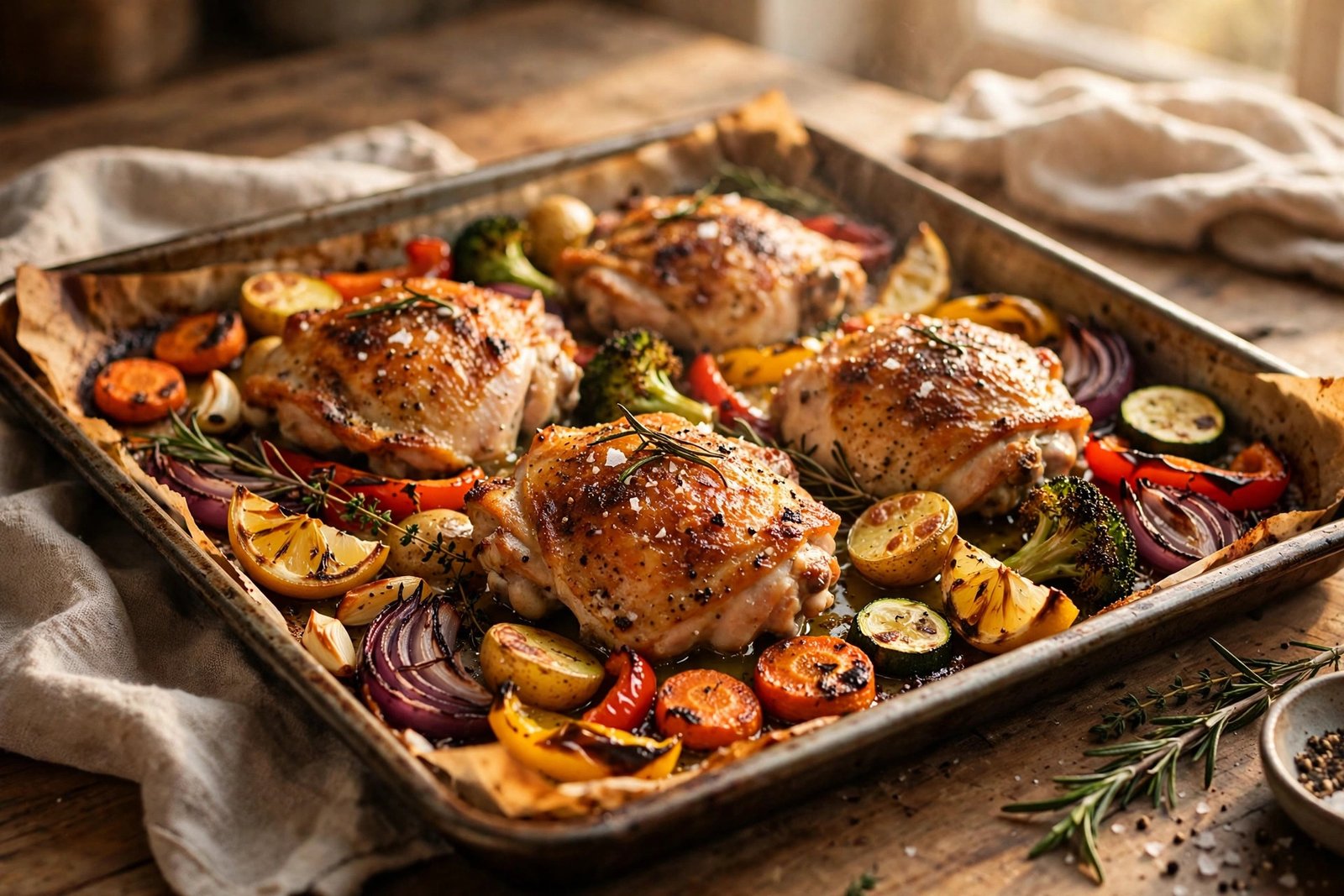
Cut chicken thighs into even pieces — thighs are more forgiving than breasts because they stay juicy even if slightly overcooked. Toss them in a roasting tray with chopped potatoes, carrots, and red onion, a good drizzle of oil, salt, pepper, and a teaspoon of dried oregano or paprika.
Roast at a high temperature, around 200°C, for 30 to 35 minutes, turning once halfway through. The dish is ready when the chicken is golden, the juices run clear, and the vegetables are tender at the edges. If the vegetables are browning too fast, cover the tray loosely with foil for the last ten minutes.
The reason this recipe works so well for beginners is that roasting is mostly hands-off. Once the tray is in the oven, you can relax, set the table, and let the heat do the work. There is no stirring, no sauce to watch, and no complicated timing to manage.
Recipe 3: Tomato and Bean Soup
Soup is the most forgiving dish in a beginner’s collection. It is hard to ruin, easy to adjust, and tastes even better the next day.
Soften a chopped onion and two cloves of garlic in olive oil over medium heat for about five minutes. Add a tin of chopped tomatoes, a tin of drained beans, a stock cube dissolved in 500 ml of hot water, and a pinch of salt. Bring it to a gentle simmer — small bubbles, not a rolling boil — and cook for 20 minutes.
Taste and adjust. If the soup tastes sharp, a pinch of sugar softens it. If it tastes flat, more salt or a squeeze of lemon brightens it. For a smoother soup, blend half of it and stir it back in, leaving the rest chunky. Serve with crusty bread.
Soup teaches tasting and adjusting, which is the skill that separates cooks who follow recipes from cooks who understand food. Because soup is so forgiving, it is a safe place to practise seasoning without fear of ruining dinner.
Recipe 4: Garlic Butter Pasta
Pasta is fast, cheap, and endlessly adaptable, which is why it appears in so many beginner collections. This garlic butter version needs no sauce-making skill at all.
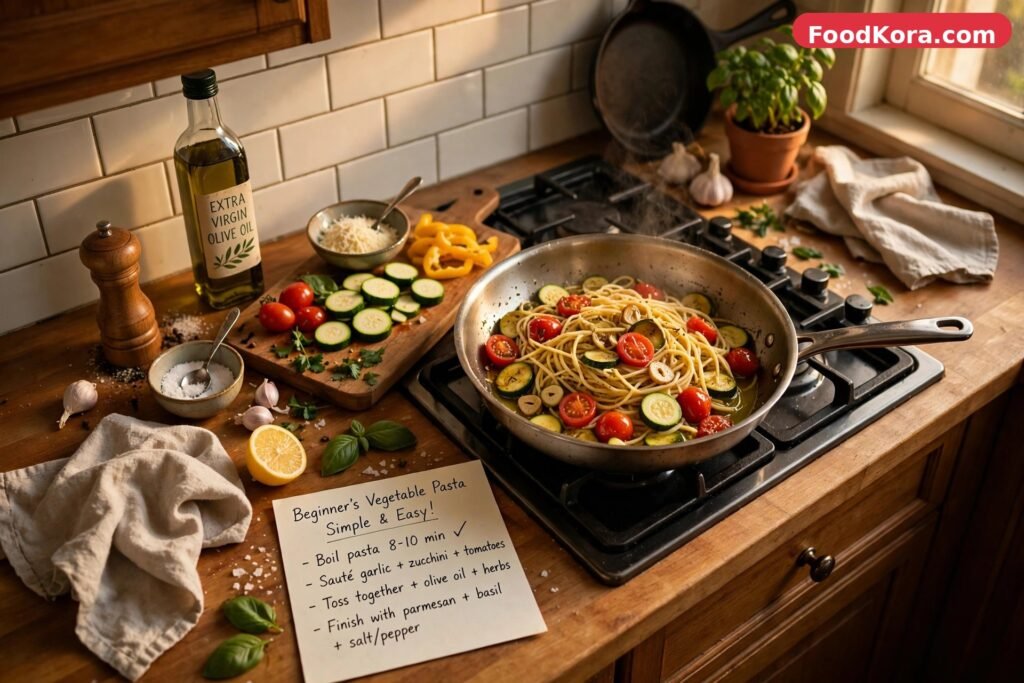
Boil a large pot of well-salted water — it should taste like the sea — and cook the pasta according to the packet, tasting a piece a minute before the suggested time so it stays firm rather than soft. While it cooks, melt butter in a pan with sliced garlic over low heat until the garlic turns pale gold, not brown. Brown garlic tastes bitter, so keep the heat gentle and watch it closely.
Drain the pasta, saving a cup of the cooking water. Toss the pasta into the garlic butter with a splash of the saved water, which helps the butter coat every strand. Add grated cheese, black pepper, and a handful of spinach or peas if you like, and toss until everything is glossy.
This recipe teaches two habits that matter in all pasta cooking: salting the water properly, and saving some cooking water to bring a sauce together. Both are small steps with a big effect on the final dish.
Recipe 5: Stir-Fry With Rice
A stir-fry looks impressive but is genuinely simple once you prepare everything before the pan gets hot. That preparation is the whole trick.
Chop chicken, tofu, or prawns into small pieces, and cut vegetables — peppers, broccoli, carrots, and spring onions — into similar sizes so they cook evenly. Mix a simple sauce from soy sauce, a teaspoon of honey, grated ginger, and a splash of vinegar. Cook rice separately according to the packet while you prepare everything else.
Heat oil in a large pan or wok until it shimmers, then cook the protein first and set it aside. Next, stir-fry the vegetables for three to four minutes until just tender, keeping them moving so nothing burns. Return the protein to the pan, pour over the sauce, and toss everything together for a minute until coated. Serve over rice.
The stir-fry teaches preparation and high-heat cooking in one dish. Because everything is chopped in advance, the actual cooking takes less than ten minutes, and the meal feels fast and fresh rather than stressful.
Recipe 6: Baked Potatoes With Simple Fillings
Baked potatoes are almost impossible to get wrong, and they make a satisfying meal with very little effort. They are also a good lesson in using the oven without fear.
Scrub large baking potatoes, prick them a few times with a fork, rub them with oil and salt, and bake at 200°C for 60 to 75 minutes until the skin is crisp and the inside feels soft when squeezed with an oven glove. The timing is flexible — ten minutes more or less makes little difference.
Split the potatoes open and fill them with whatever you have: baked beans and cheese, tuna mixed with a little mayonnaise, or sour cream and chives. A baked potato dinner feels complete with a simple side salad, and it teaches you that a good meal does not need a complicated recipe.
Timing Tips That Make Cooking Calmer
Most beginner stress comes from timing, not from cooking skill. A few habits make the whole process calmer.
First, prepare everything before you turn on the heat. Chop vegetables, measure sauces, and open tins in advance. Once cooking starts, you will be glad you did, because hot pans wait for nobody.
Second, start with the longest-cooking item. If rice takes twenty minutes and a stir-fry takes ten, the rice goes on first. Work backwards from the time you want to eat, and the meal comes together instead of arriving in stages.
Third, use timers. There is no prize for guessing, and a phone timer costs nothing. Set one for the pasta, one for the oven, and one for anything simmering, and you can relax instead of hovering.
Finally, accept that not everything will be perfect at once. If the vegetables are ready five minutes before the chicken, keep them warm under foil. Small gaps like that are normal in every kitchen, including professional ones.
How to Build Confidence Week by Week
Confidence does not arrive all at once. It builds through repetition, and a simple weekly plan helps.
In your first week, cook two or three of the recipes in this guide — scrambled eggs, garlic butter pasta, and one-pan chicken are a good starting trio. Cook each one more than once. The second time is always easier than the first, because you already know what to expect.
In the second week, change one thing in a recipe you know. Add mushrooms to the pasta, try a different vegetable in the stir-fry, or season the soup with cumin instead of oregano. Small changes teach you how flavours work, without the risk of starting from scratch.
By the third week, you will have a small set of meals you can cook without looking at a recipe. That set is the foundation of home cooking. From there, every new recipe is easier, because you recognise the techniques it uses.
If a dish goes wrong, treat it as information, not failure. Too salty? Use less salt next time. Vegetables soggy? Raise the heat or give them more room in the pan. Every mistake teaches something specific, and specific lessons stick.
For more straightforward meals to practise with, our collection of easy meal recipes covers simple dishes for the whole day, and fast and easy dinner recipes offers quick options for busy evenings. If you want to practise a gentle cooking method first, our guide to how to steam food shows how to do it without any special equipment.
Common Beginner Mistakes and Easy Fixes
Cooking on heat that is too high. Most beginner burning comes from a pan that is too hot. If food browns too fast or smokes, turn the heat down. Medium heat cooks most things perfectly well.
Crowding the pan. Food piled into a pan steams instead of browning. Cook in batches or use a bigger pan, and give each piece room.
Not tasting as you go. Taste sauces, soups, and dressings before serving. A pinch of salt, a squeeze of lemon, or a splash of vinegar at the right moment transforms a flat dish.
Skipping the reading step. Starting a recipe without reading it through leads to surprises — an ingredient you do not have, or a step that needs an hour you do not have. Five minutes of reading prevents most of them.
Expecting perfection immediately. Even experienced cooks have off days. A meal that is edible and shared is a success, and the next one will be better.
You May Also Like
Frequently Asked Questions
What is the easiest meal for a complete beginner to cook?
Scrambled eggs on toast or garlic butter pasta. Both take under fifteen minutes, need only a few ingredients, and forgive small timing mistakes, which makes them ideal first successes.
How many recipes should a beginner learn first?
Three or four reliable meals are enough to start. Cook them several times until they feel easy, then add new recipes one at a time. A small set of meals you trust beats a long list you never cook.
Do I need special equipment to start cooking?
No. A sharp knife, a cutting board, a large pan, a saucepan, a baking tray, and a wooden spoon cover almost every beginner recipe. Add tools gradually as you discover what you actually use.
Why does my food taste bland even when I follow the recipe?
Usually it needs seasoning adjusted to your taste. Salt gradually during cooking rather than only at the end, taste often, and finish with a touch of acid such as lemon juice or vinegar to brighten the flavour.
How do I avoid burning food?
Keep the heat at medium unless a recipe specifically asks for high heat, stay near the pan, and stir regularly. If food starts browning too fast, turn the heat down right away — lowering the heat is good technique, not a failure.
Is it safe to cook chicken as a beginner?
Yes, as long as you cook it thoroughly. Chicken thighs are a forgiving choice because they stay juicy, and the meat should be piping hot all the way through with clear juices and no pink flesh. A simple food thermometer removes all guesswork.
How can I make weeknight cooking less stressful?
Plan two or three meals for the week, prepare ingredients in advance, and choose one-pan or one-pot recipes on busy days. Cooking the same reliable dishes more than once also makes weeknights much calmer.
Conclusion
Beginner easy recipes are not about cooking the simplest food forever. They are about building the habits and confidence that make all cooking easier: reading a recipe first, preparing ingredients in advance, controlling heat, seasoning gradually, and tasting as you go.
Start with scrambled eggs, a one-pan roast, a forgiving soup, or a quick pasta. Cook them more than once, change one small thing at a time, and let your collection of reliable meals grow week by week. Before long, cooking will feel less like a test and more like a pleasure — which is exactly what home cooking should be.
For general guidance on balanced eating, the USDA MyPlate recommendations are a helpful reference, and BBC Good Food’s beginner recipes offer more simple, tested ideas for new cooks.
Sources
- USDA MyPlate: https://www.myplate.gov/
- BBC Good Food – Beginner recipes: https://www.bbcgoodfood.com/recipes/collection/beginner-recipes