
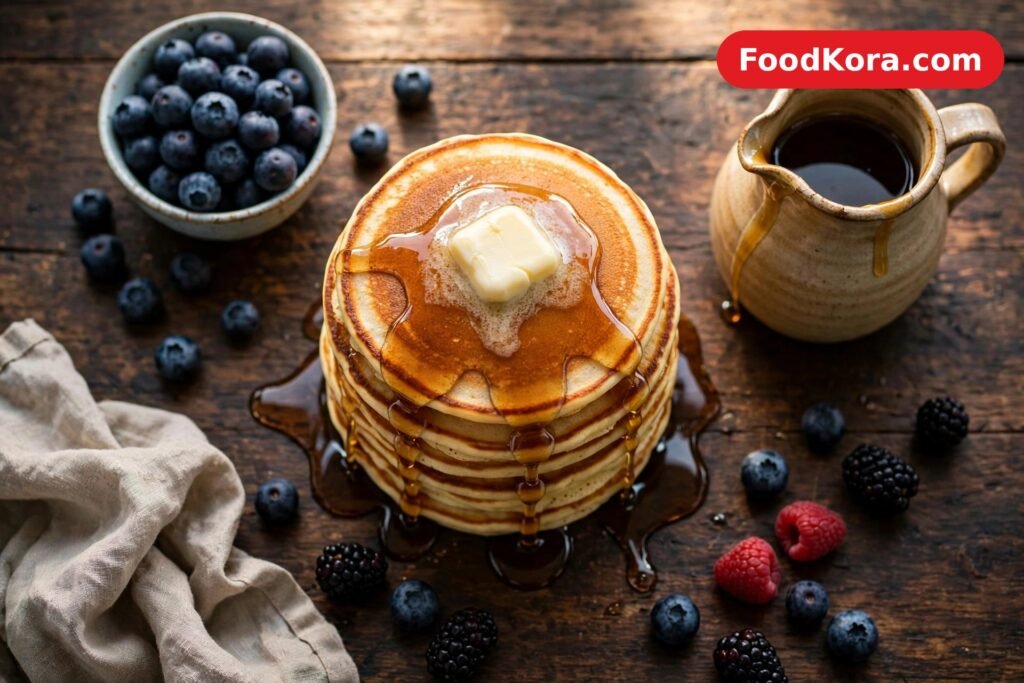
There is something about a slow morning that calls for pancakes. No alarm rushing you out the door, no lunchbox to pack, just a quiet kitchen, a hot pan, and the smell of butter and vanilla drifting through the house. Pancakes are the kind of breakfast that turns an ordinary weekend into a small celebration, and the best part is how little effort they actually take.
The recipes below are all built for real mornings. Each one uses everyday ingredients, one bowl for the batter, and a single pan on the stove. None of them need a mixer, a special gadget, or a trip to a specialty shop. If you can stir a bowl and flip a pancake, you can make every single one of these.
You will find six complete recipes here — a classic buttermilk pancake, a banana oat version, blueberry, chocolate chip, fluffy ricotta, and a golden cornmeal pancake — plus the batter tips that keep pancakes light instead of flat, and answers to the questions home cooks ask most often.
What Makes a Pancake Recipe Easy?
A pancake recipe is only easy if it works the first time you try it. That means a short ingredient list, measurements in cups and spoons rather than grams and scales, and steps you can follow half-awake. If a recipe asks you to whip egg whites to stiff peaks before your first coffee, it is not a slow-morning recipe.
Easy also means forgiving. A good pancake batter does not punish you for stirring it a little too much or letting it sit for ten minutes while the pan heats. The recipes below are written with that kind of slack built in, so a small mistake still ends in a good breakfast.
The last test is the shopping list. Flour, eggs, milk, sugar, baking powder, butter — that is the backbone of every pancake here. The extras are things you probably already have: a banana going soft on the counter, a handful of frozen blueberries, a few chocolate chips left over from baking. Nothing on these lists needs a special trip.
The Batter Basics Every Pancake Cook Should Know
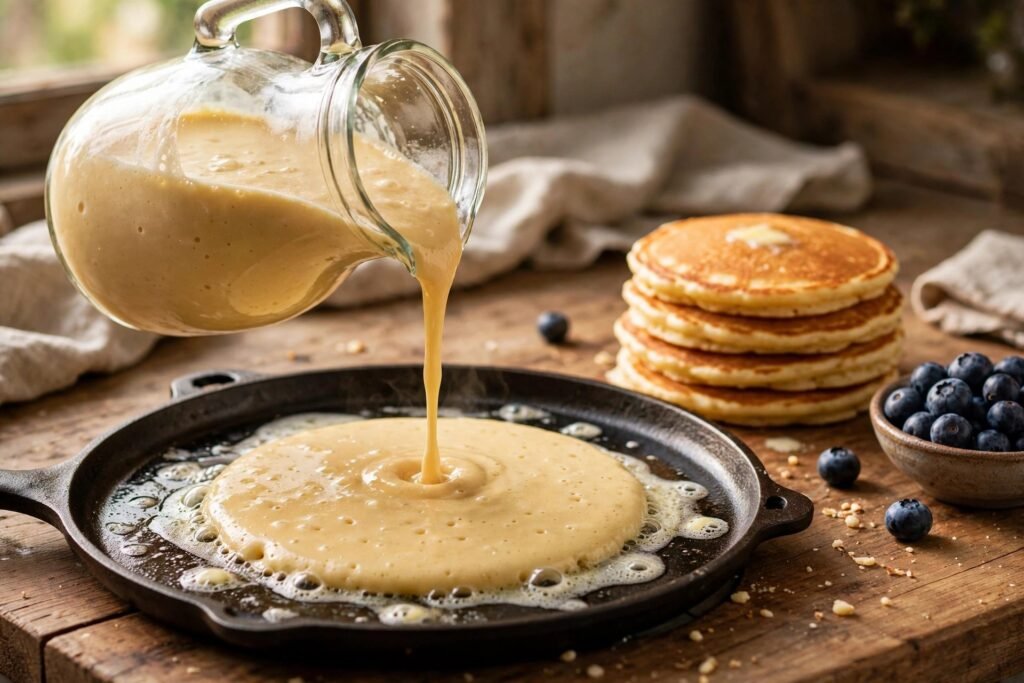
Lumps are your friend, up to a point. A few small lumps in pancake batter are completely normal, and trying to stir them all out is the fastest way to tough, flat pancakes. Stir just until the flour disappears, then stop. The batter should look a little rough, and it will smooth itself out on the pan.
Let the batter rest for five to ten minutes if you can. Resting gives the baking powder time to start working and the flour time to absorb the milk, which makes for a thicker batter and a fluffier pancake. Use that time to heat the pan and set the table.
Heat matters more than most people think. A pan that is too hot burns the outside before the inside cooks, and a pan that is too cool gives you pale, dense pancakes. Aim for medium heat. A drop of water should sizzle and vanish in a couple of seconds. Butter the pan lightly between batches, and wipe out any dark bits before they burn.
Know when to flip. Wait until you see bubbles breaking on the surface and the edges look set and dry, usually two to three minutes. Flip once, gently, and cook the second side for about a minute. A pancake flipped twice is a pancake that loses its lift.
One safety note worth knowing: pancake batter contains raw eggs and raw flour, so it should never be tasted raw. The U.S. Food and Drug Administration warns that raw flour can carry germs, and raw eggs can carry salmonella, so keep the tasting until the pancakes are cooked through.
1. Classic Buttermilk Pancakes
This is the pancake every other pancake is measured against — tall, golden, soft inside, with a gentle tang from the buttermilk that makes the flavour deeper than a plain milk batter. It is the one to learn first, because once you have this down, every other recipe here is a small variation on it.
Whisk 2 cups of all-purpose flour, 2 tablespoons of sugar, 2 teaspoons of baking powder, half a teaspoon of baking soda, and half a teaspoon of salt in a large bowl. In a second bowl or jug, whisk 2 cups of buttermilk, 2 eggs, and 2 tablespoons of melted butter. Pour the wet into the dry and stir just until combined, leaving a few lumps. Let the batter rest for five minutes.
Heat a large pan or griddle over medium heat and brush it lightly with butter. Ladle about a third of a cup of batter per pancake, leaving space between them. Cook for two to three minutes until bubbles appear and the edges look set, then flip and cook for one more minute until golden. Serve warm with butter and maple syrup.
If you do not have buttermilk, stir a tablespoon of lemon juice or white vinegar into 2 cups of regular milk and let it sit for five minutes. It curdles slightly, and it works almost exactly the same way in this recipe.
- 2 cups all-purpose flour
- 2 tablespoons sugar
- 2 teaspoons baking powder
- 1/2 teaspoon baking soda
- 1/2 teaspoon salt
- 2 cups buttermilk
- 2 eggs
- 2 tablespoons melted butter, plus more for the pan
- Maple syrup and butter, to serve
2. Banana Oat Pancakes
This is the recipe for the banana that has gone too soft for eating but is perfect for cooking. The banana sweetens the batter so you can skip most of the sugar, and the oats give the pancakes a soft, hearty texture that keeps you full until lunch.
Mash 2 ripe bananas in a large bowl until mostly smooth, with a few small pieces left for texture. Stir in 2 eggs, 1 cup of milk, 1 teaspoon of vanilla extract, and 1 tablespoon of melted butter. In a separate bowl, stir together 1 and a half cups of rolled oats, half a cup of flour, 1 teaspoon of baking powder, half a teaspoon of cinnamon, and a pinch of salt.
Pour the dry mix into the banana mixture and stir until just combined. The batter will be thicker than a regular pancake batter, and that is fine. Let it sit for five minutes so the oats soften. Cook on a buttered pan over medium heat, about a third of a cup per pancake, for two to three minutes a side until golden brown.
These freeze well, which makes them a smart make-ahead breakfast. Cool them completely, stack them with a small square of baking paper between each one, and freeze in a sealed bag. Reheat in the toaster or a warm oven, straight from frozen, and they taste almost as good as fresh.
- 2 ripe bananas, mashed
- 2 eggs
- 1 cup milk
- 1 teaspoon vanilla extract
- 1 tablespoon melted butter
- 1 1/2 cups rolled oats
- 1/2 cup all-purpose flour
- 1 teaspoon baking powder
- 1/2 teaspoon cinnamon
- A pinch of salt
3. Blueberry Pancakes
Blueberry pancakes are the diner classic, and they are easy to get right at home if you know one trick: fold the berries into the batter gently, right at the end, and do not stir after that. Stirring breaks the berries and turns the whole batter purple-grey. Folded in whole, they stay plump and burst only when you bite into them.
Whisk 2 cups of flour, 2 tablespoons of sugar, 2 teaspoons of baking powder, and half a teaspoon of salt in a bowl. In a jug, whisk 1 and three-quarter cups of milk, 2 eggs, 2 tablespoons of melted butter, and 1 teaspoon of vanilla. Pour the wet into the dry and stir just until combined.
Toss 1 and a half cups of blueberries — fresh or frozen — with a teaspoon of flour first. The light flour coating helps them stay suspended in the batter instead of sinking to the bottom of the bowl. Fold them in with two or three gentle strokes, then stop.
Cook on a buttered pan over medium heat, a third of a cup per pancake. If you use frozen berries, give them an extra thirty seconds a side, since they cool the batter slightly. Serve with a dusting of icing sugar, extra berries, and maple syrup.
- 2 cups all-purpose flour
- 2 tablespoons sugar
- 2 teaspoons baking powder
- 1/2 teaspoon salt
- 1 3/4 cups milk
- 2 eggs
- 2 tablespoons melted butter
- 1 teaspoon vanilla extract
- 1 1/2 cups blueberries, fresh or frozen
- 1 teaspoon flour, for coating the berries
4. Chocolate Chip Pancakes
Some mornings call for something a little sweeter, and chocolate chip pancakes are the answer. They taste like a treat, but the recipe is no harder than the classic version — the only change is a handful of chocolate chips folded into the batter at the end.
Whisk 2 cups of flour, 3 tablespoons of sugar, 2 teaspoons of baking powder, half a teaspoon of baking soda, and half a teaspoon of salt. In a jug, whisk 1 and three-quarter cups of milk, 2 eggs, 2 tablespoons of melted butter, and 1 teaspoon of vanilla extract. Combine the two, stirring just until the flour disappears.
Fold in three-quarters of a cup of chocolate chips — milk, dark, or mini chips all work. Mini chips spread more evenly through small pancakes, while regular chips give bigger pockets of melted chocolate. Cook on a buttered pan over medium-low heat, since the sugar in the chocolate browns faster than plain batter.
These are a favourite with children, and they are easy to dress up for a birthday breakfast. A spoonful of whipped cream, a few sliced strawberries, and a drizzle of chocolate sauce turn a plain stack into something worth a candle or two.
- 2 cups all-purpose flour
- 3 tablespoons sugar
- 2 teaspoons baking powder
- 1/2 teaspoon baking soda
- 1/2 teaspoon salt
- 1 3/4 cups milk
- 2 eggs
- 2 tablespoons melted butter
- 1 teaspoon vanilla extract
- 3/4 cup chocolate chips
5. Fluffy Ricotta Pancakes
If you like pancakes that feel more like a cloud than a cake, ricotta is the secret. The cheese melts into the batter and gives the pancakes a soft, almost custardy centre, while whipped egg whites lift them tall. They take a few minutes longer than the classic recipe, but the result is worth the extra bowl.
Separate 3 eggs. Whisk the yolks with 1 cup of ricotta, three-quarters of a cup of milk, 1 teaspoon of vanilla, and the zest of one lemon. Stir in 1 cup of flour, 1 teaspoon of baking powder, and a pinch of salt until just combined — the batter will be thick.
In a clean bowl, whisk the egg whites with a pinch of salt until soft peaks form. They should hold their shape but still look glossy, not dry. Fold the whites into the batter in two parts, using a large spoon and gentle strokes. Do not stir hard, or you will knock out the air that makes these pancakes rise.
Cook small pancakes — about a quarter of a cup each — on a buttered pan over medium-low heat for two to three minutes a side. They brown gently and puff up as they cook. Serve straight away with berries and a little honey or maple syrup, since they settle as they cool.
- 3 eggs, separated
- 1 cup ricotta cheese
- 3/4 cup milk
- 1 teaspoon vanilla extract
- Zest of 1 lemon
- 1 cup all-purpose flour
- 1 teaspoon baking powder
- A pinch of salt
- Berries and honey, to serve
6. Cornmeal Pancakes with Honey Butter
These are the pancakes for people who like a little texture and a golden, slightly crisp edge. Cornmeal gives them a warm yellow colour and a gentle crunch around the sides, and honey butter melting over the top is the finishing touch that makes the whole plate smell like a bakery.
Whisk 1 cup of fine cornmeal, 1 cup of flour, 2 tablespoons of sugar, 1 tablespoon of baking powder, and half a teaspoon of salt in a bowl. In a jug, whisk 1 and a half cups of milk, 2 eggs, and 3 tablespoons of melted butter. Pour the wet into the dry and stir just until combined, then let the batter rest for ten minutes so the cornmeal softens.
While the batter rests, make the honey butter: mash 4 tablespoons of soft butter with 2 tablespoons of honey and a pinch of salt until smooth. Cook the pancakes on a buttered pan over medium heat, a third of a cup at a time, for about three minutes a side until deep golden at the edges.
Serve with a generous spoonful of honey butter and a drizzle of extra honey. These pair well with crispy bacon or a fried egg on the side, and they are sturdy enough to hold up to a proper pour of maple syrup without going soggy.
- 1 cup fine cornmeal
- 1 cup all-purpose flour
- 2 tablespoons sugar
- 1 tablespoon baking powder
- 1/2 teaspoon salt
- 1 1/2 cups milk
- 2 eggs
- 3 tablespoons melted butter
- Honey butter: 4 tablespoons soft butter, 2 tablespoons honey, a pinch of salt
Toppings That Turn Good Pancakes into Great Ones
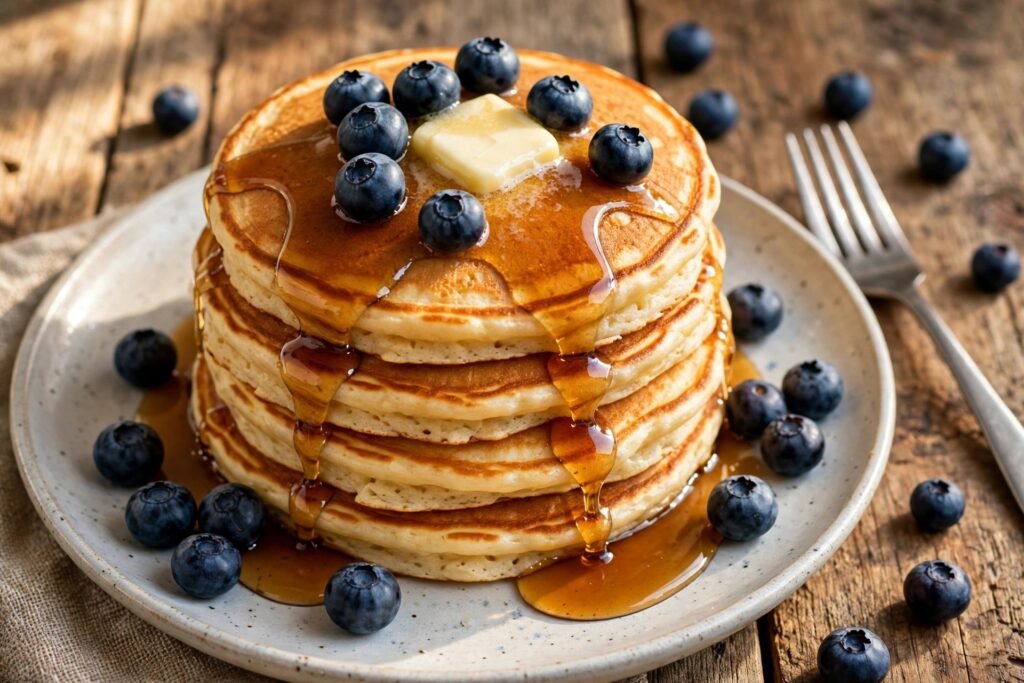
A plain pancake is a blank canvas, and the toppings are where a slow morning gets fun. Warm maple syrup is the classic for a reason — heat it gently in a small pan or in the microwave for twenty seconds, and it soaks into the pancake instead of sitting on top in a cold puddle.
Fresh fruit adds colour and a little tartness that balances the sweetness. Sliced strawberries, a handful of raspberries, or a sliced banana all work, and a spoonful of stewed apples with cinnamon tastes like autumn on a plate. In summer, a spoonful of macerated berries — berries tossed with a spoonful of sugar and left for ten minutes — makes its own syrup.
For something richer, whipped cream, a dollop of Greek yoghurt, or a spoonful of peanut butter all work. A savoury turn is possible too: the cornmeal pancakes above are lovely with a fried egg and a little hot sauce, which proves pancakes are not only a sweet breakfast.
Common Pancake Mistakes and How to Fix Them
Flat pancakes usually mean the batter was overmixed, or the baking powder is old. Baking powder loses strength after about six months open, so if your pancakes never rise, test it: drop half a teaspoon into hot water, and it should fizz hard. If it barely bubbles, buy a fresh tin.
Burnt outside and raw inside means the heat is too high. Turn the pan down to medium-low and give each side a little more time. The first pancake is almost always a test — it tells you whether the pan is right, so do not judge the batch by it.
Rubbery pancakes come from too much stirring or from keeping the batter waiting too long after mixing. Stir gently, cook within fifteen minutes of mixing, and fold in fruit or chocolate chips at the very end. Small habits, but they make the difference between a pancake you remember and one you forget.
If you want more ideas for simple morning cooking, our guide to the easiest breakfast recipes covers quick starts for busy days, while quick and easy breakfast walks through breakfasts that are ready in minutes. Both pair well with the slow-morning pancakes above, especially when you are building a breakfast routine that works on weekdays as well as weekends.
Storing and Freezing Leftover Pancakes
Leftover pancakes keep well, which makes a big weekend batch a gift to your future weekday self. Cool them completely on a wire rack — stacking them while warm traps steam and makes them soggy — then store them in a sealed container in the fridge for up to three days.
For freezing, lay them in a single layer on a baking tray and freeze for an hour, then stack them in a freezer bag with a small square of baking paper between each pancake. They keep for up to two months. Reheat straight from frozen in the toaster, or in a warm oven for a few minutes, and they come back almost as good as fresh.
Cooked pancakes should be cooled and refrigerated within two hours, and reheated until hot all the way through. The U.S. Department of Agriculture’s food safety guidance recommends refrigerating perishable cooked food promptly, and the same rule applies to a stack of pancakes left on the counter.
You May Also Like
Frequently Asked Questions
Can I make pancake batter the night before?
Yes, but with a small change. Mix the dry and wet ingredients separately the night before and keep them covered in the fridge, then combine them in the morning. A fully mixed batter left overnight loses some of its lift because the baking powder starts working as soon as it meets liquid. If you do mix it fully, add an extra half teaspoon of baking powder in the morning and stir gently.
Why are my pancakes flat instead of fluffy?
The most common cause is overmixing, which develops the gluten in the flour and knocks out the air. Stir only until the flour disappears and leave a few lumps. Old baking powder is the second cause — test it in hot water, and replace it if it does not fizz. A rested batter, five to ten minutes, also helps the pancakes rise taller.
Can I make pancakes without eggs?
Yes. For each egg, use a quarter of a cup of mashed banana, a quarter of a cup of unsweetened applesauce, or a tablespoon of ground flaxseed mixed with three tablespoons of water and left for five minutes to thicken. The texture will be slightly denser, but the pancakes will still cook up golden and tasty, and the banana and applesauce versions add a little sweetness of their own.
What is the best pan for cooking pancakes?
A heavy frying pan, a cast-iron skillet, or a flat griddle all work well, because they hold steady heat. A non-stick pan is the easiest for beginners since the pancakes release cleanly with very little butter. Whichever pan you use, keep the heat at medium and let the pan fully heat up before the first ladle of batter goes in.
How do I keep pancakes warm while I cook the whole batch?
Heat the oven to a low 90°C (200°F) and place a baking tray inside. As each batch finishes, move the pancakes to the tray in a single layer and keep them there until you are ready to serve. Avoid stacking them while they wait, since trapped steam makes the bottom ones soggy. A loose sheet of foil over the top keeps them warm without trapping too much moisture.
Conclusion
Slow mornings and pancakes belong together. With one bowl, one pan, and a handful of pantry ingredients, you can make a breakfast that feels special without turning the kitchen into a project. Start with the classic buttermilk recipe, learn how the batter should look and how the pan should sound, and then try the variations — banana oat on a weekday, blueberry when berries are cheap, chocolate chip when the day deserves a treat.
The real trick is not a secret ingredient. It is a rested batter, a pan at the right heat, and a single confident flip. Once those three things click, pancakes stop being a recipe you follow and start being a breakfast you just know how to make — and slow mornings will never be the same.
Sources
- U.S. Food and Drug Administration — Raw Flour and Raw Eggs Safety: https://www.fda.gov/food/buy-store-serve-safe-food/handling-flour-safely
- U.S. Department of Agriculture, FoodSafety.gov — Safe Food Handling and Storage: https://www.foodsafety.gov/food-safety-charts/cold-food-storage-chart
- King Arthur Baking — Pancake Tips and Techniques: https://www.kingarthurbaking.com/blog/2020/02/03/how-to-make-pancakes