

Cooking for the first time can feel like standing in front of a puzzle with half the pieces missing. Recipes assume you already know what “simmer gently” means, how hot a pan should be, or when a piece of chicken is actually done. Nobody hands you a manual for these things — you are expected to pick them up as you go.
The good news is that good cooking rests on a small set of fundamentals. Once you understand heat, seasoning, knife work, and timing, almost every recipe becomes easier to read and far more forgiving. You do not need expensive equipment or a long list of techniques. You need a handful of habits that work in every kitchen, for every meal.
This guide covers the basics that make the biggest difference for beginners: how to hold a knife, how to control heat, how to season with confidence, how to time a meal so everything finishes together, and the small kitchen habits that keep cooking safe and enjoyable.
Start With a Sharp Knife and a Steady Board
A sharp knife is safer than a dull one. That sounds backwards, but it is true: a dull blade slips off food and needs force, while a sharp blade cuts cleanly with gentle pressure. If your knife squashes a tomato instead of slicing it, it needs sharpening. A basic whetstone or a pull-through sharpener is enough for a home kitchen.
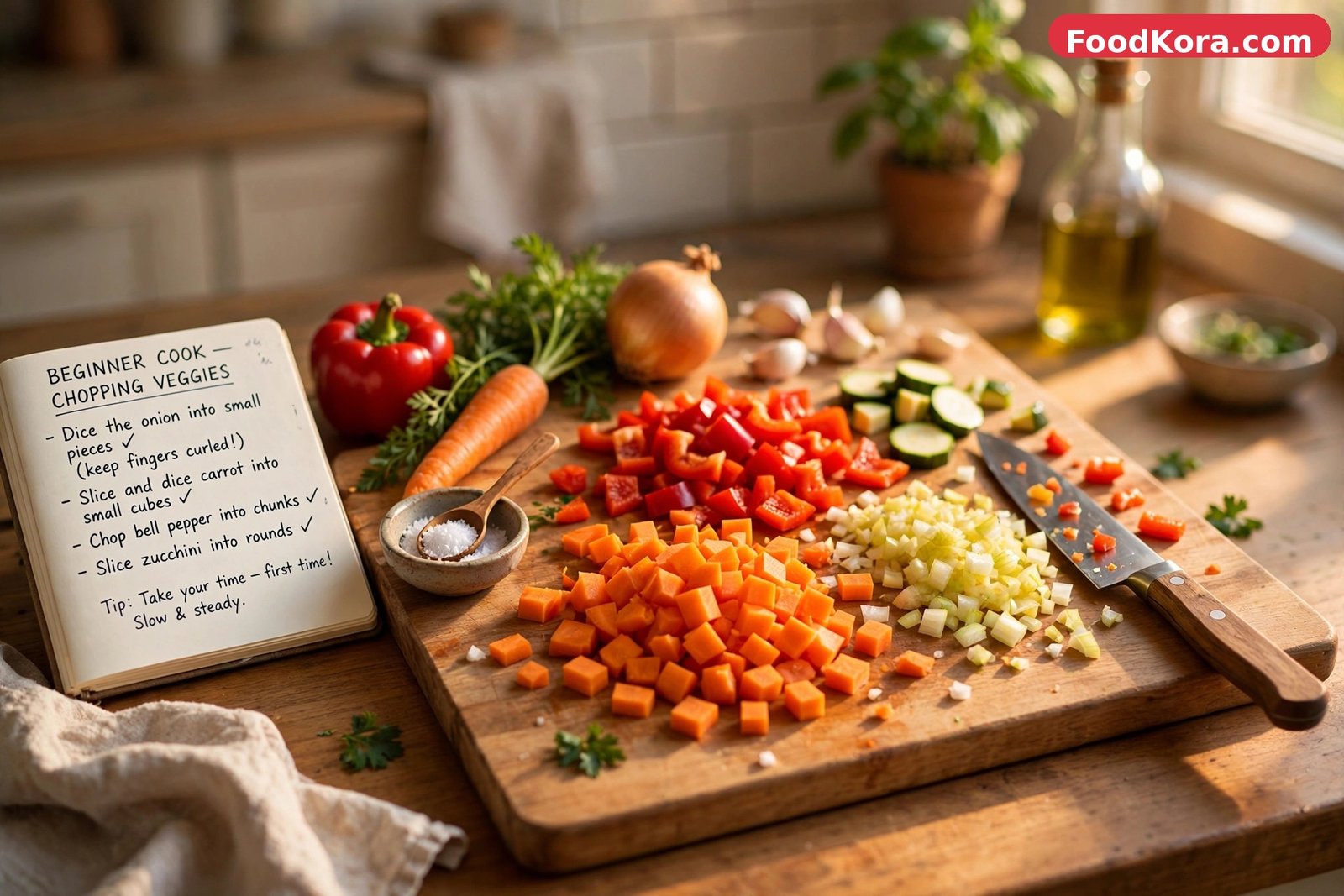
Hold the knife by its handle with a firm grip, and rest your index finger and thumb on the blade near the handle for control. Your other hand guides the food, with your fingertips tucked back like a claw so the flat of the blade slides against your knuckles rather than your fingertips. It feels strange at first, but after a few practice sessions it becomes automatic, and it is the single best habit for avoiding cuts.
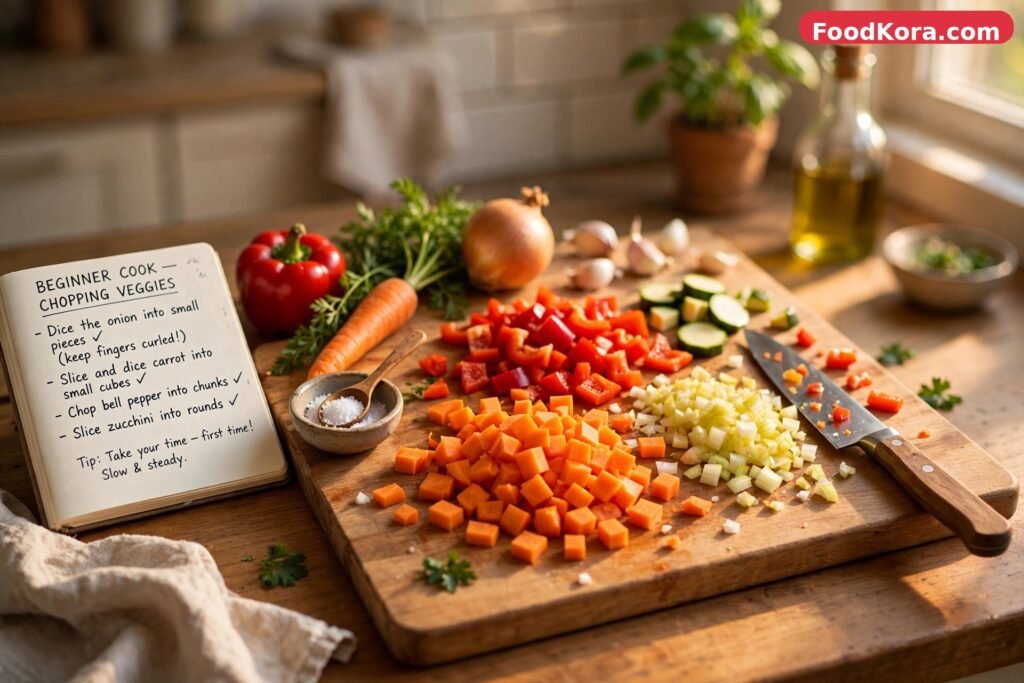
Keep your board steady. A damp tea towel under the cutting board stops it sliding across the counter, which is a small trick that prevents a lot of accidents. Cut food into even pieces, because even pieces cook evenly. A tray of mixed-size vegetables will always leave you with some pieces burnt and others raw, whatever the recipe says.
Learn three cuts and you can handle most recipes: slices for onions and peppers, dice for vegetables that go into soups and sauces, and a rough chop for herbs and garlic. Speed comes later. Accuracy and safety come first, and speed follows naturally with practice.
Understand Heat Before You Touch a Recipe
Heat is the real language of cooking, and most recipes speak it in shorthand. Low heat is for melting, warming, and slow simmering. Medium heat is for everyday cooking like sautéing onions or frying eggs. High heat is for searing meat and boiling water quickly. When a recipe says “medium-high,” it means a pan that is hot enough to sizzle when food touches it, but not so hot that oil starts smoking.
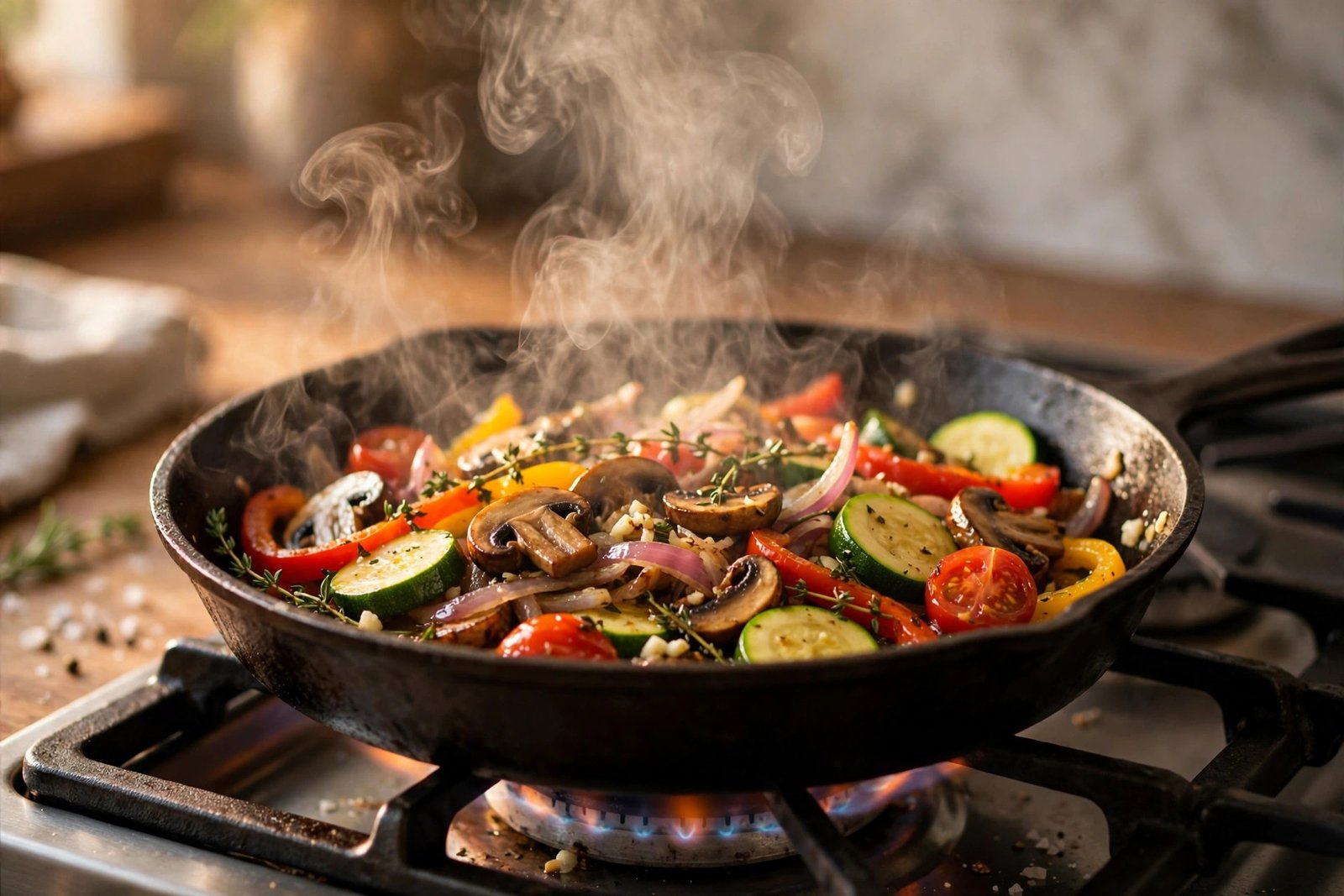
Preheat your pan before adding food. A cold pan makes food stick and steam instead of browning, which is why so many beginner stir-fries turn out grey and soggy. Let the pan warm up for a minute or two, add oil, wait until it shimmers, and then add the food. You should hear a confident sizzle. If you hear nothing, the pan was not ready.
Do not crowd the pan. Food piled into a pan drops the temperature and steams in its own juices instead of browning. Cook in batches if you need to, and give each piece room. This one habit transforms fried chicken, roasted vegetables, and seared meat more than any fancy technique.
Learn the difference between a boil and a simmer. A boil is vigorous, with large bubbles breaking the surface constantly. A simmer is gentle, with small bubbles rising now and then. Soups, sauces, and braises almost always want a simmer, not a rolling boil, which can toughen meat and cloud a stock. Turning the heat down is not a sign of timidity — it is good technique.
Season as You Go, Not Just at the End
The most common beginner mistake is under-seasoning, followed closely by seasoning only at the end. Salt works best when it has time to dissolve into food and draw out flavour, so season in layers: a pinch on raw vegetables before they go into the pan, a little more when you add liquid, and a final taste and adjustment before serving.
Taste constantly. A cook who never tastes is cooking blind. Taste the sauce before it goes on the pasta, taste the soup before it reaches the table, and adjust. A dish that tastes flat usually needs salt first, then acid — a squeeze of lemon or a splash of vinegar — and only then more herbs or spice. Acid brightens flavour in a way that salt alone cannot.
Know your salt. Table salt, kosher salt, and flaky sea salt all taste salty, but they measure differently because their grains are different sizes. A teaspoon of fine table salt is saltier than a teaspoon of coarse kosher salt. Pick one salt for cooking, learn how it behaves, and stick with it so your seasoning stays consistent.
Herbs and spices have their own timing. Dried herbs and ground spices need heat and time to release flavour, so add them early in cooking. Fresh herbs are delicate and lose their brightness with long cooking, so stir them in at the end. This simple rule keeps a curry fragrant and a pasta sauce fresh at the same time.
Learn the Five Methods Every Beginner Needs
You do not need to master dozens of techniques. Five methods cover most everyday cooking: boiling, steaming, sautéing, roasting, and baking. Boiling suits pasta, rice, and eggs. Steaming is gentle and keeps vegetables bright and fish tender. Sautéing — cooking quickly in a little oil over medium-high heat — is the workhorse for weeknight dinners.
Roasting is the easiest way to make vegetables taste extraordinary. Toss them in oil and salt, spread them in a single layer on a tray, and roast at a high temperature until the edges caramelise. The same method works for chicken and potatoes. Roasting rewards patience: leave the food alone instead of stirring constantly, and let the heat do its work.
Baking is more precise than other methods because it relies on measured ingredients and chemical reactions. Weigh or measure carefully, follow the recipe the first time, and only improvise once you understand what each ingredient does. Bread, cakes, and muffins are forgiving in flavour but strict about ratios, and that is part of the fun.
If you want a gentle method to practise first, steaming is a wonderful starting point. Our guide to how to steam food shows how to do it without any special equipment, and the same patience it teaches — keeping the lid on, trusting the timer — applies to every other method too.
Timing: How to Get Everything Ready at Once
A meal where the vegetables are cold before the chicken is done is a timing problem, not a cooking problem. The fix is to work backwards. Decide when you want to eat, then list each dish with its cooking time, and start the longest one first. Rice that takes twenty minutes starts before vegetables that take eight.
Use the resting time well. Meat and roasted vegetables improve with a few minutes of rest after cooking, which gives you a window to finish sauces, dress salads, or set the table. Resting also lets juices redistribute in meat, so it stays moist when sliced.
Prep before you cook. The French call it mise en place — everything in its place. Chop all your vegetables, measure your spices, and open your cans before the pan gets hot. Once cooking starts, things move fast, and stopping to chop an onion while garlic burns in the pan is how dinners go wrong.
Write timings down if you need to. There is no prize for memorising a recipe, and a small note on the counter — “potatoes in at 6:00, chicken in at 6:15, salad at 6:35” — is what experienced cooks actually do in busy kitchens.
Food Safety Basics You Should Never Skip
Food safety is not glamorous, but it is non-negotiable. Wash your hands before cooking and after handling raw meat. Use separate boards or wash thoroughly between raw meat and vegetables. Raw chicken should never touch food that will be eaten raw, like salad leaves.
Cook meat to the right temperature. Chicken should be piping hot all the way through with no pink meat and clear juices. Minced meat should be cooked through completely. If you cook meat often, a simple food thermometer removes all guesswork and is one of the best small purchases a beginner can make.
Store leftovers properly. Cool food quickly, refrigerate within two hours, and eat leftovers within a couple of days. Reheat until steaming hot all the way through, and only reheat once. When in doubt, throw it out — no leftover is worth a stomach upset.
Keep your kitchen clean as you go. A tidy workspace is a safer workspace, and washing a board or wiping a spill between steps takes seconds. The habit of cleaning while food cooks is what separates a calm kitchen from a chaotic one.
Build Flavour With Simple Combinations
Great flavour rarely comes from a long list of exotic ingredients. It comes from a few reliable combinations used well. Garlic, onion, and olive oil form the base of countless dishes. Lemon and herbs lift fish and vegetables. Soy, ginger, and garlic turn a simple stir-fry into something memorable. Chilli and lime wake up a plain bowl of noodles.
Learn one sauce and one dressing by heart. A simple tomato sauce — onion, garlic, canned tomatoes, salt, and a pinch of sugar, simmered for twenty minutes — will serve you for pasta, pizza, and baked dishes. A simple dressing — three parts oil to one part vinegar, plus mustard, salt, and pepper — makes any salad taste deliberate rather than accidental.
Balance is the goal. A dish with only rich flavours feels heavy, and a dish with only sharp flavours feels thin. Pair rich with fresh, salty with sweet, and soft with crunchy, and your meals will taste complete even when they are simple. A squeeze of lemon over roast chicken or a handful of toasted nuts over steamed vegetables are small touches with outsized effects.
Stock a Small, Useful Pantry
You do not need a pantry full of gadgets and rare ingredients. A useful beginner pantry fits on one shelf: good oil, vinegar, salt, pepper, canned tomatoes, dried pasta and rice, a few dried herbs and spices, soy sauce, stock cubes, and tinned beans. With those, plus fresh vegetables and a protein, you can cook dozens of meals.
Buy a few tools that earn their keep: one good chef’s knife, a large cutting board, a heavy pan, a medium saucepan, a baking tray, a wooden spoon, and tongs. Tongs are the most underrated tool in the kitchen — they turn, lift, and serve without piercing food and losing juices.
Replace things as you learn. After a few months you will know which tools you reach for daily and which gather dust. Buy quality in the things you use every day, and keep the rest simple. A kitchen grows with its cook, and there is no rush to own everything at once.
For ideas on putting these fundamentals into practice, our collection of easy meal recipes covers straightforward dishes for the whole day, and fast and easy dinner recipes offers quick options for busy evenings.
Practise With Forgiving Recipes First
Some recipes punish small mistakes and some forgive them. Soups, stews, stir-fries, and roasted vegetables are forgiving: a minute too long or a slightly uneven chop rarely ruins them. Delicate sauces, soufflés, and precise baking are less forgiving, and they are better saved for later.
Cook the same dish several times. Repetition is how fundamentals become instinct. The second time you make a stir-fry, you will know when the pan is hot enough. The third time, you will season without thinking. By the fifth time, the recipe is yours, and you can start changing it with confidence.
Cook for people you like. Feedback from real eaters teaches faster than any book, and a shared meal is the best reward for practice. Even a simple meal, cooked with care, impresses far more than a complicated one cooked with stress.
Common Beginner Mistakes and How to Fix Them
Following a recipe blindly. Recipes are guides, not laws. If your onions are browning too fast, turn the heat down, even if the recipe says medium. Trust your eyes and nose as much as the clock.
Skipping the tasting step. Taste at every stage and adjust. A dish seasoned only at the end will taste flat in the middle, no matter how good the final pinch is.
Using the wrong pan size. A small pan for a large amount of food crowds everything and steams instead of browning. A huge pan for a small amount dries food out. Match the pan to the job.
Forgetting to rest meat. Cutting into meat straight from the heat lets the juices run out onto the board. A few minutes of rest keeps them where they belong — in the meat.
Being afraid of salt. Most beginner dishes are under-salted, not over-salted. Season gradually, taste often, and you will find the balance that suits you.

You May Also Like
Frequently Asked Questions
What is the first skill a beginner cook should learn?
Knife safety and heat control, in that order. A steady board, a sharp knife, and a tucked-fingertip grip keep you safe, while learning to preheat a pan and recognise a simmer makes almost every recipe work better.
How do I know when a pan is hot enough?
Let the pan warm for a minute or two, add oil, and wait until the oil shimmers and flows easily. A drop of water flicked into the pan should sizzle and evaporate quickly. If food goes in silently, the pan was not ready.
Why does my food always taste bland?
Usually it needs more salt, added gradually during cooking rather than only at the end, plus a touch of acid such as lemon juice or vinegar. Taste as you cook and adjust in small steps until the flavour brightens.
How can I stop vegetables going soggy?
Do not crowd the pan, keep the heat high enough to brown rather than steam, and cook vegetables until just tender rather than soft. Roasting in a single layer and steaming briefly both protect texture far better than boiling for a long time.
Do I need expensive equipment to cook well?
No. A sharp knife, a steady board, a heavy pan, a saucepan, and a baking tray cover most everyday cooking. Skill and habit matter far more than gadgets, and you can add tools gradually as you discover what you use most.
How do I time a meal so everything is ready together?
Work backwards from serving time, start the longest-cooking dish first, and use resting time for finishing touches. Preparing all ingredients before the pan gets hot removes the most common cause of timing trouble.
Conclusion
Basic cooking fundamentals are not a long list of rules to memorise — they are a few habits that make every meal easier. A sharp knife and a steady board keep you safe. Controlled heat browns instead of steaming. Seasoning as you go and tasting often builds flavour. Timing backwards from the table brings a meal together. And food safety habits protect everyone you cook for.
Start with forgiving recipes, cook them more than once, and let confidence grow through practice. The fundamentals in this guide will still be useful years from now, when the recipes have changed and your kitchen has grown. That is what makes them fundamentals: they do not go out of date.
For general guidance on balanced eating, the USDA MyPlate recommendations are a helpful reference, and BBC Good Food’s cooking guides offer clear, beginner-friendly technique advice.
Sources
- USDA MyPlate: https://www.myplate.gov/
- BBC Good Food – Cooking guides: https://www.bbcgoodfood.com/


Pingback: Easy Stove Top Recipes for Busy Weeknights
Pingback: Cooking Ideas for Beginners: Simple Meals to Start With