
Pasta is one of the most forgiving foods in the kitchen. Even plain pasta tossed with butter and salt is perfectly good. But the difference between a plain bowl and a bowl you actually look forward to usually comes down to a handful of additions — the right sauce, one good protein, a vegetable or two, and a finish that pulls everything together.
The good news is that none of this needs to be complicated. You do not need a long shopping list or a special technique. Most of the best pasta upgrades are things you probably already have: a can of tomatoes, a wedge of cheese, a lemon, a few herbs, or a tin of beans sitting in the pantry.
This guide walks through what to add to pasta, course by course, so you can build a better bowl from whatever is in your kitchen tonight. Whether you are cooking a quick weeknight dinner or putting together something a little more special, the same building blocks apply.

Start With the Sauce: The Base of the Bowl
The sauce is the first decision, and it shapes everything else. A good sauce does not have to simmer for hours. Some of the best pasta sauces come together in the time it takes the pasta to cook.
Tomato sauce is the classic starting point. A simple version — garlic softened in olive oil, a tin of crushed tomatoes, a pinch of salt, and a few minutes of simmering — is enough for almost any pasta shape. Fresh basil stirred in at the end, rather than cooked for a long time, keeps its flavour bright.
Olive oil and garlic is the other great base. It is lighter than tomato sauce and lets the other ingredients shine. Warm sliced garlic gently in olive oil until it turns pale gold, add a pinch of chilli flakes if you like heat, and toss with the pasta and a splash of the starchy pasta water. The water is important: it helps the oil cling to the pasta instead of pooling at the bottom of the bowl.
Cream-based sauces have their place too, though they are best used with restraint. A small amount of cream, warmed with garlic and a little cheese, makes a rich sauce for short pasta shapes like penne or rigatoni. A lighter alternative is to use ricotta, thinned with pasta water, which gives a creamy texture without feeling heavy.
Pesto is the shortcut sauce. A spoonful of basil pesto tossed through hot pasta, loosened with a little pasta water, makes dinner in minutes. It works especially well with long shapes like spaghetti or linguine, and with short shapes that catch the sauce in their ridges.
Add a Protein: What Makes Pasta a Meal
Pasta on its own can feel like a side dish. Add a protein and it becomes a proper meal. The protein does not have to be elaborate — it just needs to be seasoned well and cooked properly.
Chicken is the most flexible choice. Thinly sliced chicken breast, seasoned with salt and pepper and cooked quickly in a hot pan, works with tomato, cream, and oil-based sauces alike. Leftover roast chicken is even easier: shred it and stir it through hot pasta with the sauce, letting it warm through for a minute or two.
Sausage is a flavour shortcut. Because sausage is already seasoned, it brings salt, spice, and richness to the whole dish. Remove the meat from its casing, brown it in a pan, breaking it into small pieces, and add it to a tomato sauce. It pairs particularly well with short shapes like orecchiette or penne.
Prawns cook in minutes and suit lighter sauces. Toss them in a hot pan with garlic and olive oil until they turn pink, then add them to pasta with lemon and parsley. They are best added at the very end, because overcooked prawns turn rubbery quickly.
For a meat-free option, beans and lentils are excellent. Chickpeas, white beans, and cooked lentils add protein and a satisfying, hearty texture. White beans with olive oil, garlic, and rosemary make a simple, rustic pasta that needs nothing else. Chickpeas tossed with pasta, tomatoes, and spinach make a complete, filling bowl.
Eggs are the secret ingredient in several classic pasta dishes. A carbonara-style sauce — eggs beaten with cheese and black pepper, tossed through hot pasta off the heat — is creamy without any cream at all. The trick is to take the pan off the heat first, so the eggs coat the pasta instead of scrambling.
Vegetables: Colour, Texture, and Freshness
Vegetables do more than add nutrition to pasta. They add colour, texture, and contrast, and they stop a rich sauce from feeling heavy. The best approach is to choose one or two vegetables rather than throwing everything in at once.
Spinach and other leafy greens are the easiest addition. A few handfuls stirred into hot pasta wilt in under a minute, adding colour and a mild, fresh flavour. Spinach works with almost every sauce, from tomato to cream to simple olive oil.
Mushrooms bring a deep, savoury flavour that suits rich sauces. Slice them, cook them in a hot pan until they brown properly — do not crowd the pan, or they steam instead of browning — and add them to pasta with cream, butter, or tomato sauce.
Roasted vegetables are worth the extra time when you have it. Cherry tomatoes, courgettes, peppers, and aubergine, roasted until soft and slightly caramelised, make a pasta sauce almost on their own. Toss them with pasta, olive oil, and cheese, and dinner is done.
Broccoli and peas are quick, practical choices. Broccoli florets cooked in the pasta water for the last few minutes of cooking save a pan and a step. Frozen peas, stirred into hot pasta, thaw in seconds and add sweetness and colour. Both work well with cheese, cream, and oil-based sauces.
Sun-dried tomatoes, olives, and capers are pantry vegetables that punch above their weight. A small amount adds a salty, intense flavour that lifts a simple sauce. They are especially good in olive oil and garlic sauces, where their boldness stands out.
Cheese: The Finish That Ties It Together
Cheese is often the difference between a good bowl of pasta and a great one. But not all cheese plays the same role, and using the right one matters more than using a lot of it.
Parmesan, or a similar hard cheese, is the everyday workhorse. Grated over the top just before serving, it adds salt and a savoury depth. It is best grated fresh, because pre-grated cheese does not melt as well and can taste dry. A small amount goes a long way.
Pecorino Romano is saltier and sharper than Parmesan, and it is the traditional choice for carbonara and for simple oil-and-cheese pastas. If you use Pecorino, go easy on the salt elsewhere in the dish, because the cheese brings plenty of its own.
Soft cheeses change the texture of a dish. Ricotta stirred through hot pasta makes it creamy and mild, and it pairs beautifully with spinach, lemon, and peas. Mozzarella, torn into pieces and tossed through hot pasta, melts into soft, stretchy pockets — best in baked pasta dishes or in tomato-based bowls.
Feta and goat cheese are useful when you want a tangy contrast. Crumbled over pasta with roasted vegetables, olives, and herbs, they add a sharp, fresh note that cuts through richness. They are best added at the end, off the heat, so they soften slightly without disappearing.
One rule applies to all cheese: add it at the right moment. Hard cheese goes on at the table. Soft cheese goes in off the heat or right at the end. Cheese added too early, over high heat, can turn grainy or oily instead of melting smoothly.
Herbs and Aromatics: The Small Things That Matter
Herbs are the cheapest way to improve a bowl of pasta. A handful of fresh herbs at the end of cooking can change the whole character of a dish.
Basil is the classic pasta herb. Torn, not chopped, and added at the very end, it keeps its sweet, peppery flavour. It is the natural partner for tomato sauces and pesto, and it works well with mozzarella and fresh vegetables.
Parsley is underrated. Flat-leaf parsley, chopped and scattered over the finished dish, adds freshness and colour to almost any pasta, from seafood to sausage to simple tomato. It is milder than basil, which makes it more versatile.
Oregano and thyme suit heartier dishes. Dried oregano, added to a tomato sauce while it simmers, gives a warm, Mediterranean flavour. Fresh thyme leaves, stripped from the stem, work well with mushrooms, roasted vegetables, and cream sauces.
Garlic is not a herb, but it deserves a mention here because it underpins so many pasta dishes. The key is to cook it gently. Garlic that turns dark brown tastes bitter, so cook it over medium heat until it is just golden, then move on. If you burn it, it is better to start again than to carry the bitter flavour through the whole dish.
Chilli flakes are another small addition with a big effect. A pinch adds warmth without overpowering the dish. They are especially good in olive oil sauces, tomato sauces, and seafood pasta.
Pantry Upgrades: What to Add When the Fridge Is Bare
Some of the best pasta upgrades come from the pantry, not the fridge. These are the ingredients that turn a plain bowl into something interesting on a night when you have not been shopping.
A squeeze of lemon at the end brightens almost any pasta. Lemon zest, grated over the finished dish, adds fragrance without sourness. Lemon works particularly well with seafood, spinach, ricotta, and olive oil sauces.
Anchovies, used in small amounts, dissolve into a sauce and add a deep savoury flavour without tasting fishy. A couple of fillets melted into olive oil at the start of a tomato or garlic sauce is a classic technique that many cooks swear by.
Putting It Together: A Simple Formula
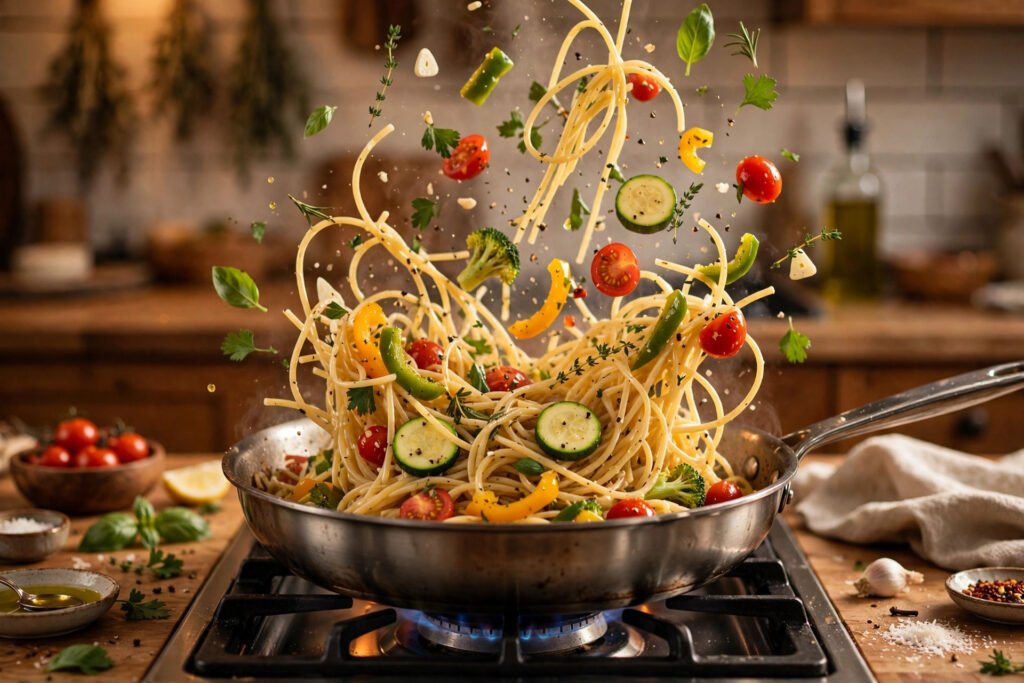
With so many options, it helps to have a simple formula. A good bowl of pasta usually has five parts: pasta, sauce, protein, vegetable, and finish. You do not need all five every time, but checking them off makes it easy to build a balanced dish.
Start with the pasta shape. Long shapes like spaghetti suit smooth sauces; short shapes like penne suit chunky sauces; ridged shapes hold on to thick sauces. Cook the pasta in well-salted water until just before it is done — it will finish cooking in the sauce.
Next, choose the sauce, then the protein, then one or two vegetables. Keep the total number of ingredients manageable. Three or four good additions, cooked well, beat ten additions thrown together without thought.
Finally, finish the dish. This is where cheese, herbs, lemon, olive oil, or toasted breadcrumbs come in. The finish is added at the very end, off the heat, and it is what makes the bowl feel complete rather than just assembled.
And always save a cup of pasta water before draining. That starchy water is the cook’s best friend: a splash loosens a thick sauce, helps it cling to the pasta, and turns a dry bowl into a glossy, well-coated one.
Common Mistakes to Avoid
Adding everything at once. A bowl with too many strong flavours competing ends up muddled. Choose a few additions that work together and let them shine.
Forgetting to season the pasta water. The water should taste salty, like the sea. This is the only chance to season the pasta itself, and unsalted pasta water leads to a bland dish no matter how good the sauce is.
Draining all the pasta water. Without that starchy water, sauces do not cling properly. Save a cup before draining, every time.
Overcooking the pasta. Pasta continues to cook in the hot sauce, so take it out of the water a minute before it is done. Mushy pasta cannot be rescued by any addition.
Adding cheese too early. Cheese added over high heat can turn grainy. Add hard cheese at the table and soft cheese off the heat.
Skipping the finish. A bowl without a final touch — herbs, cheese, lemon, or olive oil — often tastes flat, even when the sauce and protein are good. The finish takes seconds and makes a real difference.
What to Add to Pasta: Quick Combinations
If you want a starting point, here are a few combinations that always work:
- Tomato sauce, sausage, spinach, and Parmesan.
- Olive oil and garlic, prawns, lemon, and parsley.
- Cream sauce, mushrooms, chicken, and thyme.
- Pesto, green beans, potatoes, and pine nuts.
- White beans, olive oil, rosemary, and toasted breadcrumbs.
- Ricotta, peas, lemon zest, and basil.
Each of these uses the same building blocks — sauce, protein, vegetable, finish — and each one comes together in about half an hour. Once you are comfortable with the pattern, you can swap ingredients freely and build your own combinations from whatever is in the kitchen.
For more simple everyday cooking, our guide to easy meal recipes covers straightforward meals for the whole day, while fast and easy dinner recipes has more quick options for busy evenings. If you want more balanced plates, healthy cuisine recipes shows how different world cuisines build fresh, flavourful meals.
You May Also Like
Frequently Asked Questions
What is the simplest thing to add to pasta?
A good sauce and a finishing touch are the simplest upgrades. Olive oil and garlic with a squeeze of lemon, or a simple tomato sauce with Parmesan and basil, can turn plain pasta into a satisfying meal with very little effort.
What protein goes best with pasta?
Chicken, sausage, prawns, beans, and eggs all work well, and the best choice depends on the sauce. Chicken suits almost every sauce, sausage suits tomato sauces, prawns suit light oil and lemon sauces, and beans suit rustic, vegetable-based dishes.
What vegetables should I add to pasta?
Spinach, mushrooms, broccoli, peas, and roasted vegetables like peppers and courgettes are reliable choices. Pick one or two rather than many, and cook them properly — mushrooms should brown, spinach should just wilt, and roasted vegetables should be soft and slightly caramelised.
How do I stop pasta from tasting bland?
Season the pasta water well, choose a sauce with enough salt and flavour, and always add a finish: cheese, fresh herbs, lemon, or a drizzle of olive oil. Bland pasta is usually under-seasoned pasta water or a missing finish, not a problem with the pasta itself.
Can I make good pasta without meat?
Yes. Beans, lentils, eggs, and cheese all provide protein, and vegetables, herbs, and pantry ingredients like olives, capers, and toasted breadcrumbs add plenty of flavour. Many classic pasta dishes, including several well-known Italian recipes, contain no meat at all.
What cheese is best for pasta?
Parmesan is the everyday choice, Pecorino is saltier and sharper, ricotta adds creaminess, and mozzarella melts into soft pockets in baked dishes. The best cheese depends on the dish, but freshly grated hard cheese, added at the table, is almost always a good finish.
Conclusion
Learning what to add to pasta is really about learning a simple pattern: a sauce, a protein, a vegetable or two, and a finish. Once you know the pattern, you can build a better bowl from almost anything in the kitchen — a tin of tomatoes, a handful of spinach, a wedge of cheese, or a lemon from the fruit bowl.
Start with the combinations in this guide, then experiment. Swap the protein, try a new herb, or add toasted breadcrumbs for crunch. Pasta is forgiving, and the best way to learn what works is to cook, taste, and adjust. Before long, you will not need a recipe at all — you will just know what your bowl needs.
For general balanced eating guidance, the USDA MyPlate recommendations are a helpful reference, and the NHS healthy eating guide offers practical advice on building balanced meals.
Sources
- USDA MyPlate: https://www.myplate.gov/
- NHS – Eating a balanced diet: https://www.nhs.uk/live-well/eat-well/how-to-eat-a-balanced-diet/eating-a-balanced-diet/