
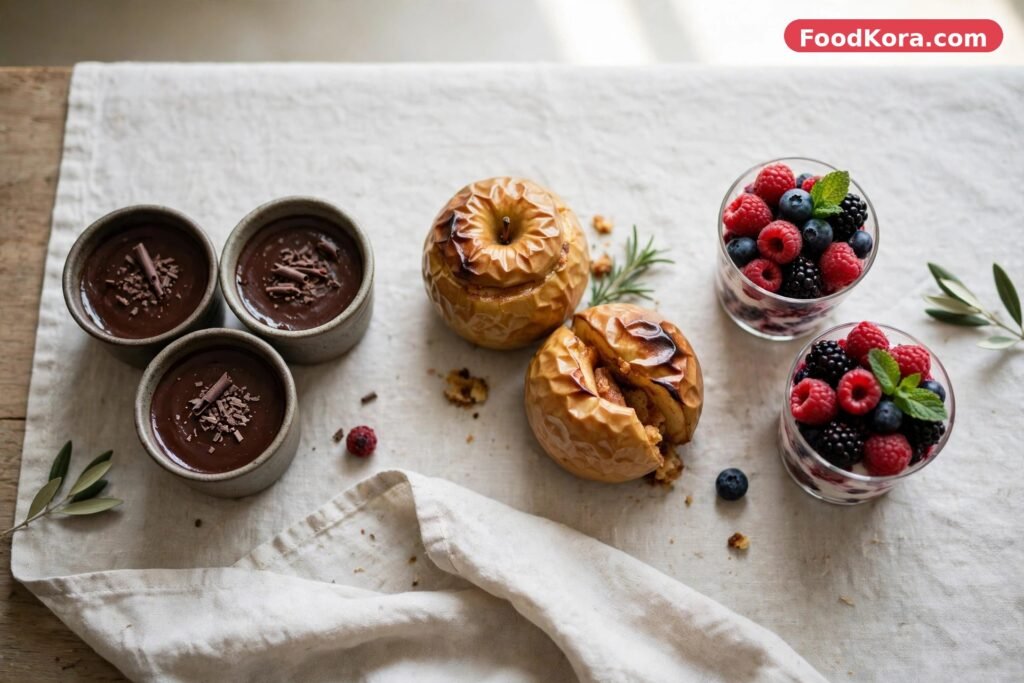

Some of the best desserts are also the simplest. A dessert made from three or four ingredients is not a lesser dessert — it is often a better one, because every ingredient has room to shine. There is nothing to hide behind, no long list to shop for, and no step where a tired cook can go wrong.
Desserts with few ingredients are also the most practical desserts in a busy kitchen. When the cupboard is nearly bare and guests are coming in an hour, a short ingredient list is a relief, not a limitation. Flour, sugar, eggs, butter, and one star ingredient — fruit, chocolate, or honey — are enough to make something genuinely good.
This guide collects six original desserts that each use five ingredients or fewer, plus practical tips for shopping, swapping, and serving them well. Every recipe is written in original wording, uses everyday ingredients, and is ready in thirty minutes or less, apart from chilling time that needs no attention. Pick one tonight, and see how little a great dessert actually needs.

Why Do Fewer Ingredients Make a Better Dessert?
The first reason is focus. When a dessert has only three ingredients, each one matters, and the cook pays attention to quality. Good chocolate, ripe fruit, or real butter makes a difference you can actually taste, because there is nothing else in the bowl to cover it up.
The second reason is reliability. Fewer ingredients mean fewer steps, and fewer steps mean fewer chances for something to go wrong. A five-ingredient dessert rarely collapses, curdles, or burns, because there is very little to manage. For a beginner cook, that reliability is worth more than any fancy technique.
The third reason is cost and waste. A dessert that uses ingredients you already have costs almost nothing extra, and it never leaves you with half a packet of something you will never use again. Short ingredient lists are kind to the shopping budget and to the cupboard, which is why they suit everyday cooking so well.
How Do You Choose Ingredients That Carry a Dessert?
With so few ingredients, each one has to earn its place. Start with one star ingredient — the flavour the dessert is built around. Dark chocolate, ripe bananas, fresh berries, or honey can each carry a whole dessert on their own, provided they are good quality.
Next, add one ingredient for structure. Cream, eggs, oats, or biscuits give the dessert its body, turning a flavour into something you can serve in a dish. Without structure, even the best flavour stays a sauce rather than a dessert.
Finally, add one ingredient for contrast. A pinch of salt sharpens chocolate. A squeeze of lemon brightens fruit. A spoonful of yogurt cools something warm. Contrast is what stops a simple dessert from tasting flat, and it is the difference between a nice idea and a dessert people ask for again.
What Should You Always Keep in the Cupboard?
A small set of staples covers almost every few-ingredient dessert. Keep chocolate, honey, oats, and a tin of condensed milk or a carton of cream on hand, along with the basics: flour, sugar, butter, and eggs. With those, you can make every recipe in this guide without a special shopping trip.
Fresh fruit is the one ingredient worth buying as you need it, because ripe fruit makes a better dessert than fruit that has sat in the fridge for a week. Bananas, apples, berries, and lemons are the most useful, and they are cheap in any season.
Spices cost very little and last for months, so keep cinnamon, vanilla, and a pinch of nutmeg at the front of the cupboard. They do not count as a main ingredient in these recipes, but a pinch of cinnamon or a few drops of vanilla can lift a simple dessert from plain to memorable. Keep them where you will actually reach for them on a busy evening.
Recipe 1: Three-Ingredient Chocolate Pots
Chocolate pots are the classic few-ingredient dessert, and they need only chocolate, cream, and a pinch of salt. They are rich, dark, and served in small portions, which makes them feel far more luxurious than their ingredient list suggests.
Warm one cup of cream in a small saucepan until it just starts to steam. Pour it over 150 grams of chopped dark chocolate in a bowl, wait for two minutes, then stir gently from the centre outwards until the mixture is smooth and glossy. Stir in a pinch of salt, which sharpens the chocolate flavour without making the pots taste salty.
Divide the mixture between four small cups or ramekins and refrigerate for at least two hours, until set but still soft enough to spoon. Serve with a few berries on top, or on their own with a small biscuit on the side. Chocolate pots keep in the fridge for two days, though they rarely last that long.
The quality of the chocolate matters more here than in any other recipe in this guide, because it is doing almost all the work. Choose a bar you enjoy eating on its own, with around fifty to seventy percent cocoa, and the pots will taste wonderful. A plain supermarket bar is perfectly fine — you do not need anything expensive.
Recipe 2: Four-Ingredient Baked Apples
Baked apples need only apples, butter, sugar, and cinnamon, and they turn an ordinary fruit into a warm, fragrant dessert. They are the small dessert for a cold evening, and they smell wonderful while they cook.
Heat the oven to 190 degrees Celsius. Core four apples without cutting all the way through the bottom, so the filling stays inside. Place them in a small baking dish that holds them snugly, which stops them from tipping over as they soften.
Put a small knob of butter, a teaspoon of sugar, and a pinch of cinnamon into the hollow of each apple. Cover the dish loosely with foil and bake for about thirty minutes, until the apples are soft when pierced with a knife and the butter and sugar have melted into a syrup inside.
Serve warm, spooning the syrup from the dish over the top, with a spoonful of yogurt or cream if you like. One apple serves one person, which makes this recipe easy to scale: bake two apples for two people, or six for a family, without changing anything else.
Recipe 3: Two-Ingredient Banana Ice Cream
Banana ice cream, sometimes called nice cream, is the simplest dessert in this guide: frozen bananas, blended, with nothing else needed. A splash of milk helps the blender along, but the bananas do the rest.
Peel ripe bananas, slice them, and freeze the slices in a bag for at least a few hours, or overnight. When you want dessert, put the slices from two bananas into a blender with a splash of milk. Blend, stopping to scrape down the sides, until the mixture turns thick and creamy like soft-serve ice cream.
Scoop into bowls and eat immediately, while the texture is still soft and cold. A drizzle of honey or a few berries on top is welcome, but entirely optional — the banana ice cream is complete on its own. The trick is using bananas that were properly ripe before freezing, because a speckled banana is sweeter and blends more smoothly than a firm one.
Keep a bag of frozen banana slices ready in the freezer at all times, and this dessert is never more than five minutes away. It is a good dessert for warm evenings, for children, and for anyone who wants something sweet without turning the oven on.
Recipe 4: Three-Ingredient Honey Oat Bars
Honey oat bars need only oats, honey, and peanut butter, and they set in the fridge into chewy, sweet squares. They are the no-bake answer to a sweet craving, and they keep for days, which makes them a good make-ahead treat.
Warm half a cup of honey with half a cup of peanut butter in a small saucepan over low heat, stirring until smooth and combined. Remove from the heat and stir in two cups of rolled oats and a pinch of salt, mixing until every oat is coated and the mixture is thick and sticky.
Press the mixture firmly into a small lined baking tin, using the back of a spoon to flatten it evenly. A firm press matters here: loosely packed bars crumble when you cut them. Refrigerate for at least one hour, then lift out of the tin and cut into bars or squares.
Store the bars in a sealed container in the fridge for up to five days, or freeze them for up to a month. They travel well wrapped in foil, so they work for lunchboxes, picnics, and after-school snacks. Small squares are plenty, because the bars are rich and satisfying.

Recipe 5: Four-Ingredient Berry Yogurt Cups
Berry yogurt cups are the lightest few-ingredient dessert in this guide, taking about five minutes with no cooking at all. They are built from yogurt, berries, honey, and a crunchy topping, layered in a glass so they look far more impressive than the effort suggests.
Spoon thick yogurt into two glasses or jars. Greek yogurt works best because it is rich and holds its shape, but any plain yogurt you like will do. Add a layer of fresh or frozen berries, then a drizzle of honey, then a spoonful of crushed biscuits or oats for crunch. Repeat the layers once more and finish with berries on top.
The balance is what makes these cups work. The yogurt gives creaminess, the berries give freshness, the honey gives sweetness, and the crunch stops the dessert feeling like a snack. If you have time, warm the berries briefly in a pan first — warm berries over cold yogurt is one of the great small pleasures of a simple dessert.
Serve immediately, or refrigerate for up to an hour before serving. If you need to make the cups ahead, keep the crunchy topping separate and sprinkle it on at serving time, so it stays crisp instead of softening in the yogurt.
Recipe 6: Five-Ingredient Lemon Posset
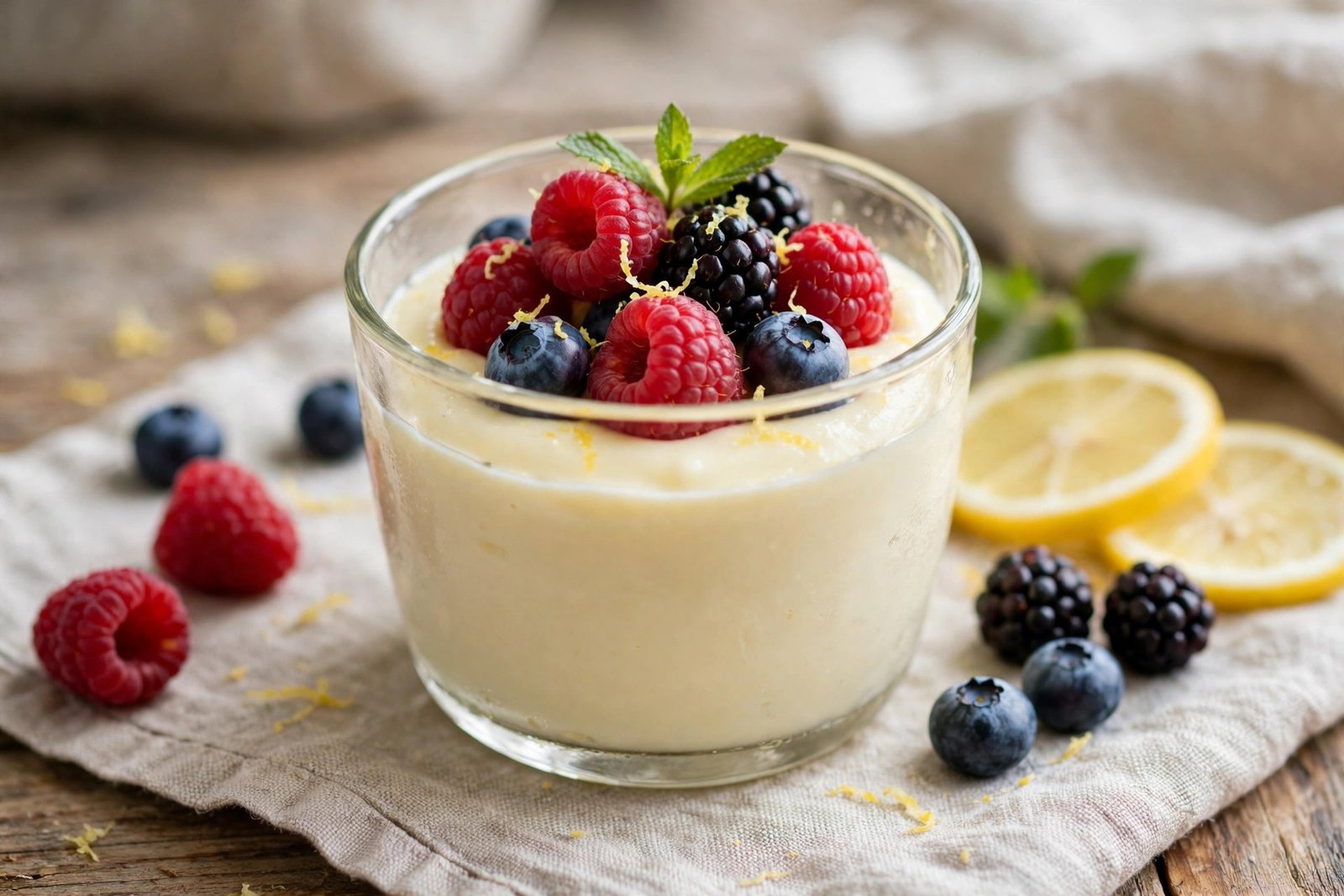
Lemon posset sounds fancy, but it is one of the simplest desserts ever invented: cream, sugar, and lemon, set in the fridge into a silky, tangy cream. It needs no gelatine, no eggs, and no baking, and it takes about ten minutes of work.
Warm two cups of cream with half a cup of sugar in a saucepan over medium heat, stirring until the sugar dissolves. Let the mixture simmer gently for three minutes, then remove from the heat and stir in the juice of two lemons and a teaspoon of lemon zest. The lemon will thicken the cream as it cools — that is the whole trick of a posset, and it needs no other setting agent.
Pour the mixture into four small glasses or cups and refrigerate for at least four hours, or overnight. The posset should be set but still soft enough to spoon, with a smooth, creamy texture and a fresh lemon tang. Serve with a few berries on top, or a thin biscuit on the side for dipping.
Posset is best made the day before a meal, because the long chill gives the best texture and the flavour mellows beautifully. One batch serves four people, and it looks elegant in small glasses with very little effort. For a dinner party, it is the dessert that makes the host look skilled while doing almost nothing.
How Do You Swap Ingredients Without Spoiling the Recipe?
Swapping works when you replace like with like. One soft fruit can usually replace another: peaches for pears, raspberries for strawberries, mango for banana. One sweetener can often replace another too, though honey is sweeter than sugar, so use a little less when you swap.
What does not swap well is structure. Cream cannot be replaced by milk in a chocolate pot, because the pot will not set. Butter cannot be replaced by oil in a baked dessert without changing the texture. When a recipe has only three ingredients, each one is load-bearing, so swap flavours, not foundations.
A useful rule is to change only one ingredient at a time. If you swap the fruit and the sweetener and the topping all at once, and the dessert does not work, you will not know which change caused it. Change one thing, taste the result, and you will learn something useful for next time.
What Mistakes Should You Avoid with Simple Desserts?
The most common mistake is overcomplicating them. A three-ingredient dessert does not need a garnish, a sauce, and a topping — it needs to be served well and left alone. Adding extra elements to a simple dessert usually makes it worse, not better, because it hides the flavour that made the recipe worth making.
The second mistake is using poor ingredients. A simple dessert has nowhere to hide, so stale biscuits, under-ripe fruit, or cheap chocolate will show. Spend the little extra on the star ingredient, and be less fussy about the supporting ones — the balance of effort is the opposite of what most cooks expect.
The third mistake is rushing the setting time. Chocolate pots, oat bars, and posset all need their hours in the fridge, and serving them early gives a soft, unfinished dessert. Plan ahead, make them the night before when you can, and let the fridge do the work it is there to do.
For more simple everyday cooking built on the same easy approach, our guide to easy chocolate desserts shows how a single star ingredient carries a whole dessert, while no bake desserts easy covers chilled treats that need no oven at all. If speed matters most, easy quick desserts has treats ready in minutes.
You May Also Like
- Easy Chocolate Desserts for Every Occasion
- No Bake Desserts Easy Enough for Any Night
- Easy Quick Desserts Ready in Minutes
Frequently Asked Questions
What is the simplest dessert I can make with few ingredients?
Two-ingredient banana ice cream is the simplest, needing only frozen bananas and a splash of milk. Three-ingredient chocolate pots are nearly as simple, and both are ready in minutes apart from chilling time. Start with one of these if you have never made a few-ingredient dessert before.
Can I make a good dessert with only three ingredients?
Yes, many classic desserts use only three ingredients. Chocolate pots need chocolate, cream, and salt. Baked apples need apples, butter, and sugar. When each ingredient is good quality and the method is simple, three ingredients are more than enough for a dessert people enjoy.
Do few-ingredient desserts taste as good as complex ones?
They taste different rather than worse. A simple dessert is cleaner and more focused, with one flavour standing out clearly instead of many flavours competing. On an ordinary evening, that clarity is often more satisfying than a complicated dessert with a dozen ingredients.
How do I know which ingredient is the star of a dessert?
The star is the flavour you taste first and remember afterwards. In chocolate pots it is the chocolate; in baked apples it is the apple; in lemon posset it is the lemon. Choose the best quality you can for the star ingredient, and be relaxed about the rest.
Can I serve few-ingredient desserts at a dinner party?
Yes, several are ideal for dinner parties because they are made ahead and look elegant. Lemon posset in small glasses, chocolate pots with berries, and baked apples served warm all impress guests without keeping the host in the kitchen. Make them the day before and dessert takes care of itself.
Conclusion
Desserts with few ingredients prove that a great sweet ending does not need a long shopping list. Chocolate pots, baked apples, banana ice cream, honey oat bars, berry yogurt cups, and lemon posset all start from the same idea: one good star ingredient, one ingredient for structure, and one for contrast, treated simply and served well.
Start with the recipe that uses what you already have in the kitchen. Once a few-ingredient dessert becomes a habit, the question of what to serve for dessert gets a lot easier, and the answer is usually already in your cupboard. For general balanced eating guidance, the USDA MyPlate recommendations are a helpful reference.
Sources
- USDA MyPlate: https://www.myplate.gov/
- NHS – Eating a balanced diet: https://www.nhs.uk/live-well/eat-well/how-to-eat-a-balanced-diet/eating-a-balanced-diet/