
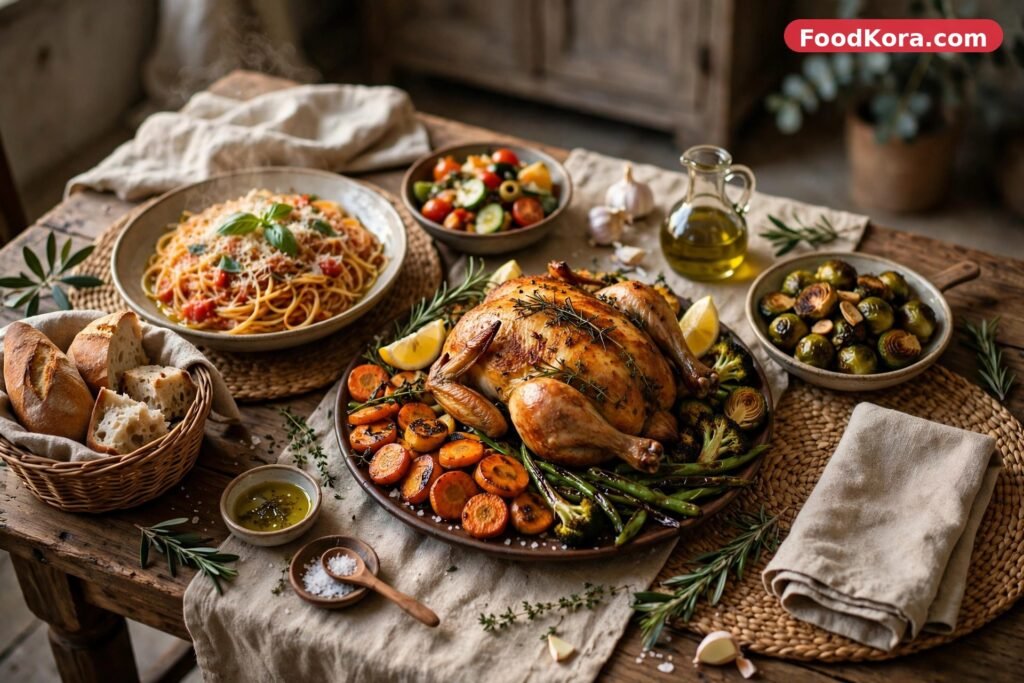

Family dinner is one of the hardest meals to get right. Children want food they recognise, adults want something that feels like a real meal, and whoever is cooking wants dinner on the table without a long argument about what is for tea. The meals that work for the whole family are the ones that please everyone without asking anyone to compromise too much: familiar flavours, a little choice at the table, and portions that leave everyone satisfied.
The secret of a family friendly healthy dinner is not hiding vegetables or serving something nobody asked for. It is choosing recipes that are naturally balanced and naturally popular. A pasta with roasted vegetables, a tray bake with chicken, or a taco night where everyone builds their own plate all follow the same pattern: a lean protein, plenty of vegetables, and a sensible portion of grains or bread, seasoned in a way that tastes good rather than worthy.
This guide collects six original family friendly healthy dinner recipes, each one tested against the toughest audience of all — a tired family at the end of a long day. Every recipe uses everyday ingredients, takes forty minutes or less, and needs only basic equipment. Alongside the recipes you will find practical tips for pleasing picky eaters, planning a family week, and keeping dinner calm, so the family meal becomes the best part of the evening instead of the most stressful.
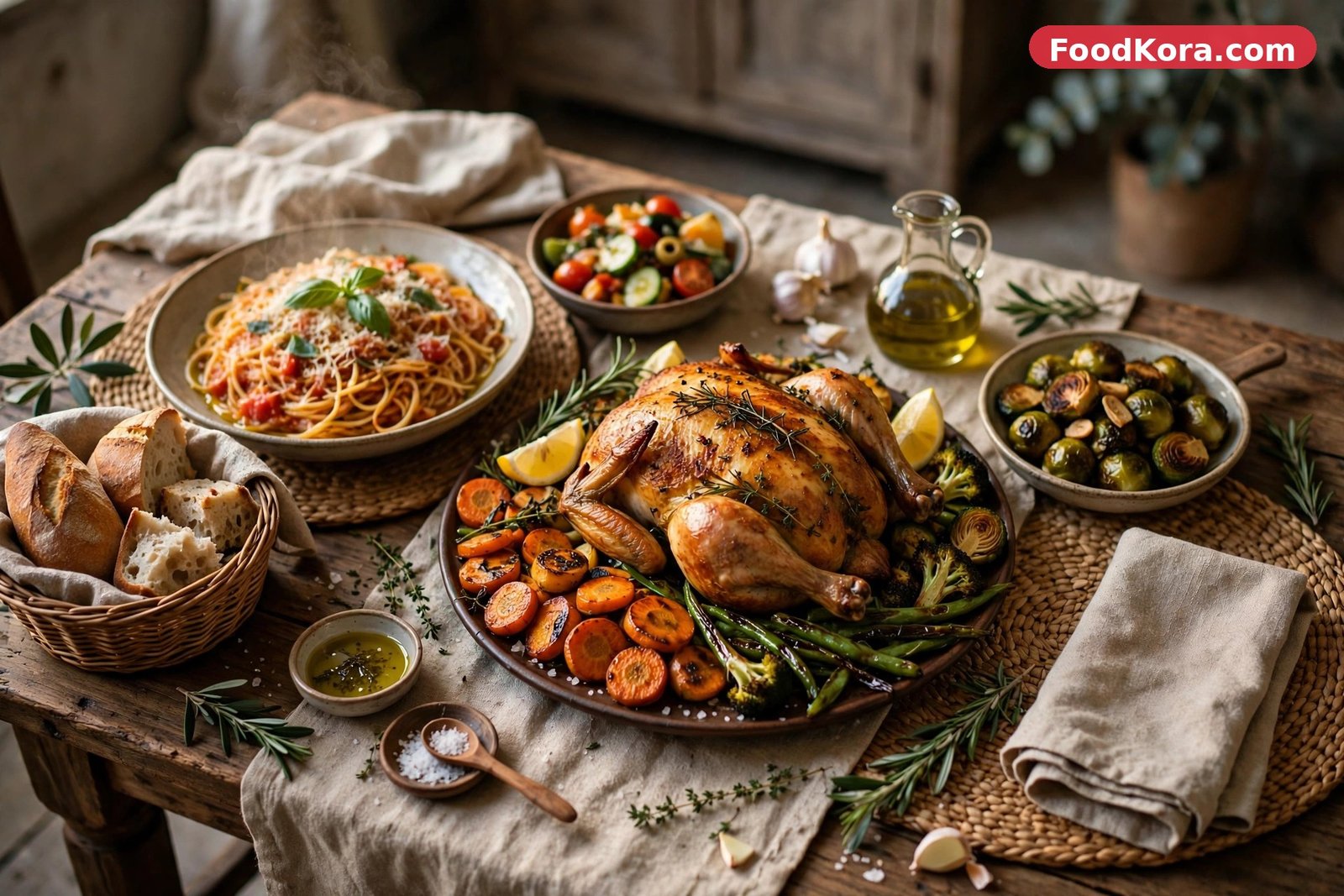
What Makes a Dinner Family Friendly?
A family friendly dinner starts with familiarity. Children eat more happily when they recognise what is on the plate, so the best family recipes are built around foods most families already enjoy: pasta, chicken, rice, beans, and bread. New flavours can be added gently, one at a time, but the base of the meal should feel safe and welcoming.
Choice at the table is the second ingredient. A dinner where everyone builds their own plate — tacos, wraps, a pasta bar, or a soup with toppings — lets each person take what they like and leave what they do not, without anyone cooking a separate meal. That small freedom removes most dinner table arguments, because nobody is forced to eat something they dislike.
A family friendly dinner also has to be practical for the cook. One pot or one tray, a short ingredient list, and a method that does not demand constant attention all matter when there are children to help, homework to supervise, and a kitchen to tidy afterwards. The recipes below were chosen with that reality in mind.
How Do You Please Picky Eaters at Dinner?
The most reliable trick is to keep the flavours mild and let each person add their own extras. A pasta with a simple tomato sauce, served with cheese, herbs, and chilli flakes on the side, suits a cautious child and an adventurous adult from the same pot. A tray bake with chicken and vegetables works the same way: mild seasoning in the dish, and sauces or toppings on the table.
Texture matters more than most adults realise. Many picky eaters dislike soft or mixed textures rather than particular flavours, so a dinner with one crunchy element — toasted bread, raw vegetables, or a crisp salad — often goes down better than a dinner where everything is soft. Keeping one vegetable raw and one cooked on the same plate is a simple way to offer that contrast.
It also helps to involve children in the cooking, even in a small way. A child who tore the herbs, stirred the sauce, or chose the vegetables is far more likely to eat the finished dish. That does not mean every dinner becomes a cooking lesson. Even a two-minute job, like washing tomatoes or tearing lettuce, gives a child a stake in the meal.
What Should a Family Dinner Plate Look Like?
A simple picture works better than any rule. Vegetables should take up about half the plate, protein about a quarter, and grains or bread the rest. That balance keeps everyone full and steady, and it is easy to judge by eye, even on a busy evening.
It helps to think of the plate in parts rather than as a single dish. A main dish, one vegetable, and one grain or bread give the meal structure and make it easy to adjust for different appetites. A smaller child may take more rice and less chicken; a hungry teenager may take more of everything. The same meal serves both, because the parts are separate.
For general balanced eating guidance, the USDA MyPlate recommendations are a helpful reference, and they are built around exactly this picture of a balanced plate.
Recipe 1: One-Pan Lemon Chicken with Roasted Vegetables
One-pan lemon chicken is the family dinner that takes care of itself. Everything goes on a single tray, the oven does the work, and the result is a complete meal with almost no washing up — which matters on a school night.
Cut 600 grams of chicken thighs or breast into even pieces and toss with olive oil, lemon juice, a sliced garlic clove, salt, and pepper. Cut two sweet potatoes, two carrots, and a red pepper into chunks, toss with a little olive oil and salt, and spread on a large baking tray. Arrange the chicken among the vegetables, leaving space so everything roasts rather than steams.
Bake at 200 degrees Celsius for twenty-five to thirty minutes, turning once, until the chicken is cooked through and the vegetables are golden at the edges. Scatter over a handful of fresh parsley before serving. The lemon keeps the dish bright, and the roasted vegetables are sweet enough that most children eat them happily.
Serve straight from the tray, with crusty bread or a small portion of rice. One tray serves four people generously, and leftovers keep well in the fridge for lunch the next day. This is the recipe to reach for when the day has been long and dinner still has to happen.
Recipe 2: Veggie-Loaded Tomato Pasta with Cheese
Pasta is the family dinner that almost never fails, and this version adds vegetables without making a fuss about them. The sauce is smooth, sweet, and familiar, and the vegetables are cooked into it rather than served as a separate challenge.
Warm a tablespoon of olive oil in a large pan and cook one chopped onion, one sliced carrot, and one sliced courgette until soft, about eight minutes. Stir in a tin of chopped tomatoes, a teaspoon of paprika, and a pinch of salt, and simmer for fifteen minutes. Blend the sauce until smooth, then stir it back into the pan.
Cook 300 grams of short pasta, such as penne or fusilli, in salted water until just tender, then drain. Toss the pasta through the sauce with a handful of spinach, which wilts in a minute, and serve with grated cheese on top. Children who pick out vegetables will find nothing to pick out, and adults will taste a sauce that is richer than plain tomato.
Serve in wide bowls, with extra cheese and a simple salad on the side. One batch serves four people, and the sauce freezes well, so a double batch solves a future dinner too. For extra protein, stir a tin of drained beans through the sauce with the pasta.
Recipe 3: Mild Fish Tacos with Crunchy Slaw
Taco night is the family dinner that turns eating into an activity. Everyone builds their own taco at the table, which means each person takes what they like and the cook does not have to guess.
Cut 500 grams of firm white fish into strips and toss with olive oil, a teaspoon of paprika, a pinch of cumin, and a squeeze of lime juice. Cook the fish in a hot pan for three to four minutes on each side, until flaky and golden at the edges. While the fish cooks, mix shredded cabbage, grated carrot, and sliced spring onion with a squeeze of lime and a pinch of salt for a crunchy slaw.
Warm small tortillas in a dry pan for one minute on each side. Set out the fish, the slaw, a bowl of yogurt, and lime wedges, and let everyone build their own tacos. The yogurt works as a cool, mild sauce that suits children, while adults can add chilli sauce or extra lime.
Serve with rice or a simple salad. One batch makes about eight tacos, enough for four people, and the same method works with chicken strips or beans for anyone who does not eat fish. Taco night is also a good dinner for a larger table, because it scales simply by adding more tortillas and fillings.
Recipe 4: Bean and Vegetable Chilli with Rice
A bean chilli is the family dinner that is cheap, filling, and forgiving. It uses cupboard staples, cooks in one pot, and tastes better the next day, which makes it a useful recipe for a busy week.
Warm a tablespoon of olive oil in a large pot and cook one chopped onion, one sliced pepper, and two sliced garlic cloves until soft, about six minutes. Stir in a teaspoon of paprika, half a teaspoon of cumin, and a pinch of mild chilli powder — keep it gentle for younger children, and let adults add heat at the table. Add two tins of drained mixed beans, a tin of chopped tomatoes, and 200 millilitres of vegetable stock.
Simmer gently for twenty minutes, stirring occasionally, until thick and rich. Season with salt and a squeeze of lime juice. While the chilli simmers, cook a pot of rice.
Serve the chilli over rice, with grated cheese, yogurt, and tortilla chips on the side for everyone to add as they like. One pot serves four to six people, and leftovers keep well in the fridge for three days. This is a dinner that solves tomorrow’s lunch as well as tonight’s tea.
Recipe 5: Baked Chicken Nuggets with Sweet Potato Wedges
Homemade chicken nuggets are the family dinner that proves healthy food can still be the food children ask for. They are crisp, golden, and familiar, but they are baked rather than fried and made from real chicken rather than processed meat.
Cut 500 grams of chicken breast into bite-sized pieces. Dip each piece in beaten egg, then coat in breadcrumbs mixed with a teaspoon of paprika and a pinch of salt. Arrange on a lined baking tray, spray or drizzle lightly with olive oil, and bake at 200 degrees Celsius for eighteen to twenty minutes, turning once, until golden and cooked through.
While the nuggets bake, cut two sweet potatoes into wedges, toss with olive oil and salt, and roast on a second tray for twenty-five minutes, turning once, until crisp at the edges. Sweet potato wedges are sweet enough that most children eat them without argument, and they add colour and fibre to the plate.
Serve the nuggets and wedges with a simple dipping sauce — yogurt mixed with a squeeze of lemon — and a handful of raw vegetables such as cucumber sticks and cherry tomatoes. One batch serves four people, and the nuggets can be made ahead and frozen raw, then baked straight from the freezer with five extra minutes.

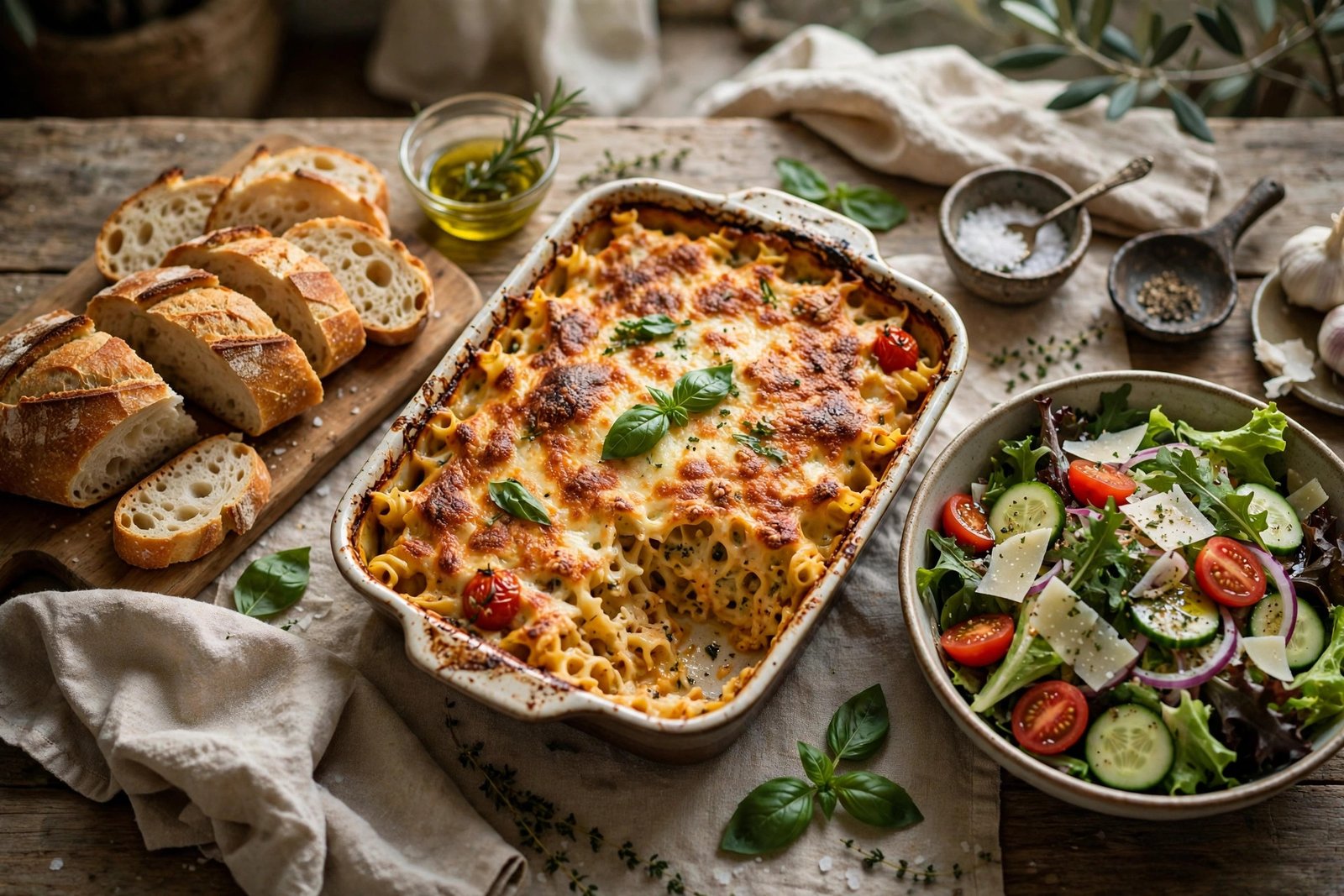
Recipe 6: Creamy Broccoli and Cheese Pasta Bake
A pasta bake is the family dinner for evenings when everyone needs comfort. It is warm, cheesy, and filling, and it can be assembled ahead and baked when the family is ready to eat.
Cook 300 grams of short pasta in salted water until just tender, then drain. While the pasta cooks, steam or boil one head of broccoli, broken into small florets, for four minutes, until just tender. Warm 400 millilitres of milk in a pan, stir in two tablespoons of flour mixed with a little cold milk, and simmer for three minutes, stirring, until thickened. Stir in a large handful of grated cheese until melted, and season with salt and a pinch of mustard.
Mix the pasta, broccoli, and cheese sauce in a large baking dish, sprinkle over a little extra cheese, and bake at 190 degrees Celsius for fifteen minutes, until golden and bubbling at the edges. The sauce is mild and creamy, which suits children, while adults can add black pepper or herbs at the table.
Serve in wide bowls, with a simple green salad on the side. One dish serves four people generously, and leftovers reheat well with a splash of milk. This is a good recipe for a cold evening, or for a night when the family needs something reliably comforting.
How Do You Plan a Week of Family Dinners?
The easiest plan is a simple weekly rhythm. One pasta night, one tray bake night, one taco or build-your-own night, and one soup or bean night give the week shape without demanding a new recipe every evening. Children like knowing what kind of dinner to expect, and cooks like knowing what to shop for.
It also helps to repeat the same kinds of meals with different details. A tray bake can use chicken one week and fish the next; a pasta sauce can be tomato one week and cheese the next. That rotation keeps dinner varied without requiring a new skill each night, which is exactly what a busy family week needs.
Leave one night unplanned. A leftover night, a simple eggs-on-toast night, or a night where the family eats out removes the pressure of a perfect plan and makes the other nights easier to keep. A weekly plan with breathing room survives real life; a plan without it collapses by Wednesday.
What If Dinner Goes Wrong?
Family dinners are forgiving, and most mistakes have a quick rescue. A sauce that tastes flat needs salt, lemon, or a spoonful of yogurt. A tray bake that looks dry can be revived with a drizzle of olive oil and a squeeze of lemon. A pasta that sticks together loosens with a splash of its cooking water.
A dish that one child refuses is not a failed dinner. Serve it with bread, a salad, or a side everyone likes, and the meal still works. The goal of a family dinner is not that every person eats every bite. It is that the family sits down together, and that everyone leaves the table reasonably full and reasonably happy.
For more simple everyday cooking, our guide to easy meal recipes covers straightforward meals for the whole day, while fast and easy dinner recipes has more quick options for busy evenings. If a family dinner ends with something sweet, healthy cuisine recipes is a good place to look next for lighter ideas.
You May Also Like
Frequently Asked Questions
What are the best family friendly healthy dinners for picky eaters?
Pasta with a smooth tomato sauce, baked chicken nuggets, and taco night are the best choices for picky eaters, because the flavours are familiar and everyone can adjust their own plate. Keeping sauces mild and toppings on the side lets each person eat the same meal in their own way.
Can I make family healthy dinners ahead of time?
Yes. Pasta bakes can be assembled a day ahead and baked when needed, bean chilli tastes better the next day, and chicken nuggets can be coated and frozen raw. Save only the final baking or reheating for close to serving time, so everything tastes fresh.
How do I get children to eat more vegetables at dinner?
Serve vegetables in familiar forms — roasted wedges, a smooth blended sauce, or a crunchy slaw — and let children choose their own portions from a shared table. Involving children in cooking, even for two minutes, also makes them far more likely to eat what they helped to make.
Are family friendly healthy dinners filling enough for adults?
Yes, when the plate includes protein, vegetables, and a sensible portion of grains or bread. A tray bake with chicken, a bean chilli with rice, or a pasta bake with salad all satisfy adults as well as children, because the portions can be adjusted at the table.
How many nights a week should a family cook at home?
There is no fixed number, and a realistic plan matters more than a perfect one. Four or five home-cooked dinners a week, with one leftover night and one night out or takeaway, gives most families a good balance without turning cooking into a chore.
Conclusion
Family friendly healthy dinners everyone will enjoy prove that a family meal does not need to be a compromise. One-pan lemon chicken, veggie-loaded pasta, mild fish tacos, bean chilli, baked chicken nuggets, or a creamy pasta bake — each one is ready in forty minutes or less, uses everyday ingredients, and brings the family to the table without a battle over what is for dinner.
Start with the recipe your family already likes best, and cook it this week. Once two or three family dinners become familiar, the evening meal stops feeling stressful and starts feeling like the best part of the day. For general balanced eating guidance, the USDA MyPlate recommendations are a helpful reference.
Sources
USDA MyPlate: https://www.myplate.gov/
NHS – Eating a balanced diet: https://www.nhs.uk/live-well/eat-well/how-to-eat-a-balanced-diet/eating-a-balanced-diet/