


Light appetizers have a reputation problem. Too often, the words “light” and “healthy” on a party table mean a sad bowl of plain vegetables and a dip nobody touches, while the real food sits on the other side of the table. Guests take one polite cucumber stick, then drift toward the fried bites. That is not because people dislike fresh food — it is because the fresh food was not given the same care as everything else.
The truth is that a light appetizer can be just as satisfying as a rich one, as long as it is built around flavour rather than restriction. A good light starter is not about what is missing. It is about what is there: bright herbs, a squeeze of lemon, a little salt, a creamy dip, something crunchy to bite into. When those things come together, nobody asks whether the dish is light. They just reach for another one.
This guide collects six original light appetizer recipes that still feel like a treat, plus practical tips for planning a lighter table that guests actually enjoy. Every recipe uses everyday ingredients, takes thirty minutes or less, and needs only basic equipment. Whether you are hosting a small evening with friends or adding a fresh corner to a bigger party spread, these starters will earn their place on the table.

What Makes an Appetizer “Light”?
A light appetizer is not defined by a single rule. In practice, it means a starter that leaves guests feeling refreshed rather than full, so they can enjoy the rest of the evening. That usually means smaller portions, fresh ingredients, and a balance of flavours rather than heavy sauces or deep frying.
Vegetables, fruit, beans, and lean protein are natural building blocks. They bring colour, crunch, and freshness to a table without much effort. A plate of cherry tomatoes and mozzarella, for example, feels light because it is fresh and simple, yet it is still satisfying thanks to the cheese and a drizzle of olive oil.
Fat and salt still matter, even in light cooking. A little olive oil, a handful of nuts, or a spoonful of yogurt dip adds richness that makes fresh ingredients taste complete. The goal is not to remove flavour. It is to let fresh ingredients carry the dish, with richer elements playing a supporting role instead of taking over.
How Do You Build a Lighter Party Table?
Start with variety, not volume. A lighter table works best when it offers different textures: something crunchy, something creamy, something fresh, and something a little salty. Guests graze happily across a table like that, because every bite feels different from the last one.
Colour helps more than most hosts realise. A table of green, red, orange, and white looks generous and inviting before anyone tastes a thing. Cherry tomatoes, cucumber, carrots, peppers, and fresh herbs give a spread instant colour, and they are also the ingredients guests reach for first.
Finally, keep the portions small. Light appetizers work as single bites or small spoonfuls, so guests can try everything without filling up on the first dish. Small plates, cocktail sticks, and little bowls all encourage tasting rather than loading up, which is exactly the mood a lighter table should create.
Recipe 1: Cucumber Cups with Herbed Yogurt
Cucumber cups are the light appetizer that looks far fancier than the effort they take. They are cool, crunchy, and refreshing, and the herbed yogurt filling gives them a creamy finish without any heaviness.
Cut two large cucumbers into thick slices, about three centimetres tall. Scoop out the centre of each slice with a small spoon, leaving a thin base so the cup holds its shape. You should end up with about twelve cups, which is enough for a small gathering as part of a spread.
Mix 150 grams of Greek yogurt with a chopped garlic clove, a handful of chopped dill and mint, a squeeze of lemon juice, salt, and pepper. The herbs are what make this filling taste special, so be generous with them. Spoon the yogurt into the cucumber cups just before serving, and top each one with a tiny sprig of dill or a sliver of red pepper.
These cups are best assembled on the day of the party, but the yogurt filling can be made a few hours ahead and kept in the fridge. They are naturally cool and fresh, which makes them the perfect opening bite on a warm evening.
Recipe 2: Tomato and Avocado Bruschetta
Bruschetta is a classic for a reason, and this lighter version swaps heavy toppings for fresh tomato and creamy avocado. It is colourful, quick, and easy to eat with one hand.
Dice three ripe tomatoes and one ripe avocado, and mix gently with a chopped garlic clove, a handful of torn basil leaves, a drizzle of olive oil, a squeeze of lemon juice, salt, and pepper. The lemon juice matters twice here: it brightens the flavours and keeps the avocado from browning.
Slice a baguette on the diagonal, brush the slices lightly with olive oil, and toast in the oven until golden and crisp, about five minutes. Rub each slice with a cut garlic clove for extra flavour, then spoon the tomato and avocado mixture on top just before serving.
Assemble the bruschetta at the last moment, not hours ahead, because the topping will soften the bread if left too long. Keep the topping in a bowl and the toasted bread in a basket, and let guests build their own if you prefer. One baguette makes about twenty pieces, enough for a medium gathering.
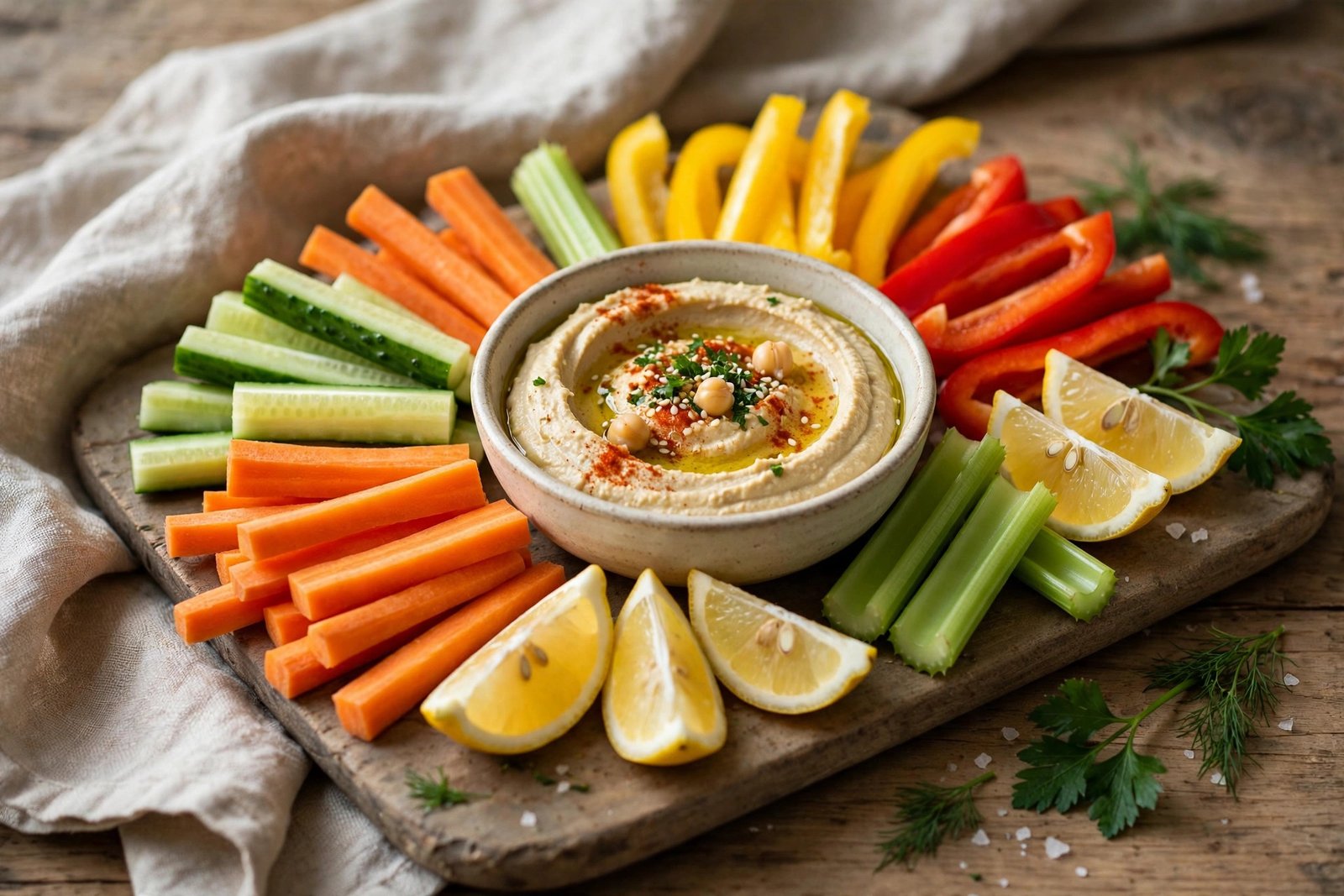
Recipe 3: Crunchy Vegetable Sticks with Hummus
Vegetable sticks with hummus only feel boring when the vegetables are limp and the hummus comes straight from a tub. Done properly, with crisp vegetables and a fresh, lemony dip, this is one of the most popular light appetizers on any table.
Cut carrots, cucumber, celery, and peppers into even sticks, about the length of a finger. Keep them in cold water in the fridge until serving time, so they stay crisp. Arrange them upright in a glass or fanned out on a platter, grouped by colour, which makes the simplest dish look deliberate and inviting.
For the hummus, blend a tin of drained chickpeas with two tablespoons of tahini, the juice of one lemon, one garlic clove, a pinch of cumin, salt, and a drizzle of olive oil. Blend until smooth, adding a spoonful of cold water at a time if the mixture is too thick. Taste and adjust the lemon and salt: a good hummus should taste bright, not flat.
Serve the hummus in a wide bowl with the vegetable sticks arranged around it. This dish can be prepared entirely the day before, which makes it one of the easiest light appetizers to host with. For a second dip, a bowl of herbed yogurt alongside the hummus gives guests a choice without any extra work.
Recipe 4: Chicken Lettuce Wraps with Lime
Lettuce wraps are the light appetizer that still feels like a proper bite. They are fresh, a little zesty, and fun to eat, because guests build each wrap themselves at the table.
Cook 400 grams of minced chicken in a pan with a tablespoon of oil, one chopped onion, and two sliced garlic cloves, until the chicken is cooked through and lightly golden, about eight minutes. Stir in a tablespoon of soy sauce, a squeeze of lime juice, a pinch of chilli flakes, and a handful of chopped coriander. Let the mixture cool slightly before serving.
Separate the leaves of a large lettuce, choosing the sturdier outer leaves that can hold a filling. Wash and dry them carefully, then arrange them on a platter with the warm chicken mixture in a bowl beside them. Guests spoon a little chicken into a leaf, fold it up, and eat it in two or three bites.
These wraps are best served with the filling warm and the leaves cold, because the contrast is part of the pleasure. For a vegetarian version, swap the chicken for crumbled tofu or finely chopped mushrooms, using the same seasoning and method. One batch fills about twelve leaves, so double the recipe for a larger party.
Recipe 5: Smoked Salmon and Cucumber Rounds
Smoked salmon and cucumber rounds are the light appetizer that makes a table feel elegant with almost no cooking. They are cool, salty, and delicate, and they take about ten minutes to assemble.
Slice a cucumber into thin rounds and arrange them on a platter. Top each round with a small spoonful of cream cheese mixed with lemon zest and chopped dill. Fold a small piece of smoked salmon on top of each one, and finish with a tiny sprig of dill or a few capers.
The balance here is what makes the dish work. The cucumber is cool and crunchy, the cream cheese is smooth and tangy, and the salmon brings a gentle saltiness that ties everything together. A squeeze of lemon over the finished platter brightens all three.
These rounds are best made on the day of the party and kept in the fridge until serving, covered lightly so they stay fresh. They are a good choice for a smaller, more relaxed gathering, where a few elegant bites matter more than a mountain of food.
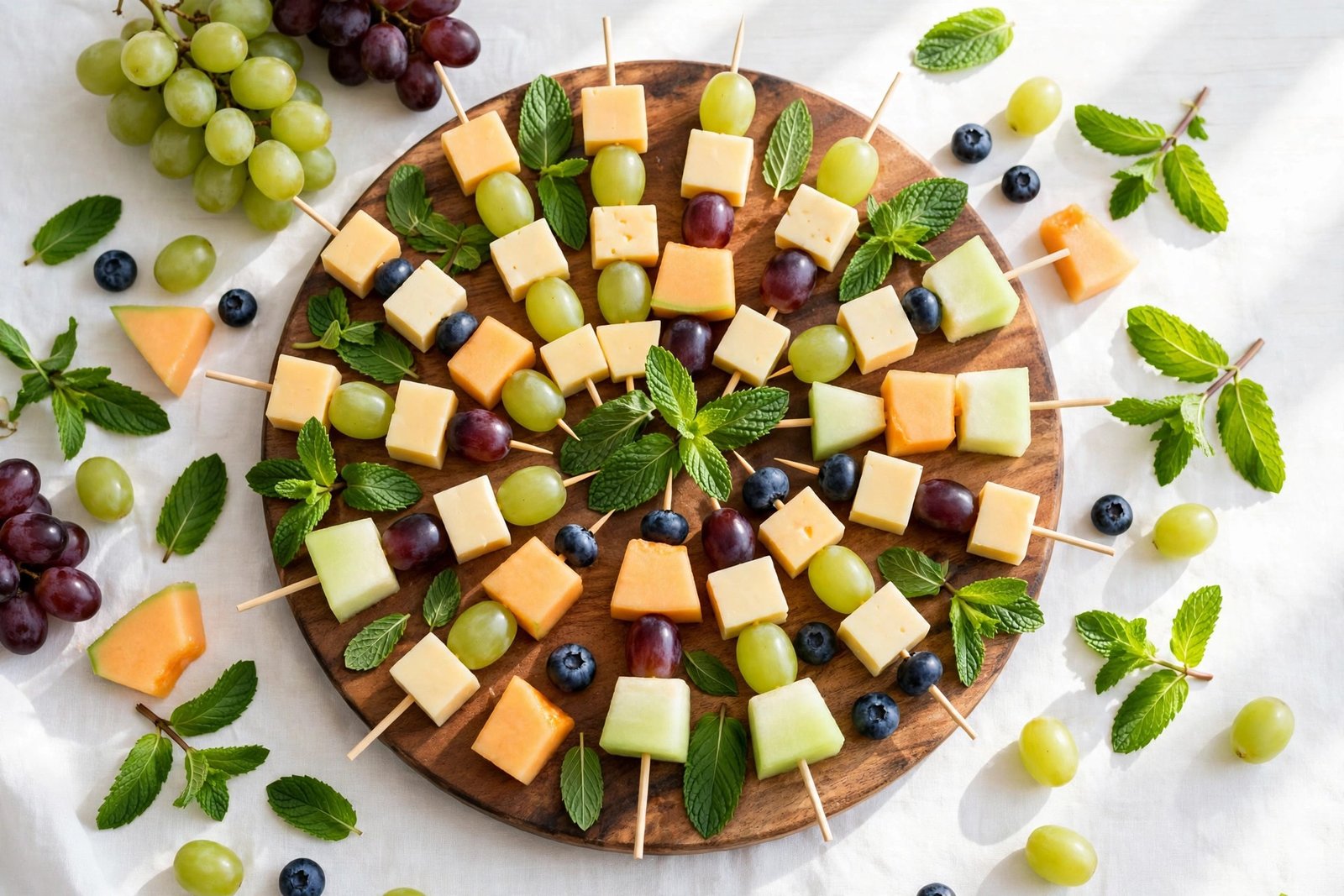
Recipe 6: Fruit and Cheese Skewers with Mint
Fruit and cheese skewers are the light appetizer that surprises people, because sweet and savoury together taste far better than either one alone. They are also the easiest starter in this guide, needing no cooking at all.
Thread cubes of melon, grapes, and strawberries onto short cocktail sticks, alternating with small cubes of mild cheese such as mozzarella or feta. A typical skewer holds two pieces of fruit and one piece of cheese, which is a satisfying single bite. Tuck a small mint leaf onto each skewer for freshness and colour.
Arrange the skewers on a platter and drizzle very lightly with honey just before serving, or leave the honey in a small bowl for guests to add themselves. The honey is optional, but a little sweetness makes the cheese taste richer and the fruit taste brighter.
These skewers can be assembled a few hours ahead and kept in the fridge, then dressed just before serving. They are the sweet, fresh finish to a lighter table, and they work just as well at the start of a party as they do alongside dessert.
How Do You Keep Light Appetizers Fresh?
Cold dishes are the main thing to manage. Light appetizers taste best cool, not warm, so keep platters in the fridge until guests arrive, and bring them out in two batches rather than all at once. A table that gets refreshed stays inviting all evening, while a table that sits out for hours loses its appeal.
Covering matters too. A sheet of cling film or a damp tea towel over a platter keeps cucumber and lettuce from drying out in a warm room. Remove the cover just before guests serve themselves, so the food still looks and tastes freshly made.
Finally, think about timing. Assemble delicate dishes like cucumber cups and salmon rounds close to serving time, and save sturdier dishes like vegetable sticks and hummus for the early table. That way, every dish arrives at its best, and the host is not rushing at the last minute.
What Mistakes Make Light Food Feel Boring?
The most common mistake is serving plain vegetables with no dip, no seasoning, and no colour. Fresh ingredients still need salt, acid, and herbs to taste good. A squeeze of lemon, a pinch of salt, and a handful of fresh herbs transform a plain plate into something guests actually want to eat.
A second mistake is offering only one light dish on a table full of rich food. A single bowl of vegetables next to trays of fried bites will always lose. Light appetizers work when they form their own corner of the table, with at least three or four options, so guests can graze across fresh flavours instead of treating one dish as an obligation.
A third mistake is making everything cold and raw. A lighter table still benefits from one warm dish, like chicken lettuce wraps, which gives the spread contrast and makes the cold dishes feel like a choice rather than a compromise.
For more simple everyday cooking, our guide to easy meal recipes covers straightforward meals for the whole day, while fast and easy dinner recipes has more quick options for busy evenings. If the evening ends with something sweet, easy chocolate desserts is a good place to look next.
You May Also Like
Frequently Asked Questions
What are the best light appetizers for a party?
Cucumber cups, vegetable sticks with hummus, and fruit and cheese skewers are excellent light choices, because they are fresh, easy to eat, and simple to make in quantity. Add one warm option like chicken lettuce wraps, and the table covers almost every taste.
Can I make light appetizers ahead of time?
Yes. Hummus, yogurt fillings, and skewers can all be prepared a few hours ahead and kept in the fridge. Save only the final assembly — filling cucumber cups, topping bruschetta, and dressing skewers — for close to serving time, so everything tastes fresh.
Are light appetizers filling enough for guests?
Light appetizers satisfy guests when the table offers variety and a little protein, such as chicken, salmon, or cheese. Small portions across several dishes feel generous, and guests can try everything without feeling weighed down before the main event.
What light appetizers work for guests with different diets?
Vegetable sticks with hummus are naturally plant-based, cucumber cups suit most diets, and fruit skewers work for almost everyone. Offering one dip, one fresh bite, and one protein-based starter usually means every guest finds something they can eat.
How do I stop light appetizers from tasting bland?
Season generously. Salt, lemon juice, fresh herbs, and a drizzle of good olive oil make fresh ingredients taste alive. A creamy dip alongside crisp vegetables also helps, because the contrast of textures makes simple food feel complete.
Conclusion
Light appetizer ideas that still feel like a treat prove that a lighter table does not have to be a boring one. Cucumber cups, tomato and avocado bruschetta, crunchy vegetables with hummus, chicken lettuce wraps, smoked salmon rounds, or fruit and cheese skewers — each one is fresh, flavourful, and easy to make, and together they make a spread that guests enjoy rather than endure.
Start with the recipes that use what you already have in the kitchen. Once two or three light starters become familiar, hosting a lighter gathering stops feeling like a compromise and starts feeling like a pleasure. For general balanced eating guidance, the USDA MyPlate recommendations are a helpful reference.
Sources
- USDA MyPlate: https://www.myplate.gov/
- NHS – Eating a balanced diet: https://www.nhs.uk/live-well/eat-well/how-to-eat-a-balanced-diet/eating-a-balanced-diet/