

A family dinner has to please more than one person, which is why it often feels like the hardest meal of the day. One person wants something light, another wants something filling, a child wants something familiar, and the cook just wants something that does not take an hour. The good news is that a healthy family dinner does not need to be a compromise. When a meal is built around fresh vegetables, a good protein, and a sensible portion of grains, almost everyone at the table finds something to enjoy.
The secret of family cooking is flexibility. A dinner that lets each person adjust their own plate — extra vegetables for one, a little more rice for another, sauce on the side instead of on top — keeps the peace far better than a meal that demands everyone eat exactly the same thing. Tacos, grain bowls, tray bakes, and soups all work this way, because the cook makes one main dish and the table does the rest.
This guide collects six original healthy and good dinner recipes that suit the whole family, plus practical tips for shopping, planning, and getting dinner on the table without stress. Every recipe uses everyday ingredients, takes forty minutes or less, and needs only basic equipment. Pick two or three to start with, and family dinner will feel less like a negotiation and more like the best part of the day.

What Makes a Dinner Good for the Whole Family?
A family dinner works when it is familiar enough for children and interesting enough for adults. That usually means a main dish everyone recognises — chicken, pasta, soup, or a tray bake — with fresh vegetables and a simple seasoning that does not overwhelm younger tastes. Chilli, strong spices, and bitter flavours can sit on the side, so adults can add them while children enjoy the milder version.
Balance matters just as much as familiarity. A plate with vegetables, protein, and grains keeps everyone full and steady, whether they are heading back to homework or settling in for the evening. The exact balance can shift from person to person: a growing teenager may take more rice, while an adult may take more salad. The same meal serves both, because the cook is not making two different dinners.
Finally, a family dinner should be forgiving. Evenings are busy, homework runs late, and someone is always hungry earlier than the rest. A dish that can wait ten minutes in a low oven, or that reheats well the next day, is far more useful than a dish that must be served the second it is ready. The recipes below were chosen with that test in mind.
How Do You Cook One Meal for Different Tastes?
The simplest trick is to build the meal in layers. Cook a plain base — grilled chicken, roasted vegetables, rice, or pasta — and offer toppings and sauces on the side. A bowl of yogurt, a jar of salsa, a plate of grated cheese, or a bottle of chilli sauce lets each person finish their own plate the way they like it. The cook makes one meal, and the table makes it personal.
A second trick is to keep the seasoning mild in the pan and bold on the table. Cook the main dish with gentle flavours — garlic, lemon, herbs, and a little olive oil — and let adults add chilli flakes, hot sauce, or extra pepper at the table. Children get a meal they enjoy, adults get the heat they want, and nobody has to eat a separate dinner.
A third trick is to let children help choose. A child who picks between two vegetables, or who helps stir a pot, is far more likely to eat the result. Family dinner is not only about the food on the plate. It is also about the habit of sitting down together, and a small choice in the kitchen makes that habit easier to build.
What Should You Keep Ready for Family Dinners?
A family kitchen runs on staples. Keep rice, pasta, canned tomatoes, canned beans, and oats in the cupboard, and eggs, yogurt, cheese, and a few fresh vegetables in the fridge. Keep lemons, garlic, olive oil, and dried herbs for flavour. With those basics on hand, a healthy family dinner is rarely more than a fresh ingredient away.
It also helps to keep a few family-friendly proteins ready. Chicken breast, minced turkey, eggs, canned beans, and lentils are all quick, affordable, and flexible. A tin of beans turns a salad into a meal, eggs turn vegetables into a filling dinner, and chicken works in a tray bake, a stir-fry, or a soup. Keep at least two of these ready at all times.
Freezer staples are the safety net. Frozen vegetables work beautifully in soups and stir-fries, frozen chicken or fish portions mean a healthy dinner is always available, and a batch of soup frozen in portions covers a night when cooking feels impossible. A well-stocked freezer is what keeps a family dinner plan on track.
Recipe 1: One-Tray Lemon Chicken with Roasted Vegetables
One-tray lemon chicken is the family dinner that takes care of itself. Everything goes on a single tray, the oven does the work, and the result is a complete, balanced meal with almost no washing up.
Cut 600 grams of chicken thigh or breast into even pieces and toss with olive oil, lemon juice, two sliced garlic cloves, a teaspoon of dried oregano, salt, and pepper. Let the chicken sit for ten minutes while you prepare the vegetables; even that short rest adds noticeable flavour.
Cut two sweet potatoes, two courgettes, and a red pepper into chunks, toss with a little olive oil and salt, and spread on a large baking tray. Arrange the chicken pieces among the vegetables, leaving space so everything roasts rather than steams. Bake at 200 degrees Celsius for twenty-five to thirty minutes, turning once, until the chicken is cooked through and the vegetables are golden at the edges.
Serve straight from the tray, with a handful of fresh herbs scattered over the top and lemon wedges on the side. One tray serves four people generously, and leftovers keep well in the fridge for lunch the next day. This is the kind of dinner that makes a family week feel easy, because the method never changes — only the vegetables do.
Recipe 2: Family Vegetable and Bean Soup with Bread
Soup is the family dinner that feels like comfort without any heaviness. This vegetable and bean version is warm, filling, and made from cupboard staples, which makes it perfect for a cold or tired evening.
Warm a tablespoon of olive oil in a large pot and cook one chopped onion, two sliced carrots, and two sliced garlic cloves until soft, about five minutes. Stir in a tin of chopped tomatoes, a tin of drained white beans, a teaspoon of paprika, and one litre of vegetable stock. Simmer gently for twenty minutes, stirring occasionally.
Blend half the soup until smooth, then stir it back into the pot, so the soup is thick but still has texture. Season with salt, pepper, and a squeeze of lemon juice. A handful of spinach stirred in at the end wilts in a minute and adds colour and freshness.
Serve hot, with toasted bread and grated cheese on the side, so each person can finish their own bowl. One pot serves four to six people, and the soup keeps well in the fridge for three days, so it is a dinner that solves tomorrow’s lunch as well. For extra richness, add a spoonful of yogurt to each bowl instead of cream.
Recipe 3: Baked Fish with Potatoes and Green Beans
Baked fish is the family dinner that feels a little special without any extra work. It cooks on one tray, needs almost no attention, and turns an ordinary weeknight into something worth sitting down for.
Cut four potatoes into small cubes, toss with olive oil and salt, and spread on a baking tray. Roast at 200 degrees Celsius for twenty minutes. Then place four white fish fillets on the same tray, drizzle with olive oil and lemon juice, and add a large handful of green beans around the fish. Return the tray to the oven for twelve more minutes, until the fish flakes easily.
While the tray cooks, make a simple salad with leaves and cucumber, or simply set out lemon wedges and a bowl of yogurt. The contrast of warm fish and potatoes with something cool and fresh is what makes this dinner feel complete.
Serve the fish, potatoes, and beans straight from the tray, with the salad or yogurt on the side. One tray serves four people, and the method works just as well with salmon, chicken, or tofu, adjusted for cooking time. If fish is not popular with younger eaters, serve it with bread and a mild dipping sauce, which usually wins them over.
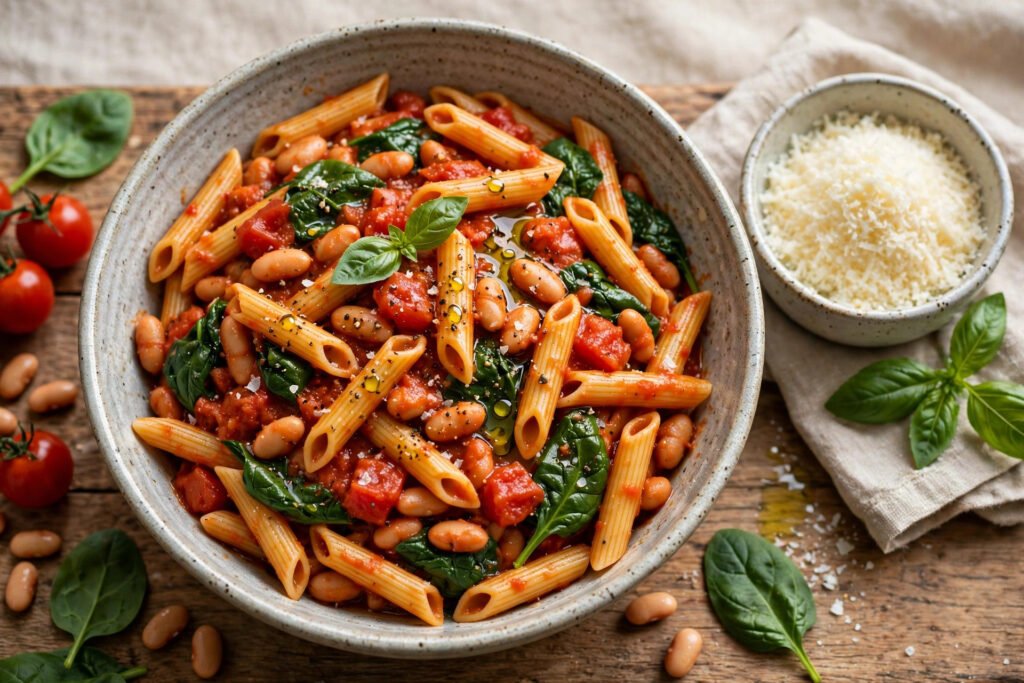
Recipe 4: Family Pasta with Tomato, Beans and Spinach
Pasta is the family dinner that rarely fails, and this tomato, bean, and spinach version keeps it light and balanced. It uses pantry ingredients, takes twenty-five minutes, and proves that a healthy family meal can still feel like comfort food.
Cook 400 grams of short pasta, such as penne or fusilli, in salted water until just tender, then drain, keeping a cup of the cooking water. While the pasta cooks, warm two tablespoons of olive oil in a large pan and cook two sliced garlic cloves for one minute. Add a tin of chopped tomatoes, a tin of drained cannellini beans, and a large handful of spinach, and simmer for ten minutes.
Stir the drained pasta into the sauce with a splash of the cooking water, and toss for two minutes until everything is coated and the spinach has wilted. The starchy cooking water helps the sauce cling to the pasta, so the dish tastes rich without any cream. Season with salt, pepper, and a squeeze of lemon.
Serve in wide bowls with grated parmesan on the side, so each person can add as much as they like. One batch serves four people, and the leftovers reheat well with a splash of water. For extra vegetables, add chopped courgette or peppers to the sauce with the tomatoes.
Recipe 5: Build-Your-Own Chicken and Vegetable Rice Bowls
Rice bowls are the family dinner that ends the “what do you want” argument, because everyone builds their own. The cook makes a few simple parts, and the table does the rest.
Cook 300 grams of rice according to the packet instructions, then let it rest for five minutes. While the rice cooks, cut 500 grams of chicken breast into strips and cook in a hot pan with olive oil, salt, and pepper for six to seven minutes, until golden and cooked through. Slice one cucumber, shred one carrot, and warm a tin of sweetcorn.
Set out the rice, chicken, cucumber, carrot, sweetcorn, and a bowl of yogurt or a mild sauce in the middle of the table. Each person builds their own bowl, choosing what they like and leaving what they do not. A sprinkle of sesame seeds or chopped herbs on top finishes the dish.
This method works for almost any protein. Swap the chicken for tofu, beans, or a boiled egg, using the same vegetables and rice. One batch serves four people, and any leftover rice and vegetables make an excellent lunch the next day. Rice bowls are also a good choice for using up vegetables before they go soft.
Recipe 6: Slow Evening Lentil and Vegetable Stew
Lentil stew is the family dinner that costs very little, feeds a crowd, and tastes even better the next day. It is filling without being heavy, and it uses ingredients that are almost always in the cupboard.
Warm two tablespoons of olive oil in a large pot and cook one chopped onion, two sliced carrots, and two sliced garlic cloves for eight minutes. Stir in a teaspoon of cumin, half a teaspoon of turmeric, and 250 grams of rinsed red lentils. Pour over one litre of vegetable stock, season with salt, and simmer for twenty-five minutes, until the lentils have broken down and the stew is thick.
Stir in the juice of one lemon and a handful of chopped parsley just before serving. The lemon and parsley are essential: they lift the earthy lentils and give the stew a fresh finish. A drizzle of olive oil over each bowl adds richness without heaviness.
Serve the stew in deep bowls with warm flatbread and a spoonful of yogurt on the side. One pot serves six people generously, and the leftovers freeze well, so double the recipe and keep a batch for a busy evening. Lentil stew is also a good choice for batch cooking: the effort is the same whether you make one pot or two.
How Do You Make Family Dinners Less Stressful?
The first rule is to lower the bar. A family dinner does not need to be impressive. It needs to be ready, balanced, and on the table while everyone is still hungry. A simple tray bake, a pot of soup, or a bowl of pasta counts as a good dinner, and it counts every night of the week.
The second rule is to cook once and eat twice. Stews, soups, and tray bakes all taste better the next day and reheat well, so a double batch on Sunday covers lunch on Monday. When the fridge already holds a good meal, the temptation to order something heavy disappears, and the evening stays calm.
The third rule is to keep the routine simple. Sit down at roughly the same time, put phones away for twenty minutes, and let dinner be a pause in the day rather than another task. A calm table matters as much as a balanced plate, and a simple meal served without rush does more for a family than a complicated meal served with stress.
What If a Family Dinner Goes Wrong?
Family dinners are forgiving, and most mistakes have a quick rescue. A soup that is too thick loosens with a splash of stock or water. A tray bake that looks dry can be revived with a drizzle of olive oil and a squeeze of lemon. A pasta that sticks together loosens with a splash of its cooking water.
A dish that overcooks slightly can often be rescued by its accompaniments. Serve it with fresh bread, a crisp salad, or a spoonful of yogurt, and nobody will notice the main dish is less than perfect. The general lesson is the same as for any cooking: do not panic. Family meals use small quantities of everyday ingredients, so a mistake costs very little, and most of them can be fixed with fresh herbs, a squeeze of lemon, or a second batch.
For more simple everyday cooking, our guide to easy meal recipes covers straightforward meals for the whole day, while fast and easy dinner recipes has more quick options for busy evenings. If the evening ends with something sweet, healthy cuisine recipes is a good place to look next.
You May Also Like
Frequently Asked Questions
What are the best healthy dinners for the whole family?
Tray bakes, soups, pasta with vegetables and beans, and build-your-own rice bowls are the best choices, because they use one pot or tray, cook in under forty minutes, and let each person adjust their own plate. Add one baked fish dinner for variety, and the week covers almost every taste.
Can I make family dinners ahead of time?
Yes. Soups and stews can be cooked a day ahead and reheated gently, and tray bakes can be prepared in the morning and baked in the evening. Save only the final cooking — baking fish or wilting spinach — for close to serving time, so everything tastes fresh.
How do I get picky eaters to enjoy healthy dinners?
Build the meal around familiar flavours and let each person adjust their own plate. A rice bowl station, a pasta with toppings on the side, or a soup with bread and cheese lets picky eaters choose what they like, while the core dish stays healthy and flavourful.
Are healthy family dinners filling enough?
Healthy family dinners satisfy everyone when the plate includes protein, vegetables, and a sensible portion of grains or bread. Small portions across several dishes feel generous, and adding a hearty element like lentils, beans, or chicken keeps everyone full until the next meal.
How do I plan healthy family dinners for a busy week?
Choose three or four dinners at the start of the week, shop once, and rotate the same kinds of meals with different vegetables and proteins. A tray bake on Monday, a soup on Wednesday, and pasta on Friday give the week shape without demanding a new recipe every night.
Conclusion
Healthy and good dinner recipes for the whole family prove that one meal can please everyone at the table. Lemon chicken with roasted vegetables, vegetable and bean soup, baked fish with potatoes, tomato and bean pasta, build-your-own rice bowls, or a slow lentil stew — each one is ready in forty minutes or less, uses everyday ingredients, and turns an ordinary evening into a satisfying family dinner.
Start with the recipes that use what you already have in the kitchen. Once two or three family dinners become familiar, planning a healthy week stops feeling stressful and starts feeling like a habit. For general balanced eating guidance, the USDA MyPlate recommendations are a helpful reference.
Sources
USDA MyPlate: https://www.myplate.gov/
NHS – Eating a balanced diet: https://www.nhs.uk/live-well/eat-well/how-to-eat-a-balanced-diet/eating-a-balanced-diet/