

Busy weeknights ask a lot of dinner. You come home tired, everyone is hungry, and the idea of a complicated meal feels impossible. That is exactly when healthy simple dinners earn their place. They are the meals that use a handful of fresh ingredients, one pan or one pot, and a method you can follow without thinking too hard. They prove that eating well on a busy evening does not require hours in the kitchen or a long shopping list.
The secret to a healthy weeknight dinner is not perfection. It is balance. A plate with some lean protein, plenty of vegetables, and a sensible portion of grains or bread will leave you satisfied without feeling heavy. Add a squeeze of lemon, a handful of fresh herbs, or a spoonful of yogurt, and the meal tastes bright and complete. When dinner is built this way, it is easy to cook, easy to enjoy, and easy to repeat the next week.
This guide collects six original healthy simple dinner recipes that work on the busiest weeknights, plus practical tips for planning, shopping, and keeping weeknight cooking calm. Every recipe uses everyday ingredients, takes thirty minutes or less, and needs only basic equipment. Pick two or three to start with, and let healthy dinners become the easy part of your evening.

What Makes a Dinner Healthy and Simple?
A healthy simple dinner starts with a short ingredient list. When a recipe needs only five or six things, shopping is quick, preparation is simple, and there is very little that can go wrong. The recipes below were chosen with that test in mind: most need a single pan or pot and a handful of familiar ingredients.
A healthy dinner also balances the plate. Vegetables should take up about half the plate, protein about a quarter, and grains or bread the rest. That simple picture is easier to follow than counting anything, and it works for almost every meal in this guide. A salad with chicken, a stir-fry with rice, or a soup with beans all follow the same pattern.
Finally, a simple dinner uses one easy method. Stir, roast, simmer, or grill — one main step, not a sequence of fiddly techniques. If a recipe asks you to marinate overnight, fry in batches, and make a sauce from scratch, it is not a weeknight dinner, however healthy it looks. The meals here each have one main step, and the rest is just putting things on a plate.
How Do You Plan Healthy Dinners for a Busy Week?
Planning starts with a small set of staples. Keep rice, pasta, canned tomatoes, canned beans, and oats in the cupboard. Keep eggs, yogurt, cheese, and a few fresh vegetables in the fridge. Keep lemons, garlic, olive oil, and dried herbs for flavour. With those basics on hand, a healthy dinner is rarely more than a fresh ingredient away.
It also helps to plan three or four dinners at the start of the week, rather than deciding at six o’clock every evening. Write the list on the fridge, shop once, and let each evening’s meal be a decision you have already made. That small habit removes the hardest part of weeknight cooking, which is not the cooking itself but the wondering what to cook.
Variety matters more than novelty. Rotate the same kinds of meals with different vegetables, proteins, and seasonings, and dinner never feels repetitive. A stir-fry on Monday, a salad on Tuesday, a pasta on Wednesday, and a soup on Thursday give the week shape without demanding a new recipe every night.
What Should You Keep Ready for Healthy Weeknights?
A few fresh vegetables cover almost every recipe in this guide. Tomatoes, cucumbers, peppers, carrots, spinach, and onions are the most useful, because they work raw, roasted, or stirred into a pan. Buy them once a week and use them across several meals, so nothing sits forgotten in the fridge.
Protein deserves the same treatment. Chicken breast, eggs, canned beans, lentils, and yogurt are all quick, affordable, and flexible. A tin of beans turns a salad into a meal, eggs turn vegetables into a filling dinner, and yogurt makes a sauce or a dressing in seconds. Keep at least two of these ready at all times.
It also helps to keep flavour ready rather than buried. Olive oil, lemon juice, garlic, herbs, and a few spices — paprika, cumin, and black pepper — turn plain ingredients into a meal worth sitting down for. Healthy food that tastes flat will not become a habit, so season generously and taste as you go.
Recipe 1: Lemon Herb Grilled Chicken with Salad
Grilled chicken with salad is the healthy weeknight dinner that never disappoints. It is light, fresh, and ready in twenty minutes, with a lemon and herb flavour that makes simple ingredients taste special.
Cut two chicken breasts into even pieces and toss with olive oil, lemon juice, a sliced garlic clove, salt, pepper, and a handful of chopped parsley. Let the chicken sit for ten minutes while you prepare the salad; even that short time adds flavour. Cook the chicken in a hot pan for six to seven minutes on each side, until golden and cooked through.
Meanwhile, mix a large bowl of salad leaves with sliced cucumber, cherry tomatoes, and red onion. Dress with olive oil, lemon juice, and a pinch of salt. Slice the chicken and arrange it over the salad, spooning any pan juices on top.
Serve with a slice of crusty bread or a small portion of rice. One batch serves two people generously, so double the recipe for a family. The chicken can be cooked ahead and kept in the fridge, then sliced cold over salad the next day, which makes this recipe useful twice in one week.
Recipe 2: One-Pan Vegetable and Chickpea Stir-Fry
A stir-fry is the weeknight dinner for evenings when the fridge looks empty but dinner still has to happen. It uses whatever vegetables you have, one pan, and a simple sauce, and it is on the table in twenty minutes.
Heat a tablespoon of olive oil in a large pan over medium-high heat. Add one sliced onion, two sliced garlic cloves, and a sliced pepper, and cook for three minutes. Add a tin of drained chickpeas, a handful of green beans, and a sliced courgette, and cook for five more minutes, stirring often.
Stir in a sauce made from two tablespoons of soy sauce, a squeeze of lemon juice, and a teaspoon of honey. Toss for one minute until everything is coated and glossy, then remove from the heat. The chickpeas make the dish filling, while the vegetables keep it fresh and light.
Serve over rice or noodles, with a sprinkle of sesame seeds or chopped herbs on top. This stir-fry is a good choice for using up vegetables before they go soft, because almost any vegetable works in the same method. Make a double batch and keep the leftovers for lunch the next day.
Recipe 3: Tomato and Bean Soup with Toast
Soup is the healthy dinner that feels like comfort without any heaviness. This tomato and bean version is warm, filling, and made from cupboard staples, which makes it perfect for a cold or tired evening.
Warm a tablespoon of olive oil in a large pot and cook one chopped onion and two sliced garlic cloves until soft, about five minutes. Stir in a tin of chopped tomatoes, a tin of drained white beans, a teaspoon of paprika, and 500 millilitres of vegetable stock. Simmer gently for fifteen minutes, stirring occasionally.
Blend half the soup until smooth, then stir it back into the pot, so the soup is thick but still has texture. Season with salt, pepper, and a squeeze of lemon juice. A handful of spinach stirred in at the end wilts in a minute and adds colour and freshness.
Serve hot, with toasted bread for dipping. One pot serves four people, and the soup keeps well in the fridge for three days, so it is a dinner that solves tomorrow’s lunch as well. For extra richness, add a spoonful of yogurt to each bowl instead of cream.
Recipe 4: Wholegrain Pasta with Roasted Vegetables
Pasta with roasted vegetables is the healthy dinner that turns a pantry staple into something fresh and colourful. Roasting brings out the sweetness in vegetables, and a simple dressing ties the whole dish together.
Break one head of broccoli into small florets, slice two peppers, and halve a punnet of cherry tomatoes. Toss with olive oil, salt, and pepper, and spread on a baking tray. Roast at 200 degrees Celsius for twenty minutes, until the edges are golden and the tomatoes have softened.
Meanwhile, cook wholegrain pasta according to the packet, then drain, keeping a small cup of the cooking water. Toss the pasta with the roasted vegetables, a handful of spinach, a squeeze of lemon juice, and a drizzle of olive oil. Add a splash of the cooking water if the pasta needs loosening.
Serve with grated cheese on top, or without it for a lighter meal. One batch serves four people, and the leftovers make an excellent cold lunch the next day. This recipe is also a good way to use vegetables that are a few days old, because roasting revives them beautifully.
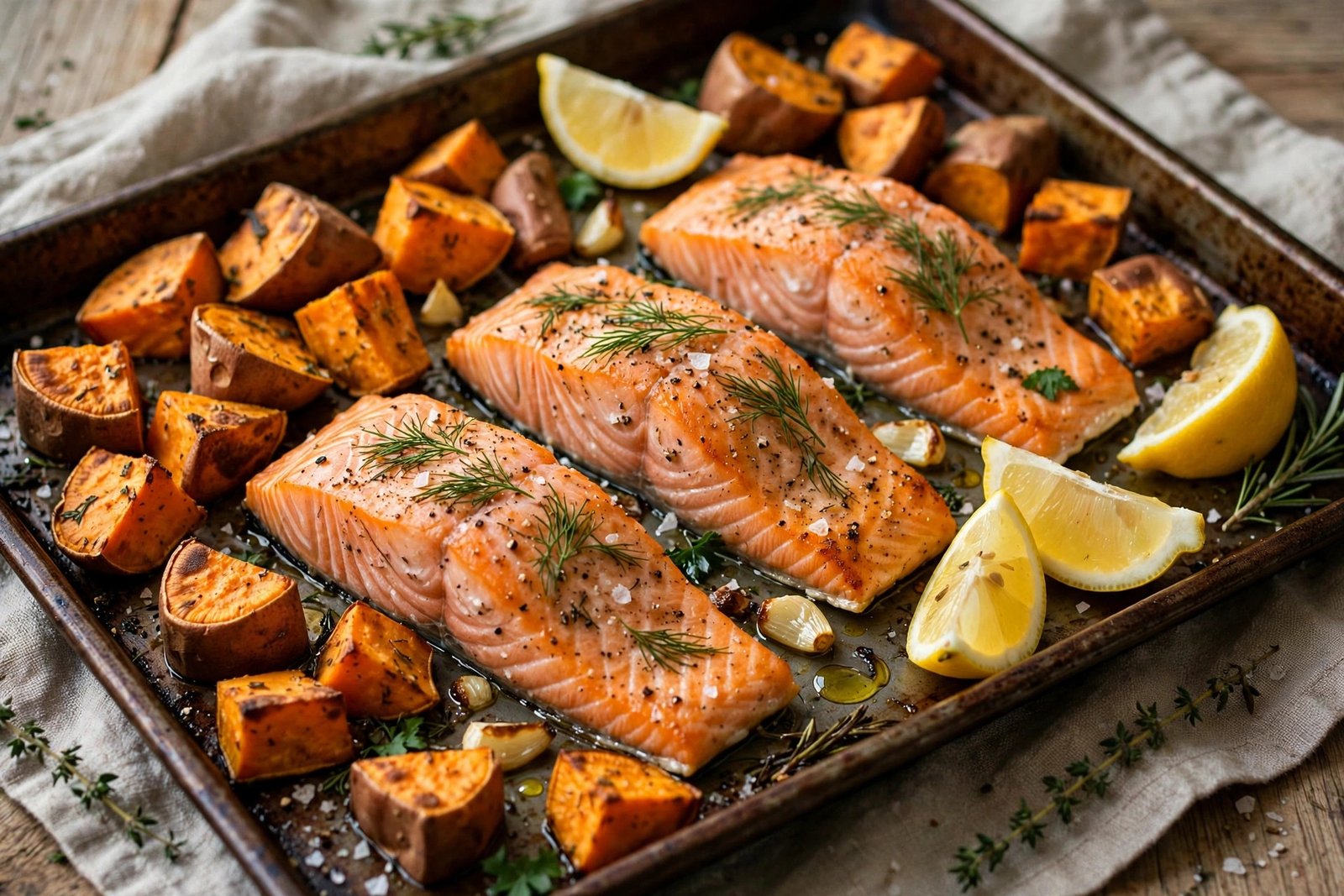
Recipe 5: Baked Salmon with Roasted Sweet Potatoes
Baked salmon with sweet potatoes is the healthy dinner that feels a little special without any extra work. It cooks on one tray, needs almost no attention, and tastes like a weekend meal on a weeknight.
Peel and cube two sweet potatoes, toss with olive oil, salt, and a pinch of paprika, and spread on a baking tray. Roast at 200 degrees Celsius for fifteen minutes. Then place two salmon fillets on the same tray, drizzle with olive oil and lemon juice, and return to the oven for twelve more minutes, until the salmon flakes easily.
While the tray cooks, make a simple green salad with leaves, cucumber, and a lemon dressing. The contrast of warm salmon and sweet potatoes with a cool, crisp salad is what makes this dinner feel complete.
Serve the salmon and sweet potatoes with the salad on the side. One tray serves two people, so use two trays for a family. If salmon is not available, the same method works with chicken thighs or a firm white fish, adjusted for cooking time.
Recipe 6: Egg and Vegetable Fried Rice
Egg fried rice is the healthy weeknight dinner for evenings when time is shortest. It uses leftover rice, a few vegetables, and eggs, and it is ready in fifteen minutes from start to finish.
Heat a tablespoon of oil in a large pan or wok over high heat. Add one sliced onion, two sliced garlic cloves, and a sliced pepper, and cook for two minutes. Add two cups of cooked, cooled rice and stir-fry for three minutes, breaking up any clumps, until the rice is hot and lightly golden.
Push the rice to one side of the pan and pour in two beaten eggs. Scramble the eggs for one minute, then stir them through the rice. Add a handful of peas, a splash of soy sauce, and a squeeze of lime juice, and toss everything together for one more minute.
Serve hot, with chopped spring onions or herbs on top. This recipe is a good choice for using leftover rice, which fries better than freshly cooked rice because it is drier. For extra protein, add a handful of beans or a few slices of cooked chicken.
How Do You Make Healthy Dinners Taste Good?
Seasoning is the difference between a healthy dinner and a boring one. Salt, lemon juice, fresh herbs, and a drizzle of good olive oil make fresh ingredients taste alive. A squeeze of lemon over roasted vegetables, a handful of herbs over a salad, or a spoonful of yogurt on soup can transform a plain meal.
Texture matters too. A dinner with only soft foods feels dull, however healthy it is. Add something crunchy — toasted bread, nuts, seeds, or raw vegetables — and the meal becomes interesting. A salad with crunchy cucumber, a soup with toasted bread, or a stir-fry with sesame seeds all benefit from that contrast.
Finally, do not be afraid of flavour. Garlic, ginger, chilli, cumin, and paprika add warmth and depth without adding heaviness. A healthy dinner should taste like food you want to eat again, not food you endure because it is good for you. When dinner tastes good, healthy cooking becomes a habit rather than a chore.
What If a Healthy Dinner Goes Wrong?
Healthy dinners are forgiving, and most mistakes have a quick rescue. A stir-fry that tastes flat needs salt, lemon, or a splash of soy sauce — taste, adjust, and taste again before deciding it has failed. A soup that is too thick loosens with a splash of stock or water, and a soup that is too thin thickens with a handful of blended beans.
Chicken that goes a little dry can be sliced and served over salad with extra dressing, which covers the dryness completely. Pasta that sticks together loosens with a splash of its cooking water and a drizzle of olive oil. The general lesson is the same as for any cooking: do not panic, because small quantities mean small mistakes, and most of them can be fixed with fresh herbs, a squeeze of lemon, or a second batch.
For more simple everyday cooking, our guide to easy meal recipes covers straightforward meals for the whole day, while fast and easy dinner recipes has more quick options for busy evenings. If the evening ends with something sweet, easy chocolate desserts is a good place to look next.

You May Also Like
Frequently Asked Questions
What is the quickest healthy dinner for a busy weeknight?
Egg fried rice is the quickest, because it takes about fifteen minutes from leftover rice, vegetables, and eggs. A salad with grilled chicken is nearly as fast, at about twenty minutes, and both use ingredients you probably already have.
Can I prepare healthy dinners ahead of time?
Yes. Soups, stir-fries, and roasted vegetables can all be made a day ahead and kept in the fridge. Chicken can be cooked in advance and sliced over salad, and rice can be cooked the night before for fried rice the next evening.
How many vegetables should a healthy dinner include?
Aim for vegetables to fill about half the plate, with protein taking about a quarter and grains or bread the rest. That simple picture works for salads, stir-fries, pasta, and soups alike, and it is easier to follow than counting portions.
What healthy dinners work for the whole family?
Pasta with roasted vegetables, tomato and bean soup, and one-pan stir-fries all work well for families, because everyone can adjust their own portion and toppings. Keep sauces and seasonings mild, and let each person add extra flavour at the table.
Are healthy simple dinners filling enough?
Yes, when they include protein and fibre from beans, lentils, eggs, chicken, or fish, alongside vegetables and grains. A dinner built that way satisfies hunger without feeling heavy, and it keeps you full until the next meal.
Conclusion
Healthy simple dinners for busy weeknights prove that eating well does not need to be complicated. Grilled chicken with salad, a vegetable stir-fry, tomato and bean soup, roasted vegetable pasta, baked salmon, or egg fried rice — each one is ready in thirty minutes or less, uses everyday ingredients, and turns a tired evening into a satisfying meal.
Start with the recipes that use what you already have in the kitchen. Once two or three healthy dinners become familiar, weeknight cooking stops feeling stressful and starts feeling like a pleasure. For general balanced eating guidance, the USDA MyPlate recommendations are a helpful reference.
Sources
- USDA MyPlate: https://www.myplate.gov/
- NHS – Eating a balanced diet: https://www.nhs.uk/live-well/eat-well/how-to-eat-a-balanced-diet/eating-a-balanced-diet/