

A hotdog looks like the simplest food in the world. It comes ready to eat, it cooks in minutes, and it needs almost no skill at all. Yet anyone who has eaten a cold-centred hotdog, a split and dried-out one, or a soggy bun knows that “simple” and “perfect” are not quite the same thing.
The difference between an average hotdog and a great one comes down to a few small decisions: how hot the heat is, how long the hotdog stays on it, and how the bun is treated. Get those three things right and the result is the same every time — a hotdog that is steaming hot all the way through, lightly crisped on the outside, and sitting in a warm, soft bun that holds together until the last bite.
This guide covers everything you need to know about how to cook a hotdog perfectly, whichever method you prefer. Grilling, boiling, pan-frying, air frying, and even the microwave all get their own section, so you can pick the method that suits your kitchen, your weather, and your evening.

Choosing the Right Hotdogs and Buns
A perfect hotdog starts before the cooking does, in the shop. Hotdogs vary a lot: some are beef, some are pork, some are chicken or mixed meat, and some are plant-based. There is no single “best” kind — the best hotdog is the one you enjoy eating. What matters more is freshness. Check the date on the packet, keep hotdogs refrigerated until you cook them, and do not leave them sitting out on the counter while you prepare everything else.
Size matters too. Standard hotdogs fit standard buns, but longer or thicker varieties need longer buns, or they will hang out of both ends and fall apart when you pick them up. If you buy jumbo hotdogs, buy jumbo buns to match. It sounds obvious, but mismatched hotdogs and buns are one of the most common reasons a hotdog dinner feels clumsy.
Buns deserve as much attention as the hotdogs. A good bun is soft but sturdy — it should bend without tearing and hold its shape around the hotdog and toppings. Stale buns crack and split, and very thin buns go soggy the moment anything wet touches them. If your buns feel dry, warming them gently (see the bun section below) brings them back to life. If they are already falling apart, it is better to buy fresh ones than to rescue them.
Grilling: The Classic Method
Grilling is the method most people picture when they think of a hotdog, and for good reason. The open heat gives the outside a light crispness and a smoky flavour that no other method quite matches, and the grill marks look the part too.
Start with a medium heat, not a fierce one. A grill that is too hot burns the outside before the inside has warmed through, which is how you end up with a charred skin and a cold centre. If you are using a charcoal grill, wait until the coals are covered in grey ash and the heat feels strong but not scorching when you hold your hand above it. On a gas grill, medium heat is usually enough.
Place the hotdogs on the grill and turn them every minute or so. Rolling them gently keeps the browning even and stops one side from splitting. Most hotdogs need about five to seven minutes on a medium grill, depending on their thickness. They are ready when they are browned all over, slightly plump, and steaming hot throughout. If a hotdog splits open, it is not ruined — it is just a sign that the heat was a little high or the hotdog stayed on a touch too long. Take it off, and turn the heat down for the next batch.
Grilling works best outdoors, but a stovetop grill pan gives a very similar result indoors at the same medium heat.
Boiling: The Quick and Reliable Method
Boiling is the fastest reliable way to cook a hotdog, and it is the method to choose when you need dinner in five minutes with no fuss. It will not give you crispness or grill flavour, but it guarantees a hotdog that is heated evenly all the way through.
Bring a pot of water to a gentle boil, then turn the heat down so the water is just simmering. Drop the hotdogs in and let them cook for about five minutes. There is no need for a rolling boil — violent bubbling can split the skins and waterlog the hotdogs, which makes them taste washed out. A gentle simmer heats them through without any of that.
Lift the hotdogs out with tongs rather than a fork. Piercing the skin lets juices escape and leaves the hotdog drier. If you are serving them straight away, move them directly into warm buns. If you are keeping them for a few minutes, put them on a warm plate and cover them loosely so they stay hot without steaming themselves soggy.
Pan-Frying: The Best Indoor Method
If you want crispness but you are cooking indoors, pan-frying is the best method there is. A hot pan gives the hotdog a browned, slightly crisp outside while keeping the inside juicy, and the whole job takes under ten minutes.
Heat a pan over medium heat and add a tiny amount of oil or butter — just enough to stop sticking. You do not need a pool of oil; a thin film is plenty, because hotdogs release some fat of their own as they cook. Place the hotdogs in the pan and roll them every minute or so, so every side gets contact with the heat.
After about six to eight minutes, the hotdogs should be browned all over and steaming hot through. For extra flavour, you can score them lightly — two or three shallow diagonal cuts on each side — before they go in the pan. The cuts open slightly as the hotdog cooks, catch a little extra browning, and give sauces somewhere to sit. Do not cut deeply, though, or the hotdog will split and dry out.
Pan-frying has one more advantage: the same pan can toast the buns afterwards. A minute in the leftover heat, cut-side down, gives buns a light golden crispness that makes a real difference to the finished hotdog.
Air Fryer: The Modern Shortcut
The air fryer has become a favourite for hotdogs, and it is easy to see why. It combines the crispness of grilling with the convenience of indoor cooking, and it needs almost no attention once the hotdogs are in.
Set the air fryer to 190 degrees Celsius (about 375 degrees Fahrenheit) and preheat it for two or three minutes. Place the hotdogs in the basket in a single layer, leaving a little space between them so the hot air can circulate. Cook for five to six minutes, shaking the basket or turning the hotdogs halfway through.
The result is a hotdog with a lightly crisped skin and a fully heated centre, very close to a grilled one. Thicker hotdogs may need an extra minute or two — check that they are steaming hot throughout before serving. You can also put the buns in the air fryer for the last minute of cooking, which warms them perfectly and saves a step.
One caution: do not overcrowd the basket. Hotdogs piled on top of each other steam instead of crisping, and they cook unevenly. Cook in two batches if you need to — each batch only takes a few minutes.
Microwave: The Emergency Method
The microwave is not the method anyone dreams about, but when you need a hotdog in ninety seconds, it does the job.
Place the hotdog on a microwave-safe plate and cover it loosely with a paper towel or microwave cover. The cover stops splatters and keeps some moisture around the hotdog, which helps it heat evenly. Microwave on high for about forty seconds, then check. Most hotdogs need sixty to ninety seconds in total, depending on their size and your microwave’s power.
The key is to stop and check rather than cooking in one long burst. Microwaves heat unevenly, and a hotdog that is blazing hot at one end can still be cool in the middle. Turn it over halfway through, and let it stand for thirty seconds after cooking so the heat evens out. The hotdog should be steaming hot throughout before you eat it.
A microwaved hotdog will not be crisp, and the bun will not be toasted — but a quick roll in a hot pan afterwards fixes both, if you have the minute to spare.
Warming the Buns
The bun is half the hotdog, and a cold bun is the easiest way to spoil a perfectly cooked one. Warm buns are softer, more flexible, and far less likely to split when you load them with toppings.
The simplest method is the microwave: wrap the buns loosely in a paper towel and microwave for ten to fifteen seconds. They come out warm and soft. Do not overdo it — more than twenty seconds can make them tough as they cool.
A better method, if you have a pan or grill going anyway, is to toast them. Place the buns cut-side down on the grill or in the pan for about a minute, until lightly golden. Toasted buns hold their shape better, resist sogginess from wet toppings, and add a little extra flavour of their own.
Whichever method you choose, warm the buns last, just before serving. A bun warmed ten minutes early is a bun that has gone cold again, and the whole point is lost.

Toppings and Serving Ideas
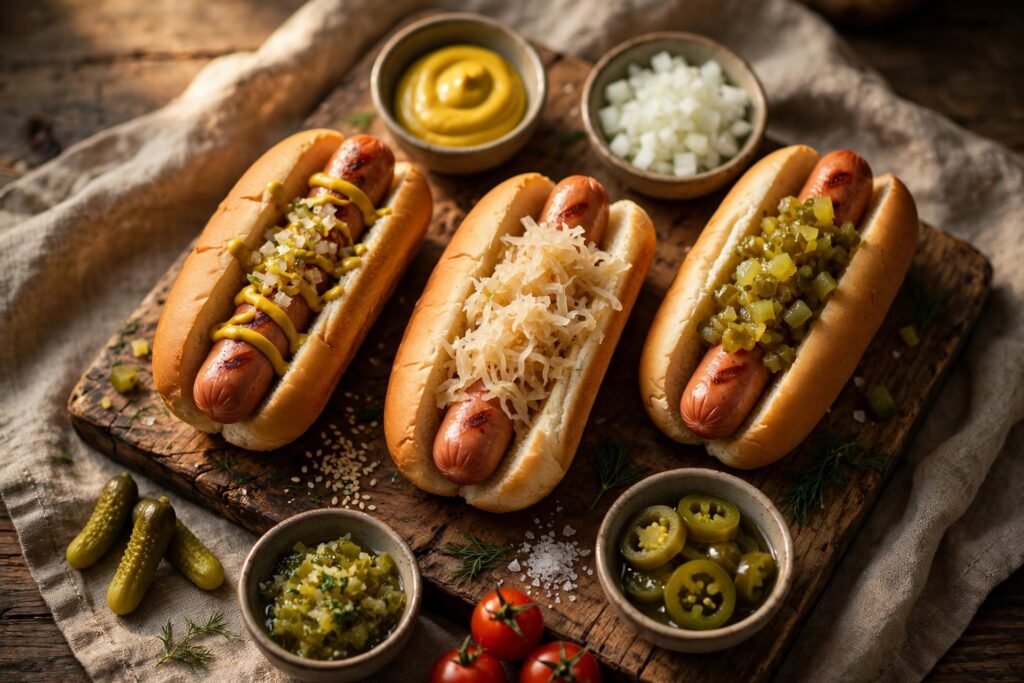
Toppings are where a hotdog becomes personal, and there is no wrong answer — but a few combinations work better than others, and a little restraint goes a long way. A hotdog buried under six toppings is hard to eat and hard to taste. Two or three well-chosen toppings usually beat a pile of everything.
The classic: yellow mustard, ketchup, and finely diced onion. Simple, familiar, and the reason the combination became classic in the first place.
The tangy one: sauerkraut or pickled onions with mustard. The sharpness cuts through the richness of the hotdog and keeps the whole thing feeling light.
The loaded one: chilli, grated cheese, and diced onion. Hearty and filling, and best eaten with a fork nearby for the inevitable escapees.
The fresh one: diced tomato, cucumber, and a squeeze of lemon with a little salt. Lighter and brighter, and a good choice on a hot day.
The sweet-heat one: caramelised onions with a drizzle of hot sauce. The sweetness of the onions against the heat is a combination that works far better than it sounds.
And always serve hotdogs as soon as they are ready. A hotdog that sits for ten minutes loses its crispness, its heat, and most of its charm.
Common Mistakes to Avoid
Cooking on too high a heat. This is the number one mistake. Fierce heat burns the outside and leaves the centre cold, or splits the skin entirely. Medium heat, and a little patience, beats high heat every time.
Piercing the hotdog with a fork. Every hole lets juices escape. Use tongs for turning and lifting, and the hotdog stays juicier.
Skipping the bun warming. A cold, stiff bun cracks, tears, and makes the whole hotdog harder to eat. Warm buns take a minute and change everything.
Overloading the toppings. More is not always better. A hotdog you cannot pick up without losing half of it is not a better hotdog — it is a mess. Pick a few toppings and let the hotdog itself do some of the work.
Leaving cooked hotdogs sitting around. Hotdogs cool quickly and dry out fast. Cook them last, after the toppings and sides are ready, and serve them straight away.
Forgetting food safety. Hotdogs should always be heated until they are steaming hot throughout before eating. This matters most for children, older adults, and anyone pregnant, and it is worth taking seriously even though hotdogs come ready to eat. If in doubt, heat them a little longer — a hotdog that is fully heated is never worse for it.
You May Also Like
Frequently Asked Questions
How long does it take to cook a hotdog?
It depends on the method. Grilling and pan-frying take five to eight minutes, boiling takes about five minutes, the air fryer takes five to six minutes, and the microwave takes sixty to ninety seconds. In every case, the hotdog is ready when it is steaming hot throughout.
Should hotdogs be boiled or grilled?
Both work well, and the choice comes down to what you value. Grilling gives crispness and smoky flavour; boiling is faster, easier for large numbers, and guarantees even heating. Pan-frying sits in between, giving crispness indoors.
How do I stop hotdogs from splitting?
Use medium heat rather than high heat, turn the hotdogs regularly, and avoid piercing them with a fork. If you score them, keep the cuts shallow — deep cuts are the fastest way to a split hotdog.
Can I cook hotdogs from frozen?
Yes, but they need longer — roughly double the usual cooking time — and the microwave is not the best choice for frozen hotdogs because it heats unevenly. Boiling or pan-frying from frozen works, as long as you check that the centre is steaming hot throughout before serving. Thawing in the fridge first gives the most even result.
What is the best bun for a hotdog?
A fresh, soft bun that matches the hotdog’s size is best. Warm it before serving — briefly in the microwave or toasted cut-side down in a pan or on the grill — so it is soft, flexible, and less likely to split or go soggy.
Conclusion
Cooking a hotdog perfectly is not about fancy equipment or secret techniques. It is about medium heat, even turning, a fully heated centre, and a warm bun — done the same way, every time, whichever method you choose. Grill it when the weather allows, pan-fry it indoors, boil it when you are feeding a crowd, or microwave it when time is all you have. The method changes; the standard does not.
Once the basics are second nature, the fun starts: new toppings, new combinations, and a hotdog dinner that everyone actually looks forward to. For general guidance on heating ready-to-eat meats safely, the USDA Food Safety and Inspection Service is a reliable reference.
Sources
- USDA Food Safety and Inspection Service: https://www.fsis.usda.gov/
- NHS – Food safety: https://www.nhs.uk/live-well/eat-well/food-safety/