
Steam cooking sounds fancy, but it is one of the oldest and simplest ways to cook. Long before ovens and air fryers, cooks were placing food over boiling water and letting the steam do the work. The result is food that stays moist, keeps its colour, and tastes clean and fresh — without added fat and without much attention from the cook.
If you have never steamed anything on purpose, this guide is for you. It explains what steam cooking is, what equipment you actually need, and how to steam vegetables, fish, dumplings, and more without guesswork. You do not need a special machine, and you do not need experience. A pot, a basket, and a lid are enough to start.
Once you learn the basics, steaming becomes one of those quiet kitchen skills you use all the time. It is fast on weeknights, gentle on delicate food, and forgiving in a way that frying and roasting are not.

What Is Steam Cooking, and Why Does It Work?
Steam cooking means cooking food with the hot vapour from boiling water, rather than in the water itself or in hot oil. The food sits above the water, usually in a basket or on a rack, while steam rises around it and cooks it evenly from all sides.
It works so well for three reasons. First, steam is hot — around the temperature of boiling water — so it cooks food quickly and evenly. Second, because the food never sits in water, it does not lose flavour or go soggy the way boiled vegetables sometimes do. Third, steam is gentle. It does not scorch, it does not dry food out, and it is kind to delicate things like fish fillets and dumplings that would fall apart in a pan.
There is also a health angle that matters to many cooks. Steaming needs no oil, so the food keeps its natural character without added fat. Vitamins that dissolve into boiling water stay in the food instead. That does not make steaming magic, but it does make it one of the easiest ways to cook a light, balanced meal.
What Equipment Do You Need?
The good news is that you probably already own most of what you need. Steaming does not require a dedicated appliance, though one can be handy if you steam often.
A steamer basket. This is the most common starting point. A metal basket with folding leaves sits inside an ordinary pot, holding food above a small amount of boiling water. It is cheap, easy to store, and works for vegetables, fish, and dumplings alike. If you buy only one piece of steaming equipment, buy this.
A bamboo steamer. These round, stacked baskets sit over a wok or a wide pot and are the classic choice for dumplings, buns, and fish. They stack, so you can cook two layers at once, and they absorb a little moisture, which keeps dumpling skins from going soggy. Line them with parchment paper or cabbage leaves so food does not stick.
A pot and a plate. No basket at all? You can still steam. Put a small heatproof bowl upside down in a large pot, or use a wire rack, and rest a heatproof plate of food on top. Add water to just below the plate, cover the pot with a tight lid, and you have a working steamer. It is not elegant, but it works perfectly well for a first attempt.
A tight-fitting lid. Whatever setup you use, the lid matters. Steam escapes quickly through gaps, and lost steam means slower cooking and dried-out food. Use the lid that fits your pot best, and avoid lifting it too often to peek — every lift lets heat out and adds minutes to the cooking time.
How to Steam: The Step-by-Step Method
Steaming follows the same basic steps whatever food you are cooking. Learn this pattern once and you can apply it to almost anything.
Step 1: Prepare the water. Pour about 3 to 5 centimetres of water into your pot — enough to boil for several minutes without running dry, but not so much that it touches the food. The food should sit above the water, never in it.
Step 2: Bring it to a boil. Put the lid on and heat the pot over medium-high heat until the water is boiling well and steam is rising strongly. Starting with cold water and cold food together leads to uneven cooking, so always let the water boil first.
Step 3: Arrange the food. Place the food in a single layer in the basket or on the plate, leaving small gaps between pieces so steam can circulate. Crowding the basket is the most common beginner mistake — pieces in the middle of a pile cook slowly while the outside overcooks.
Step 4: Cover and cook. Set the basket in the pot, put the lid on, and start timing. Keep the heat at a steady medium-high so the water keeps boiling. Resist the urge to lift the lid every minute; check once near the end of the expected time instead.
Step 5: Check and rest. When the time is up, lift the lid away from you so the steam escapes safely, and check the food. Vegetables should be tender but still bright, fish should flake easily, and dumplings should look slightly translucent. Let the food rest for a minute before serving.
Best Foods to Steam (and How Long They Take)
Steaming suits a wide range of foods, but some are better than others. Here are the most reliable choices, with sensible timings to start from. Timings vary with thickness and with how much food is in the basket, so treat these as guides and check as you go.
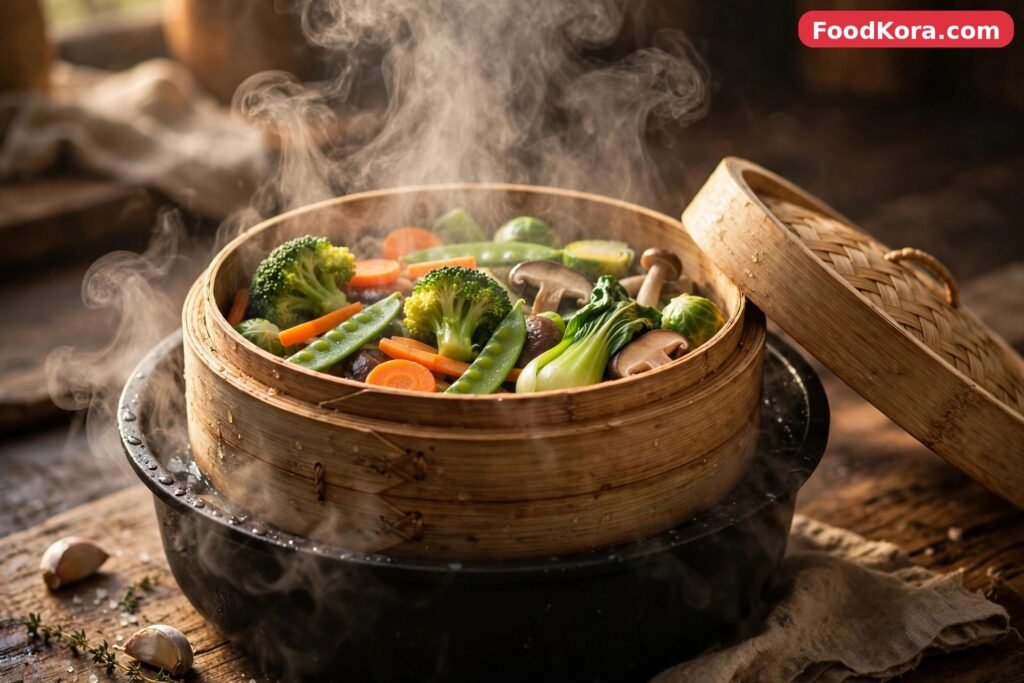
Vegetables. This is where most people start, and for good reason. Broccoli florets take about 5 to 7 minutes, green beans about 5 minutes, sliced carrots about 8 to 10 minutes, and cauliflower florets about 7 to 9 minutes. Leafy greens like spinach wilt in just 2 to 3 minutes. The goal is tender with a little bite left, and colour that is still vivid — dull, grey-green vegetables have gone too far.
Fish and seafood. Steaming is one of the best ways to cook fish because it keeps fillets moist and intact. A fish fillet about 2 centimetres thick usually takes 8 to 10 minutes, while whole prawns take about 4 to 5 minutes, until they turn pink and curl. Season the fish simply before steaming — a little salt, ginger, and spring onion is enough — and serve it with the light cooking juices.
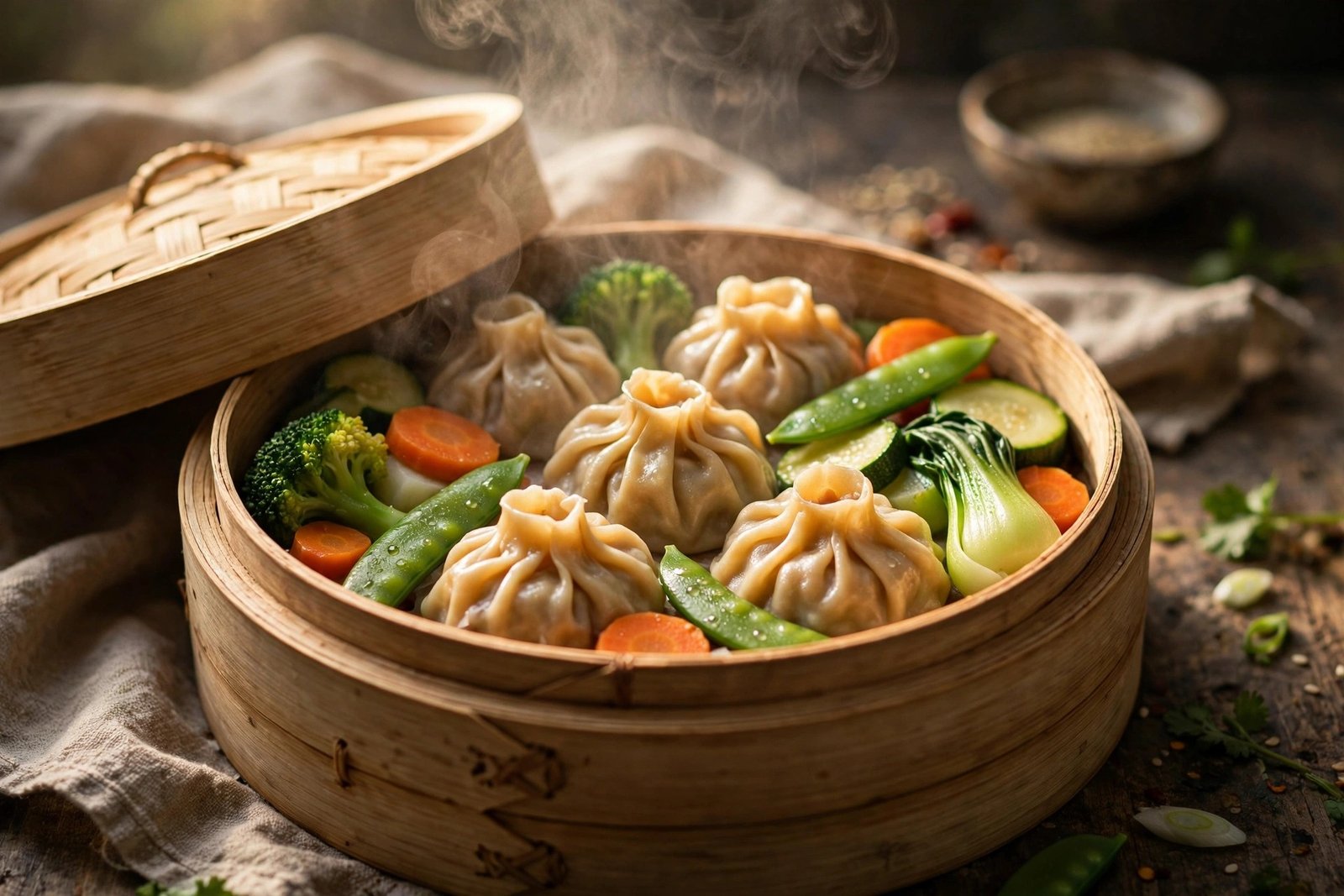
Dumplings and buns. Dumplings steam beautifully in a bamboo steamer. Fresh dumplings usually take 8 to 10 minutes, and frozen ones a little longer, around 12 to 15 minutes. Space them apart so they do not stick together, and line the steamer so the skins do not tear. Steamed buns follow a similar pattern and come out soft and pillowy.
Chicken. Small, even pieces of chicken — sliced breast or thigh — steam well in about 15 to 20 minutes, depending on thickness. Whole chicken pieces take longer and need care to make sure they are cooked through, so sliced or flattened pieces are the better choice for beginners. Marinate the chicken first in soy, ginger, and garlic for flavour, since steaming adds no browning of its own.
Eggs and puddings. Steamed eggs, in the style of a savoury custard, are a quiet classic in many kitchens and take about 12 to 15 minutes in a covered bowl. Rice puddings and simple steamed cakes also work, though they take longer. If you enjoy gentle, soft textures, this corner of steaming is worth exploring.
Common Mistakes (and How to Avoid Them)
Letting the pot run dry. This is the one mistake that can damage your pot. Always start with enough water, and for longer steaming sessions, check the water level once or twice and top it up with boiling water from a kettle if needed. Never pour cold water into a hot pot mid-steam if you can avoid it — it drops the temperature sharply.
Lifting the lid too often. Every peek costs heat and time. Set a timer and trust it. Check once, near the end, and only then decide whether the food needs another minute or two.
Overcrowding the basket. Steam needs space to move. A single layer with gaps cooks faster and more evenly than a packed pile. If you have a lot of food, cook it in two batches rather than one crowded one.
Forgetting seasoning. Steaming does not add flavour the way roasting or frying does, so the food needs seasoning before it goes in. Salt, herbs, ginger, garlic, citrus, and a drizzle of soy or sesame oil after cooking all make a real difference. Plain steamed food tastes plain — seasoned steamed food tastes fresh and clean.
Overcooking vegetables. Steamed vegetables go from perfect to dull very quickly. Start checking a minute before the expected time, and take them out while they still have a little bite. They will keep cooking for a minute off the heat, which is usually exactly right.
How to Build a Full Steamed Meal
A steamed meal does not have to be a side dish. With a little planning, it can be the whole dinner, and a very good one.
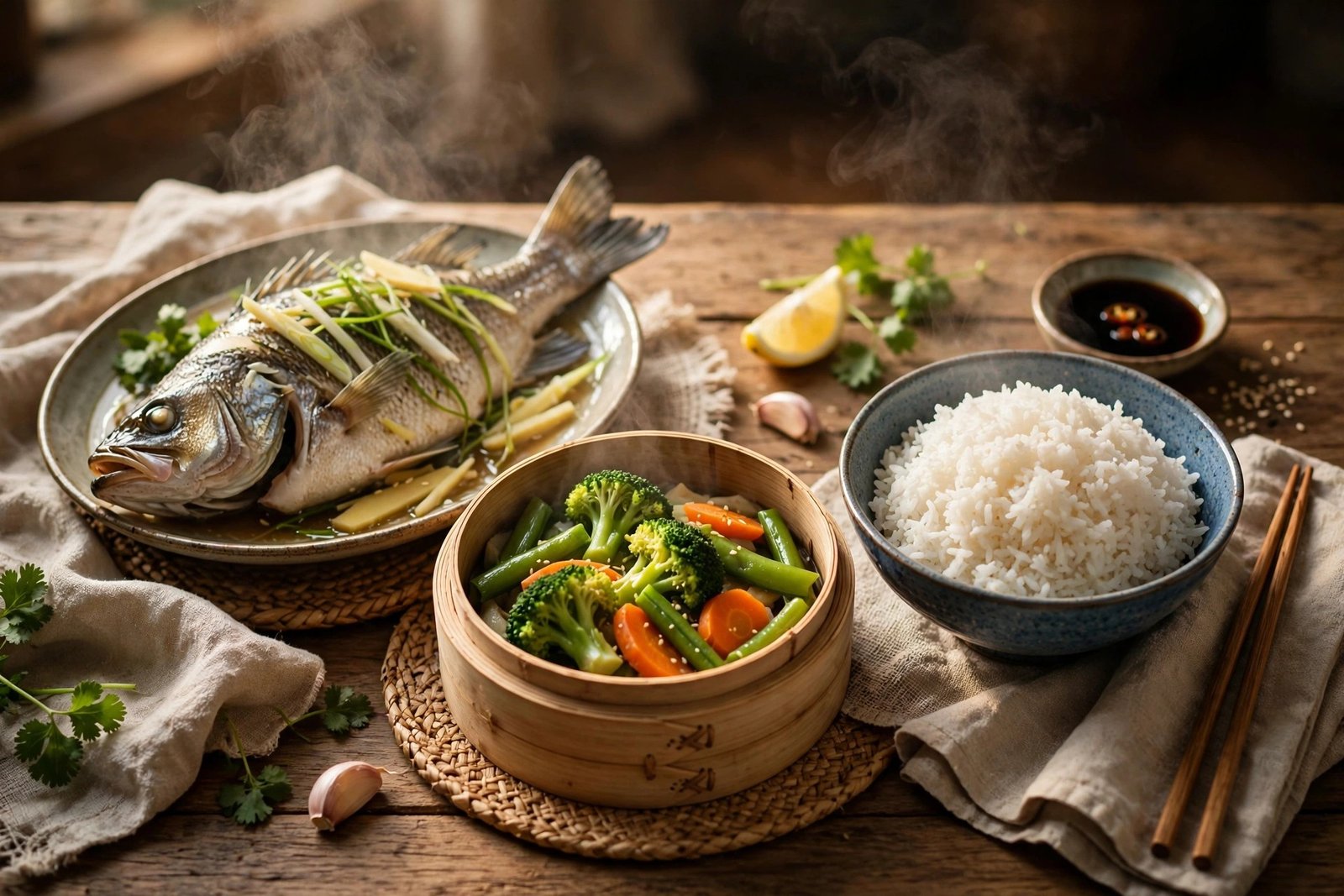
Start with a grain: rice or noodles cooked separately while the steamer runs. Add a protein from the steamer — fish, chicken, or dumplings — and one or two vegetables. Finish with a sauce that adds the flavour steaming does not: soy with ginger and spring onion, a chilli and lime dressing, or a simple sesame sauce. The sauce is what turns a plate of steamed food into a meal people look forward to.
This approach works especially well on busy nights, because the steamer needs almost no attention once it is going. While the food steams, you can set the table, make the sauce, and cook the rice — and dinner is ready in about twenty minutes with very little washing up.
Is Steaming Worth Learning?
Yes, and for a simple reason: it is one of the few cooking methods that is simultaneously easy, healthy, and hard to get badly wrong. It does not need expensive equipment, it does not fill the kitchen with smoke or oil, and it treats delicate food kindly. Once the basic method feels familiar, you will find yourself reaching for the steamer basket on nights when you want dinner to be calm rather than complicated.
Start with vegetables this week. Try broccoli or green beans, seasoned simply, with a sauce you like. Then try dumplings or a fish fillet. Within a few attempts, steaming will feel less like a technique you are learning and more like a habit you already have.
For more simple everyday cooking, our guide to easy meal recipes covers straightforward meals for the whole day, while fast and easy dinner recipes has more quick options for busy evenings. If you want more balanced plates, healthy cuisine recipes shows how different world cuisines build fresh, flavourful meals.
You May Also Like
Frequently Asked Questions
Do I need a special steamer to cook with steam?
No. A metal steamer basket in an ordinary pot is enough to start, and a plate on a rack inside a large pot works too. A bamboo steamer is nice for dumplings, but it is not required.
How much water should I use for steaming?
About 3 to 5 centimetres in the pot — enough to boil for several minutes without running dry, but not so much that the water touches the food. For long steaming sessions, top up with boiling water if the level gets low.
Why do my steamed vegetables go dull and soggy?
They are usually overcooked, or the lid was lifted too often and the temperature dropped. Check a minute before the expected time and take vegetables out while they still have a little bite and bright colour.
Can I steam frozen food?
Yes. Frozen dumplings and frozen vegetables steam well; just add a few extra minutes to the usual time. Frozen chicken pieces are better thawed first so they cook evenly.
Does steamed food need seasoning?
Yes. Steaming adds no flavour of its own, so season food before cooking and finish with a sauce, a drizzle of oil, or fresh herbs afterwards. This is what makes steamed food taste fresh rather than plain.
Conclusion
Learning how to cook steam is really about learning one simple pattern: boiling water, food above it, a tight lid, and a timer. With that pattern, you can steam vegetables in minutes, cook fish without drying it out, and make dumplings that stay tender and intact.
Start small, season well, and do not lift the lid too often. Steaming rewards patience with food that is moist, colourful, and full of its own natural flavour — and once it becomes a habit, it is one of the easiest ways to put a balanced dinner on the table. For general balanced eating guidance, the NHS healthy eating guide is a helpful reference.
Sources
- NHS – Eating a balanced diet: https://www.nhs.uk/live-well/eat-well/how-to-eat-a-balanced-diet/eating-a-balanced-diet/